
Premium produce · free for buyers · from USD 250,000 per season
Premium produce sourcing for large wholesale programmes
Cherries, avocados, berries, mangoes, table grapes and citrus — specified the way packers and inspectors work, then taken to suppliers by our team. No listings, no price lists, no direct supplier contact before review.

What is premium produce sourcing at Global B2B Group?
Global B2B Group helps commercial buyers source premium fresh produce through a managed RFQ: you define the specification, our team reviews it and approaches suitable suppliers on your behalf, and you compare offers on the same basis. It is free for buyers and applies to programmes of USD 250,000 or more per year or season. We do not grow, export, import, ship or sell produce, and we do not publish listings or prices.
Choose a product
Each page sets out the commodity-specific specification, the season and origin facts we could verify from official or industry sources, and a worksheet that carries your answers into the request form.
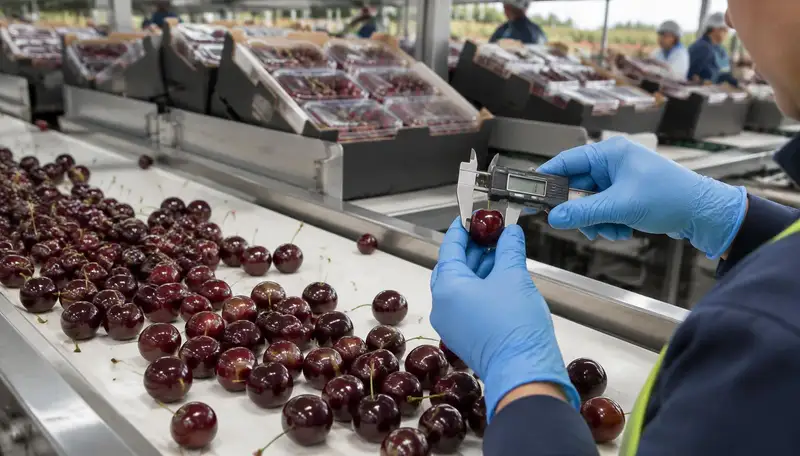
Cherries
Calibre stated in millimetres (or row size) with the allowed spread inside each pack.
Specification and seasons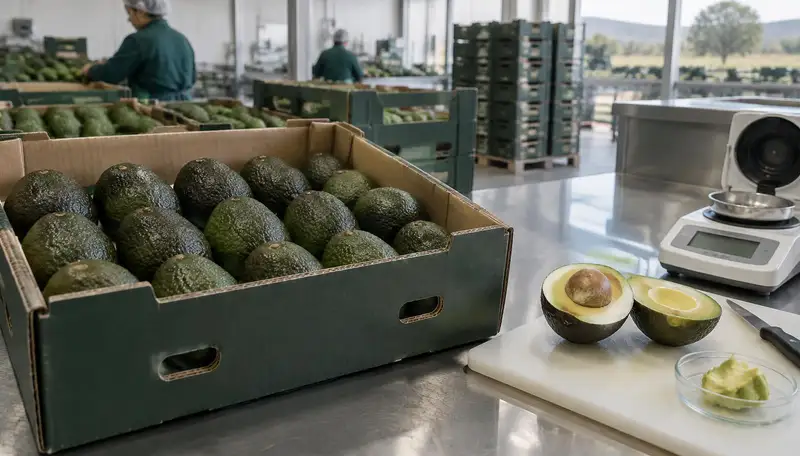
Avocados
Minimum dry matter (or oil content) at harvest, with the test method and sample size.
Specification and seasons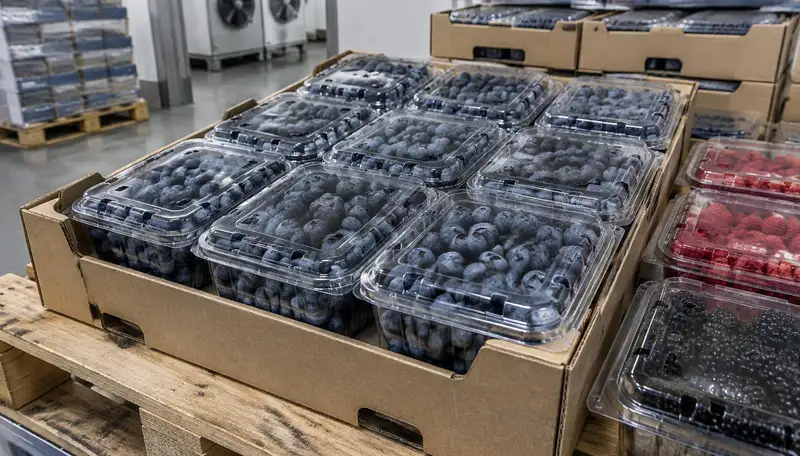
Berries
Minimum berry diameter and uniformity inside each punnet.
Specification and seasons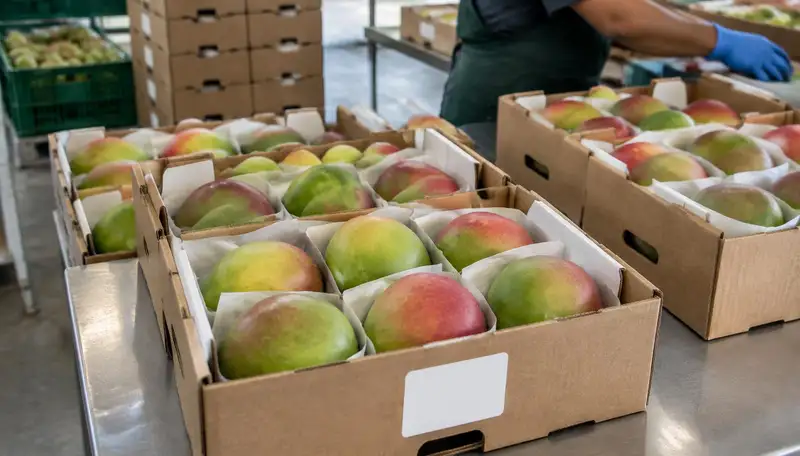
Mangoes
One named variety per programme, not mixed lots.
Specification and seasons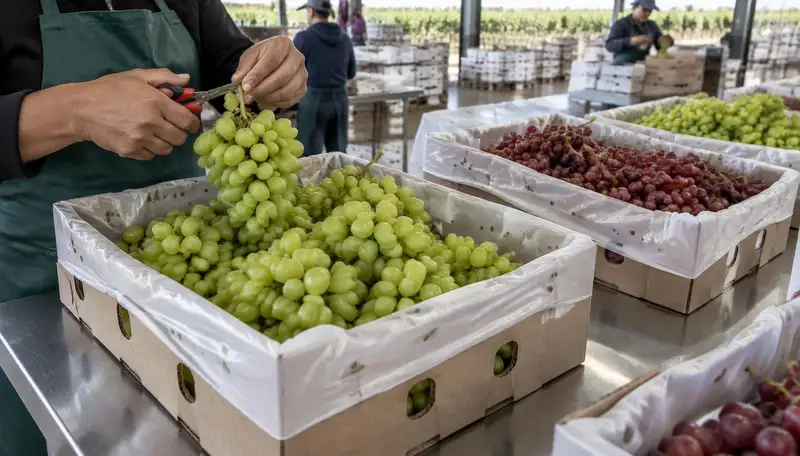
Table grapes
Large, uniform berries of one variety per pallet.
Specification and seasons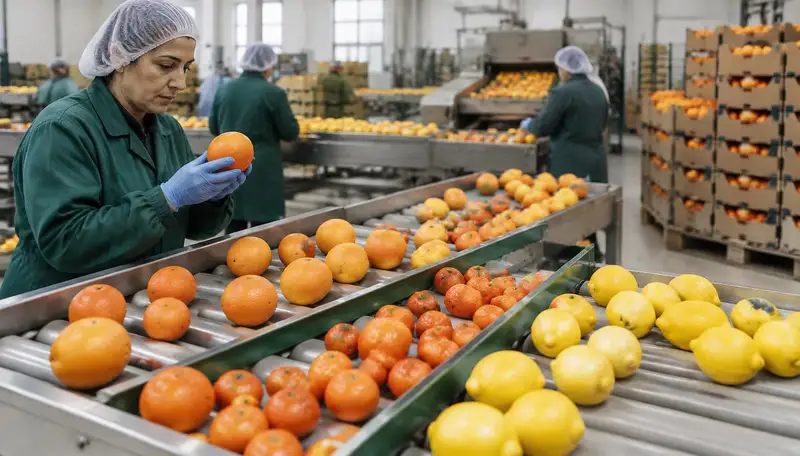
Citrus
One variety per pallet with consistent size count.
Specification and seasons
Other premium fruit and specialty vegetables (for example cherry tomatoes on the vine or asparagus) use the same request form — choose fresh fruit or fresh vegetables, or start from wholesale fresh produce sourcing.
Global B2B Group is committed to conducting its own activities in accordance with applicable law. It facilitates sourcing and RFQs and does not itself produce, manufacture, export or sell the listed products, or approve them on behalf of any authority. Suppliers are responsible for the products and shipments they offer and supply meeting the requirements of the origin and destination countries — for example safety, quality, labelling, traceability, sanitary or phytosanitary certificates and export documents, where relevant. Buyers remain responsible for their own import permissions, local requirements and due diligence. Requirements differ by product and country; this is not legal advice. Compliance & responsibilities · Terms
Directory, marketplace or managed RFQ?
Three common ways to find fresh-produce suppliers, described generally. Each suits a different kind of purchase.
| Generic supplier directory | Open marketplace | Buyer-first managed RFQ (Global B2B Group) | |
|---|---|---|---|
| Who contacts suppliers | You, one by one | You, or suppliers contact you | Our team, on your behalf, after review |
| Specification | Your own, if any | Listing descriptions vary | One written specification every supplier quotes against |
| What you receive | Contact details | Listings and messages | Offers returned on the same basis for comparison |
| Supplier information | Self-declared profiles | Varies by platform | We check what suppliers can evidence before any introduction; nothing is guaranteed |
| Prices | Rarely shown | Asking prices on listings | Quoted after your specification is reviewed |
| Best fit | Small or exploratory buying | Spot purchases | Recurring or seasonal programmes from USD 250,000 |
How a premium produce RFQ works
Step 1
Define the specification
Variety, grade, size, maturity, origin, window, volume, pack, cold chain, documents, destination and Incoterms®.
Step 2
Submit the RFQ
Free for buyers. Leave unknown fields blank — they are recorded as unknown, not guessed.
Step 3
Our team reviews
We check completeness, scope and programme value. Below USD 250,000 per year or season, requests stay on file without supplier outreach.
Step 4
Managed supplier outreach
We approach suppliers that appear suitable and ask them to quote on your specification. You are not put in direct contact before review.
Step 5
Compare and decide
Offers are returned on the same basis. Any introduction needs your approval; the contract is between you and the supplier.
Seasonal and origin guide — dated, sourced statements only
Each row quotes an official or industry source; the date is the source's own publication date. We do not fill gaps with estimates. Seasons move with weather and differ by region and variety — confirm the weeks with exporters for your programme. Checked 2026-10-22.
| Product | Origin | Window | What the source says |
|---|---|---|---|
| Cherries | Chile | November–March | Historically, more than 99% of Chile's fresh cherry exports occur in November through March. USDA Foreign Agricultural Service, September 2024 |
| Avocados | Peru | Mainly March–August (2024) | Most of Peru's avocado exports in 2024 occurred between March and August. USDA Foreign Agricultural Service, 16 May 2025 |
| Avocados | Mexico | Confirm by state and flowering | Industry sources report Hass accounts for 97% of Mexico's avocado production. USDA Foreign Agricultural Service, 5 April 2024 |
| Avocados | Mexico → United States | — | Michoacán and Jalisco produce 85% of Mexico's avocados by volume and are the only states authorized to export to the United States. USDA Foreign Agricultural Service, 12 March 2026 |
| Berries | Peru (blueberries) | Peak October–November (2024/25) | In marketing year 2024/25, Peru's blueberry export seasonality was pushed back by a cooler winter and peaked between October and November. USDA Foreign Agricultural Service, 13 June 2025 |
| Mangoes | Mexico, Ecuador, Peru, Brazil, Guatemala, Haiti (U.S. supply) | Spring/summer and fall/winter | Mangoes sold in the U.S. come mostly from these origins, which harvest at different times; the year has two overlapping seasons, spring/summer and fall/winter. National Mango Board (U.S.), page checked 22 October 2026 |
| Table grapes | Peru | October–April | The harvesting season in Peru begins in October and ends in April with a north-to-south harvest pattern; Ica (50%) and Piura (35%) are the main production areas. USDA Foreign Agricultural Service, 2 December 2025 |
| Citrus | South Africa | April–November | The export season typically starts around week 16 (April) with navels and week 21 (May) with Valencia oranges, and concludes around week 45 (November). About 81% of exports ship through Durban. USDA Foreign Agricultural Service, 19 December 2025 |
2024 trade signals: where premium fruit was bought and shipped
Top reporters by value in UN Comtrade data published by WITS (checked 2026-10-22). Each product page has the full table, volumes and reading notes. The Netherlands, Spain and Hong Kong, China appear as both importers and exporters — trading hubs whose imports are not final consumption. Past trade values, not available stock or prices.
| Product (HS) | Largest importers, US$ million | Largest exporters, US$ million |
|---|---|---|
| Cherries (080920) | China 3,685.2 · Hong Kong, China 1,117.2 · European Union 214.8 | Chile 3,515.4 · Hong Kong, China 1,026.7 · United States 509.0 |
| Avocados (080440) | United States 3,876.5 · European Union 2,616.4 · Netherlands 1,298.5 | Mexico 3,828.2 · Peru 1,247.0 · Netherlands 1,114.8 |
| Table grapes (080610) | United States 2,544.1 · European Union 1,406.2 · Germany 951.5 | Peru 1,726.3 · Chile 1,352.2 · Netherlands 989.2 |
Berries, mangoes and citrus span several HS lines, so they carry dated season sources here rather than a single trade table. Stone fruit other than cherries is not covered in this section.
Premium produce sourcing checklist
What a reviewed request needs. Unknown items can be left blank.
- Product, variety and end use
- Grade or class and the reference standard
- Size or calibre, count per carton and net weight
- Maturity at harvest and ripeness on arrival
- Acceptable origins and alternates
- First and last arrival, and delivery cadence
- Volume per shipment, per season and programme length
- Pack, label and pallet configuration
- Cold-chain requirements and temperature records
- Documents and certifications your destination and customers require
- Destination, Incoterms® rule and named place
- Declared programme value per year or season
Cold-chain and packaging checklist
Agree these with the exporter and your logistics provider; we do not operate the cold chain.
- Pre-cooling after harvest: method and time limit agreed with the packer
- Carrying temperature and atmosphere agreed per product and voyage
- Temperature logger per pallet or container, and who reads it
- Handover points (packhouse, port, vessel, terminal, your warehouse) and who is responsible at each
- Maximum dwell times at port and before your cold store
- Pack strength, ventilation and liners suited to the voyage
- Labelling language, lot codes and traceability marks
- Arrival inspection: sampling plan, tolerances and how claims are raised
Evaluating export documents and certifications
Requirements are set by the destination and by your customers. Confirm them with the competent authority and your customs broker for the exact product, origin and destination. This is not legal advice.
- Phytosanitary certificate
- Issued by the exporting country's plant protection organisation under the IPPC framework. Check that consignment details match the commercial documents.
- Market-access protocol
- Some origin–destination pairs require registered orchards or packhouses, inspections or treatments. Confirm with the destination authority and your broker.
- Certificate of origin
- Needed where a trade agreement or tariff preference applies.
- Treatment certificates
- Cold treatment, hot-water treatment or fumigation records where your destination requires them.
- Food-safety and quality certificates
- Only those your customers require. Ask for copies, check scope, site and validity with the issuing certification body, and do not accept a logo as evidence.
- Commercial set
- Invoice, packing list, bill of lading or air waybill, and temperature records.
References: IPPC · UNECE fresh fruit and vegetable standards · Codex Alimentarius standards · ICC Incoterms® rules
Prices and availability
We do not publish prices, stock or supplier listings, because we have no current documented quotes to show. Pricing is provided after our team has reviewed your specification and suppliers have responded. To compare offers you already hold, use the landed-cost estimator — it uses only the figures you enter.
Buyer resources
- Premium produce sourcing checklist
- Cold-chain and packaging checklist
- Evaluating export documents and certifications
- Seasonal and origin guide
- Country markets: 2024 importer, hub and origin evidence by HS code
- Origin map: where cherries, avocados, blueberries, shrimp and eggs come from and where they go
- Import glossary: phytosanitary certificate, HS code, CHED, Incoterms®
- Supplier certifications explained: GLOBALG.A.P., BRCGS, FSSC 22000 and more
- Importing into Great Britain: IPAFFS, CHED and BTOM
- Importing into the United States: FDA prior notice, FSVP and APHIS
- Importing cherries and avocados into Japan: plant quarantine and food notification
- Importing fresh produce into the UAE and Saudi Arabia: MOCCAE, SFDA Ghad and FASAH
- Importer sourcing center: origins, markets, compliance and cold chain
- Product specification builder (copyable buyer spec)
- Printable produce specification template
- Landed-cost estimator for produce quotes
- Farm-to-port cold-chain checkpoints
- Cold-chain temperature monitoring: loggers, live tracking and claim evidence
- Digital import certificates and traceability: ePhyto, TRACES, CATCH, FSMA 204
- Premium RFQ checklist and supplier review
- Year-round supply calendar planning
Buyer questions
- Does Global B2B Group sell produce?
- No. We are a buyer-first sourcing service. We do not grow, pack, export, import, ship or own the produce. Our team reviews your request and coordinates supplier outreach on your behalf.
- Is there a fee for buyers?
- No. Buyer requests and buyer tools are free.
- What is the minimum programme size?
- Assisted sourcing applies to programmes with a declared value of USD 250,000 or more per year or season, not per shipment. Smaller requests are kept on file without supplier outreach.
- Do you show prices or available stock?
- No. We do not publish listings, stock or prices. Pricing is provided after your specification has been reviewed and suppliers have responded.
- Will I talk to suppliers directly?
- Not before review. Our team manages supplier communication; introductions happen only after review and with your approval.
- Which premium products can I request?
- This area covers cherries, avocados, berries, mangoes, table grapes and citrus. Other premium fruit and specialty vegetables can be requested through the same form under fresh fruit or fresh vegetables.
Ready to define your programme?
Free for buyers. Assisted sourcing from USD 250,000 per year or season. Our team reviews every request before contacting any supplier. Availability, grade, documents, price and shipping terms are confirmed per request; nothing is guaranteed.
Share this page