
Premium & specialty sourcing · 8 min read
Premium Produce and Seafood RFQ Checklist: What to Prepare and How Responsible Supplier Review Works
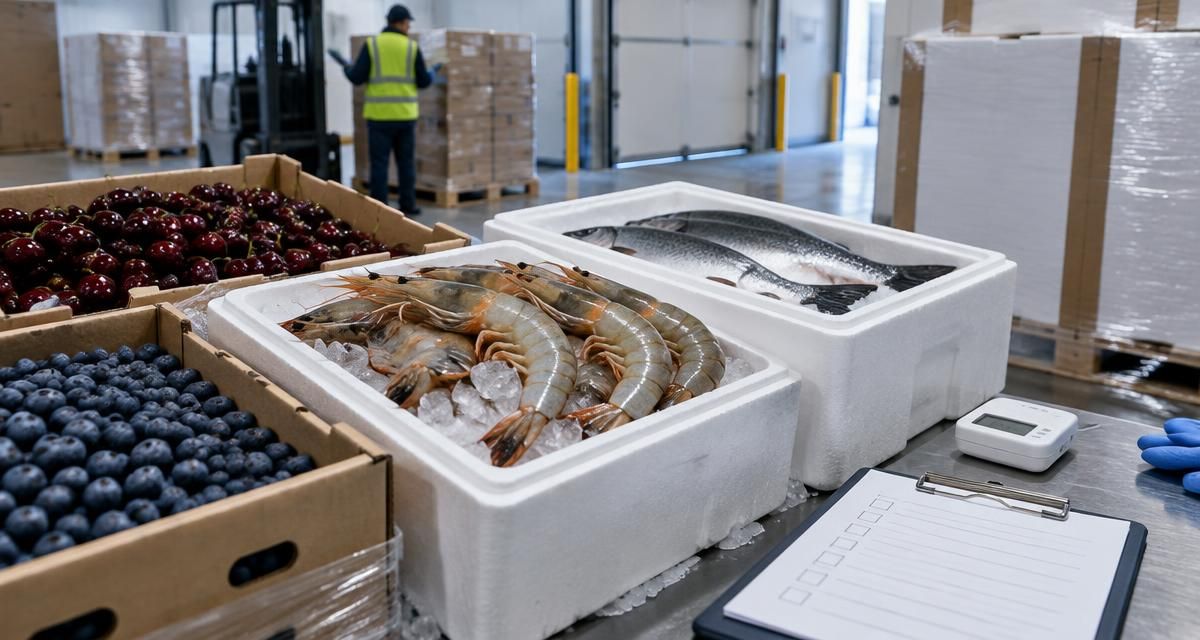
The outcome comes first. Procurement follows.
Plan the production or project → define the output and market → structure a reviewed RFQ → our team approaches suitable counterparties → compare offers. Equipment and production-line procurement remains a separate path: plan an equipment RFQ.
Why premium categories need a checklist, not adjectives
"Premium", "export grade" and "top quality" mean different things to different suppliers. In high-value categories — export-grade cherries and berries, large shrimp, crab, lobster, caviar, premium fish — the useful definition is a list of measurable specifications plus the evidence that proves them. This checklist turns a premium intention into an RFQ that suppliers can quote on equal terms.
Global B2B Group is buyer-first and supplier-neutral. We do not own farms, vessels or stock and do not run an open listing of live inventory. Our role is to review requests, approach suppliers that appear to fit on the buyer's behalf, and return comparable offers.
The premium RFQ checklist
Use the list below as the minimum content. Where you have not decided, write "unknown" so the gap is visible.
- Product: variety or species (with scientific name for seafood), form and end use
- Specification: size or count, grade and the standard it refers to, defect tolerances
- Volume: per shipment, per week or month, and the total for the year or season
- Origin: acceptable and excluded origins; flexibility if one region is short
- Window: first and last arrival dates, peaks you are buying for
- Packing: pack size, labels, pallet pattern, private label
- Cold chain: temperature range, pre-cooling, loggers, transport mode
- Documents and certificates: only those the destination or your customers require
- Trade terms: Incoterms® rule and named place, currency, payment
- Acceptance: inspection point, tolerances, claims procedure
How responsible supplier review works
Review protects both sides. First the request itself is checked: is it complete enough to quote, does it fall inside the platform's scope, and does the total programme value meet the USD 250,000 threshold for assisted sourcing? Then suppliers that appear suitable are approached, and their information — company details, the specification they can meet, documents they can provide — is checked before anything is presented to the buyer.
We describe the result as screened introductions after review. We call a supplier verified only when the evidence for that specific supplier has been reviewed and is shown. Buyer contact details are not shared before review and the buyer's approval.
Comparing offers on equal terms
Offers are only comparable when product, specification, pack, origin window, Incoterms® rule and named place match. An offer that differs on any of these should be treated as an alternative, not ranked against the others. Ask each supplier to confirm what is included in the price and what remains the buyer's responsibility.
What the platform does not do
Global B2B Group does not produce, own or sell the goods, does not guarantee availability, quality, price, delivery, regulatory approval or a transaction, and does not provide legal or customs advice. Buyers and suppliers carry out their own due diligence and contract directly under their own responsibilities. Import, phytosanitary, veterinary and catch-documentation rules depend on the product and the destination; confirm them with the competent authority.
What happens after you submit
Submit through the output sourcing request. Requests are free. Our team reads each one, may ask follow-up questions, and only then approaches suppliers. Requests below USD 250,000 per year or season are recorded but do not enter supplier outreach. Producers and exporters who want to present supply register separately through the partner application and are reviewed on their own track; they never see buyer details by default.
Buyer & seller checklist
Editorial suggestions for a complete request — not legal requirements.
- Product and end use: Variety or species, form, retail/food-service/processing
- Specification: Size or count, grade, standard, tolerances
- Volume: Per shipment, cadence and total programme
- Origin and window: Acceptable origins, arrival dates
- Packing and cold chain: Pack, labels, temperature, loggers
- Documents: Destination and customer requirements only
- Terms and acceptance: Incoterms®, currency, inspection, claims
- Programme value: Total per year or season; assisted sourcing from USD 250,000
Planning the production side? ColdMatch
Where the gap is cold storage, pre-cooling or refrigerated logistics capacity rather than product, our cold-chain specialist platform handles the project.
Go to ColdMatchOptional next step
This guide is free to use. If you have a programme of USD 250,000 or more per year or season, you can send a request for review. A request is not a guarantee of supply, quality, price or a sale.
Request a reviewed supply programmeFrequently asked questions
- Who is this checklist for?
- Importers, wholesalers, retail and food-service buyers and processors planning recurring or seasonal purchases of high-value produce or seafood.
- What is the minimum for assisted sourcing?
- USD 250,000 total programme value per year or season, not per shipment. Requests below that are recorded but not sent to suppliers.
- Do buyers pay?
- No. Buyer requests and buyer tools are free.
- When do I speak with a supplier?
- Only after our team has reviewed the request and the supplier's information, and you have approved the introduction.
- Can a supplier pay to be shown first?
- No. Suppliers cannot pay for inclusion or ranking; offers are presented on comparable terms.
- Where do producers or exporters register?
- Through the separate partner application. Supplier registration and buyer requests are kept apart.
Sources and editorial note
- ICC — Incoterms® rules
- FAO/WHO Codex Alimentarius — food standards
- IPPC — International Plant Protection Convention
- UNECE — Agricultural quality standards for fresh fruit and vegetables
Written by the Global B2B Group project team. Published and last reviewed . Regulatory references are examples and change over time; confirm current requirements for your product and destination with the competent authority. This guide is not legal advice.
Related guides and tools
- Premium cherries: wholesale sourcing guide
- How to specify high-value seafood
- Structuring a cross-border procurement programme
- Printable commodity specification template
- Suppliers and exporters: apply for review
- Output sourcing: request a reviewed supply programme
- Knowledge Center — output procurement checklists
- Business Intelligence Center — official trade and market sources
- Separate path: equipment and production-line RFQ builder
