
Premium & specialty sourcing · 9 min read
Premium Cherries for Wholesale Buyers: How to Specify Grade, Size, Origin and the Export Window
The outcome comes first. Procurement follows.
Plan the production or project → define the output and market → structure a reviewed RFQ → our team approaches suitable counterparties → compare offers. Equipment and production-line procurement remains a separate path: plan an equipment RFQ.
Premium cherries in consumer search versus B2B sourcing
Many people searching for "premium cherries" are shoppers or gift buyers. This guide is written for the other audience: importers, wholesalers, retail-chain category managers, food-service distributors and processors who buy cherries by the pallet or container for a season. For them, premium is not an adjective; it is a set of limits on size, colour, firmness, stem condition and defects that a packer agrees to meet and an inspector can verify on arrival.
Global B2B Group works on the buyer side. We do not grow, pack or hold cherries, and we do not list live stock. Buyers describe the programme, our team reviews it and, when it qualifies, approaches packers and exporters that appear to fit and returns comparable offers. Introductions follow review and your approval; we do not guarantee supply, quality, price or delivery.
Variety, colour, size and grade: the core of a wholesale cherry specification
Name the variety or, if you are flexible, the colour group and firmness you need — dark red, mahogany or bi-colour types behave differently in transit and on shelf. Then state the size. Packers commonly grade by fruit diameter in millimetres or by a row count; write the measure you will use at acceptance so that every offer refers to the same scale.
Grade should refer to a published standard where one exists. The UNECE standard for cherries (FFV-13) sets minimum requirements, quality classes and tolerances that many trading partners reference. Whether your destination or customer uses it, a national standard or a private specification is something to confirm, not assume.
- Variety, or acceptable varieties and colour group
- Minimum diameter in mm (or row count), plus allowed size spread per pack
- Quality class and the standard it refers to; defect tolerances you will accept
- Stem requirement (stem-on or stemless), firmness and minimum soluble solids if your customers specify them
Origin, harvest timing and the export window
Cherries are a short-season crop, so origin and timing are inseparable. Northern- and southern-hemisphere origins harvest in opposite parts of the year, and each producing region has its own early, mid and late windows that move with weather. Ask cherry exporters for their expected window by variety rather than relying on a calendar you found online, and plan for it to shift.
Write your required first and last arrival dates, any holiday or promotional peak you are buying for, and whether you can accept a neighbouring origin if one region is short. Origin and destination concentration is a real commercial risk in this category: when much of a region's crop flows to one market, demand changes there can move prices and availability for everyone. A buyer with more than one acceptable origin and a clear window is easier to quote and less exposed.
Packing, pre-cooling and cold chain
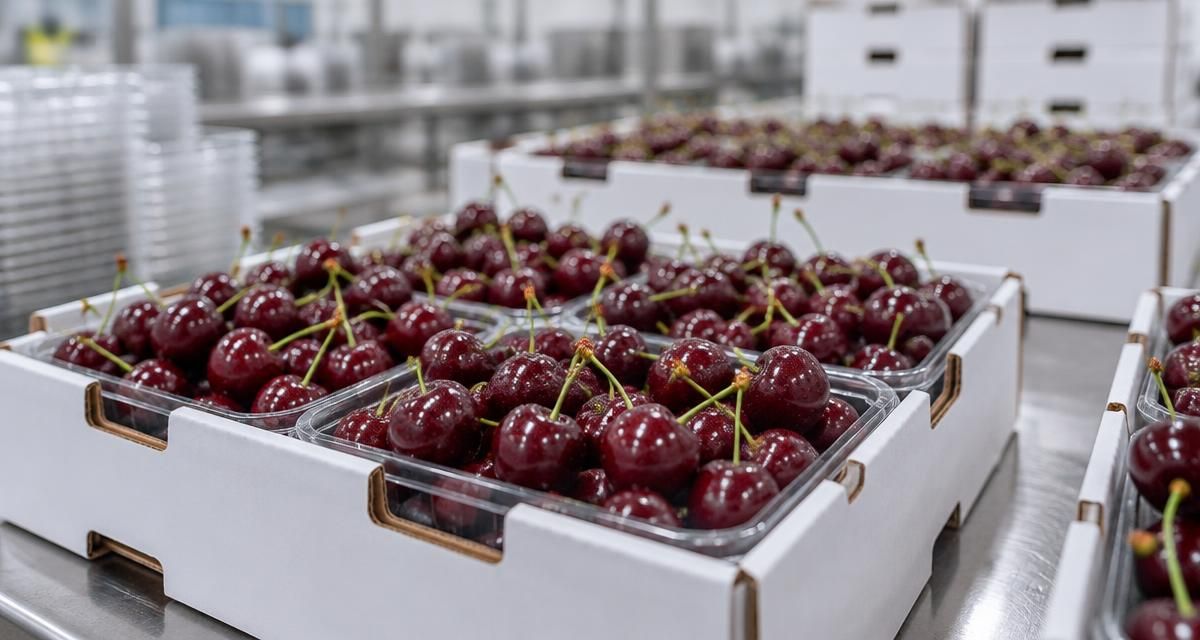
Cherry quality on arrival depends heavily on how quickly the fruit is cooled after harvest and how stable the temperature stays through packing, storage and transport. Your request should state the pack format, labelling and pallet configuration, the transport mode (air or sea) and the temperature records you expect to receive.
- Pack: carton net weight, clamshells or bags, liners, and label language or private label
- Pallet pattern, corner boards and cases per pallet
- Air freight or reefer container; any modified-atmosphere packaging you require
- Temperature logger per pallet or container and who reads it at arrival
Destination documents to verify before the season
Fresh cherries usually travel with a phytosanitary certificate issued by the exporting country's national plant protection organisation under the IPPC framework. Some destinations add market-access protocols, registered orchards or packhouses, pest-specific treatments or pre-clearance inspection. These requirements are set by each destination and change; confirm them with the destination authority and your customs broker for the exact origin–destination pair before you commit to a programme.
Record the documents in the request as buyer requirements: phytosanitary certificate, certificate of origin, any private food-safety or residue certificates your customers require, and the Incoterms® rule with its named place so that responsibility for each step is clear.
From specification to a reviewed sourcing request
Once the specification is written, open the output sourcing request, choose fresh fruit, and enter variety, size, grade, volumes per week, the delivery window, pack, destination and documents. Leave unknown fields blank — they are recorded as "unknown" rather than guessed. Buyer requests are free. Assisted sourcing starts at USD 250,000 total value per year or season, not per shipment; smaller requests are kept on file but do not trigger supplier outreach.
If the real question is cold storage or pre-cooling capacity at destination, that is an infrastructure project handled by ColdMatch, separate from buying the fruit.
Buyer & seller checklist
Editorial suggestions for a complete request — not legal requirements.
- Variety and colour: Named variety or acceptable group
- Size: Minimum diameter (mm) or row count, with spread per pack
- Grade: Quality class and the standard it refers to; defect tolerances
- Origin and window: Acceptable origins, first and last arrival dates
- Volume: Cartons or tonnes per week and total for the season
- Pack: Net weight, clamshell or bag, labels, pallet pattern
- Cold chain: Air or sea, loggers, arrival temperature check
- Documents: Phytosanitary certificate and destination-specific requirements
- Programme value: Total per year or season; assisted sourcing from USD 250,000
Planning the production side? SeedMatch
If the question becomes orchard, greenhouse or planting-material production rather than buying fruit, our specialist platform for crop production inputs handles it.
Go to SeedMatchOptional next step
This guide is free to use. If you have a programme of USD 250,000 or more per year or season, you can send a request for review. A request is not a guarantee of supply, quality, price or a sale.
Request a reviewed supply programmeFrequently asked questions
- Do you sell premium cherries or hold stock?
- No. Global B2B Group is an independent intermediary. We do not grow, pack or hold fruit and do not list live inventory; our team reviews buyer requests and approaches suitable packers and exporters on the buyer's behalf.
- How do I compare offers from different cherry exporters?
- Only on the same terms: same variety group, size measure, grade, pack, Incoterms® rule and named place, and arrival window. Offers that differ on any of these are not like-for-like.
- Which grading standard should I use?
- Use the standard your customers or destination require. The UNECE cherry standard is widely referenced; a national or private specification may apply instead. State it in the request.
- Is there a minimum order for wholesale cherries?
- Requests are free. Assisted sourcing applies to programmes of at least USD 250,000 in total annual or seasonal value — not per shipment.
- Can you guarantee arrival quality?
- No. Quality on arrival depends on harvest, cooling, packing and transport. Buyers and suppliers agree inspection, tolerances and claims directly in their contract.
Sources and editorial note
- UNECE — Standard FFV-13 concerning the marketing and commercial quality control of cherries
- IPPC — International Plant Protection Convention (phytosanitary certification)
- ICC — Incoterms® rules
- FAO/WHO Codex Alimentarius — food standards
Written by the Global B2B Group project team. Published and last reviewed . Regulatory references are examples and change over time; confirm current requirements for your product and destination with the competent authority. This guide is not legal advice.
Related guides and tools
- Premium produce and seafood RFQ checklist
- Sourcing agricultural produce across borders
- Printable commodity specification template
- ColdMatch — cold storage and cold-chain projects
- Output sourcing: request a reviewed supply programme
- Knowledge Center — output procurement checklists
- Business Intelligence Center — official trade and market sources
- Separate path: equipment and production-line RFQ builder