
Buyer guide · Premium & specialty sourcing
Buyer's guide to sourcing premium fresh produce and seafood at scale: cherries, avocados, leafy greens, shrimp, fish and caviar
How commercial buyers turn a premium programme into a specification suppliers can quote — grade, volume, season, origin, packing, cold chain, documents and delivery terms — with a comparison table and an RFQ checklist.
Prepared by the Global B2B Group project team · Published · Last reviewed · English edition
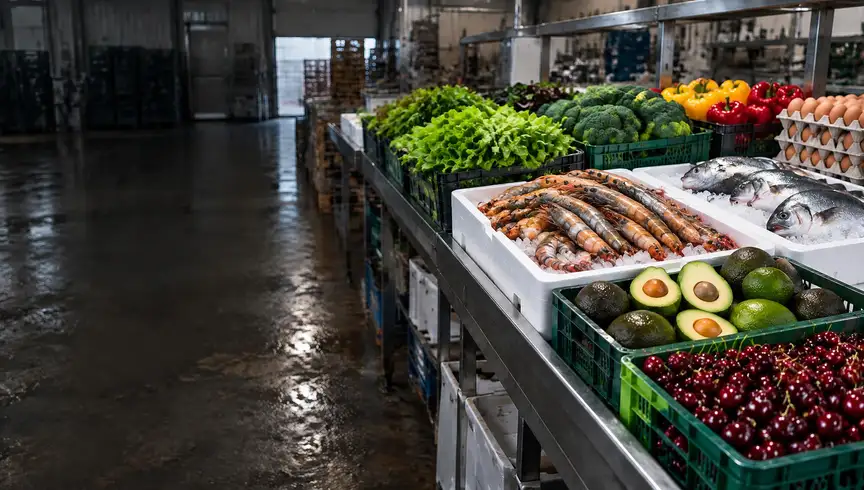
How do you source premium produce and seafood in bulk?
Write one measurable specification per product before you ask for prices: the grade or standard you buy on, size or count, volume per shipment and per season, the arrival window, acceptable origins, pack format, the temperature regime and who records it, the documents your destination requires and the Incoterms® rule with a named place. Send that specification to several suitable suppliers, then compare offers on delivered cost and risk, not on the headline unit price. On Global B2B Group you submit one structured request; our team reviews it and contacts suppliers on your behalf.
Who this guide is for — and the programme minimum
It is written for importers, wholesalers, retail and food-service buyers, processors and project owners who buy premium fruit, vegetables and seafood in recurring commercial volumes, and for procurement teams that have to compare suppliers across origins.
Assisted sourcing on this platform applies to programmes with a declared value of USD 250,000 or more per year or season — not per shipment. Smaller requests are kept on file without supplier outreach. The guides, checklists and calculators are free for anyone.
Step by step: what to define before you request a quote
Suppliers can only quote what you describe. The eight decisions below turn the word "premium" into terms every supplier prices the same way.
1. Name the product and its use
State the product precisely — variety or species, fresh or frozen, whole or processed — and what it is for: retail, food service, further processing or re-export.
- Cherries: variety or colour group (for example dark sweet cherries).
- Avocados: variety (for example Hass) and whether you need ripened or hard fruit.
- Leafy greens: type (head lettuce, romaine, baby leaf, mixed salad), whole head or cut.
- Shrimp: species, wild or farmed, and presentation (head-on, peeled, deveined, tail-on).
- Fish: species, whole or fillet, fresh or frozen.
- Caviar: sturgeon species and wild or aquaculture origin.
2. Fix the grade and measurable specification
Reference a published standard where one exists and add the measurements you will check on arrival.
- Fresh fruit and vegetables: UNECE standards define classes and sizing — for example FFV-13 (cherries), FFV-42 (avocados) and FFV-22 (lettuces and endives).
- Seafood: Codex standards and codes of practice cover handling and, for quick-frozen shrimp, freezing, glazing and net-weight rules.
- State tolerances (how much of a lot may fall outside the band) and the inspection method.
3. Set volume and cadence
Give volume per shipment, number of shipments and total programme volume per season or year, with the tolerance you accept. Suppliers plan harvest, catch or production capacity around these numbers.
4. Plan around season and origin
Premium supply is often seasonal and concentrated. List the arrival weeks you need, the origins you accept or exclude, and whether you accept counter-season or alternative origins to cover gaps.
5. Specify packing and labelling
Name the pack format (carton weight or count, punnets, clamshells, bags, master cartons), pallet configuration, labelling language and any retail-ready requirement. Packing changes both price and how the product survives the journey.
6. Define the cold chain
State the temperature regime (chilled, frozen or deep-frozen), any pre-cooling requirement, transport mode (air or sea reefer), and how temperatures are recorded and shared. Agree who downloads the data and what counts as an excursion.
7. List the import documents
Ask for the documents your destination requires for this product and origin, and confirm them on the official portal before the first shipment.
- Plants and plant products: a phytosanitary certificate where the destination requires one (increasingly exchanged electronically as ePhyto).
- Fishery products into the EU: a health certificate from a listed establishment and, for wild-caught marine products, a validated catch certificate.
- Caviar: CITES permits and the universal caviar label on every primary container.
- United States: foods on the FDA Food Traceability List — which includes leafy greens, finfish and crustaceans — carry additional traceability record requirements.
8. Choose delivery terms and compare on the same basis
Name the Incoterms® rule and place (for example FOB at the port of loading or CIF at the destination port), currency, payment terms and validity. Then convert every offer to the same delivered basis before ranking them.
Comparison table: what to specify for each product
Use this table to brief suppliers consistently across categories. It lists the fields buyers usually need to state — not prices, availability or supplier claims.
| Product | Grade and specification | Packing | Cold chain | Documents to expect | Common watch-out |
|---|---|---|---|---|---|
| Cherries | Variety or colour group, minimum diameter in mm, firmness, stem condition; class under UNECE FFV-13 | Carton or bag weight, punnets for retail, pallet pattern | Chilled; pre-cooling after harvest; air or sea | Phytosanitary certificate where required; origin documents | Short shelf life and a concentrated export window |
| Avocados | Variety, size count, minimum dry matter (UNECE FFV-42 sets 21% for Hass), ripeness on arrival | Count per carton, single-layer or bulk | Chilled; ripening plan at destination | Phytosanitary certificate where required | Maturity and ripening conditions decide eating quality |
| Leafy greens | Type, head weight or count, trim, cut or whole; class under UNECE FFV-22 | Cartons, bags or retail packs; labelling | Chilled, fast handling; short transit | Phytosanitary certificate where required; US traceability records for listed foods | Very short shelf life; food-safety controls on cut product |
| Shrimp | Species, wild or farmed, presentation, count per kg or lb, glaze level | Block or IQF, inner bags, master cartons | Frozen to −18 °C or colder at the thermal centre (Codex) | Health certificate; EU catch certificate for wild-caught; US traceability records | Prices quoted on glazed weight instead of net weight |
| Fish | Species, whole or fillet, size range, fresh or frozen, trim | Boxes on ice (fresh) or frozen cartons | Fresh: chilled close to melting ice; frozen: deep-frozen | Health certificate; EU catch certificate for wild-caught marine fish | Species naming must match the documents exactly |
| Caviar | Sturgeon species, wild or aquaculture, grade, salt content, tin size | Primary tins with CITES label, insulated shipping | Chilled, tightly controlled | CITES permits; universal caviar label on each tin | Label codes and quantities must match the permits |
Season and origin: examples from published data
Windows differ by region, variety and year, so confirm the weeks for your volume with each exporter. Two examples from official reports show why timing belongs in the specification:
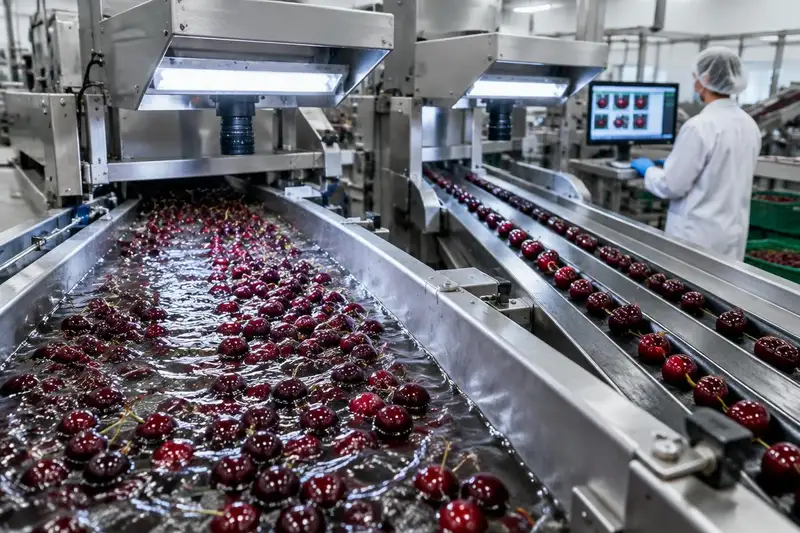
Cherries: USDA reports that historically more than 99% of Chile's fresh cherry exports occur from November through March.
Fresh Peaches and Cherries: World Markets and Trade (September 2024) — USDA Foreign Agricultural Service
Avocados: USDA reports that most of Peru's avocado exports in 2024 occurred between March and August.
Peruvian Avocado Exports Expected to Bounce Back (GAIN PE2025-0005, 16 May 2025) — USDA Foreign Agricultural Service
How to compare supplier offers fairly
Two quotes are comparable only when they describe the same product, grade, pack, volume, delivery term and document set. Normalise each offer before ranking it.
- Convert every price to the same unit (per kg net, per carton of stated weight or count) and the same Incoterms® rule and place.
- Add freight, insurance, duties, inspection and handling where they are not included, using the landed-cost estimator.
- List what each offer leaves out or does not confirm — missing documents, open pack details, unconfirmed shipping windows.
- Weigh risk alongside price: concentration on one origin, seasonal capacity, temperature-record arrangements and claims terms.
Common mistakes buyers make
- Asking for "premium quality" without a standard, class, size or tolerance — suppliers then quote different products.
- Comparing frozen seafood prices without checking whether they are on glazed or net weight.
- Fixing volume without an arrival window, or a window that falls outside the origin's export season.
- Leaving packing and labelling open until after the price is agreed.
- Assuming documents: not confirming phytosanitary, health, catch or CITES requirements for the exact product and destination.
- No agreed temperature record or excursion definition, so claims cannot be settled.
- Comparing an FOB price with a CIF or delivered price as if they were the same.

RFQ checklist for premium produce and seafood
Copy this list into your brief, download it, or use it to complete the request form. Mark anything you cannot yet confirm as open — reviewers can still help.
Ready to request quotes?
Send one structured request for your programme. Our team reviews the specification, approaches suitable suppliers on your behalf and returns offers you can compare on the same basis. Buyers pay nothing; assisted sourcing applies to programmes of USD 250,000 or more per year or season. Supplier identities are shared only after review and with your approval.
Frequently asked questions
How do I buy premium cherries, avocados or shrimp in bulk?
Write a measurable specification for each product — grade or standard, size or count, volume per shipment and per season, arrival window, origins, pack, temperature regime, documents and Incoterms® rule — and request quotes from several suitable suppliers on that same basis. On this platform you submit one structured request and our team approaches suppliers for you.
What is the minimum order for assisted sourcing?
Assisted sourcing applies to programmes with a declared value of USD 250,000 or more per year or season, not per shipment. Smaller requests are kept on file without supplier outreach. Reading the guides and using the tools is free.
Can I get supplier contact details directly?
No. Global B2B Group runs supplier outreach on the buyer's behalf. Supplier identities are shared only after our team has reviewed the request and you have approved an introduction.
Which documents do I need to import shrimp or fish into the EU?
Fishery products need a health certificate from an approved, listed establishment, and wild-caught marine products also need a validated catch certificate, submitted by EU importers through the CATCH system. Confirm the exact requirements for your product and origin with the competent authority before shipping.
How do I compare offers from different origins?
Convert each offer to the same product definition, unit, pack and delivery term, add the costs not included, and list what each offer leaves unconfirmed. Then compare delivered cost and risk rather than the headline price.
Does Global B2B Group guarantee quality or delivery?
No. Global B2B Group is a buyer-side sourcing intermediary. Quality, inspection, delivery and claims are agreed between buyer and supplier in their contract; our team reviews requests and coordinates supplier outreach.
Sources
- UNECE Standard FFV-13 — cherries — UNECE · checked 23 October 2026
- UNECE Standard FFV-42 — avocados, 2023 edition (issued 15 March 2024) — UNECE · checked 23 October 2026
- UNECE Standard FFV-22 — lettuces, curled-leaved and broad-leaved endives, 2023 edition — UNECE · checked 23 October 2026
- Standard for Quick-Frozen Shrimps or Prawns (CXS 92-1981) — FAO/WHO Codex Alimentarius · checked 23 October 2026
- Code of Practice for Fish and Fishery Products (CXC 52-2003) — FAO/WHO Codex Alimentarius · checked 23 October 2026
- Fresh Peaches and Cherries: World Markets and Trade (September 2024) — USDA Foreign Agricultural Service · checked 23 October 2026
- Peruvian Avocado Exports Expected to Bounce Back (GAIN PE2025-0005, 16 May 2025) — USDA Foreign Agricultural Service · checked 23 October 2026
- International Plant Protection Convention — phytosanitary certification — IPPC / FAO · checked 23 October 2026
- FAQs — Certification (health certificates for fishery products) — European Commission, DG SANTE · checked 23 October 2026
- Illegal fishing — the EU IUU Regulation and the CATCH IT system — European Commission, Oceans and Fisheries · checked 23 October 2026
- Resolution Conf. 12.7 (Rev. CoP17) — universal labelling system for caviar — CITES Secretariat · checked 23 October 2026
- Food Traceability List — U.S. Food and Drug Administration · checked 23 October 2026
- Incoterms® rules — International Chamber of Commerce · checked 23 October 2026
This guide is general buyer education. It is not legal, customs, veterinary or phytosanitary advice and names no supplier. Requirements depend on the exact product, origin, destination and date — confirm them with the competent authority or your customs broker. Global B2B Group is a buyer-side sourcing intermediary: it does not grow, catch, process, pack, own, export, import, ship, certify or insure the goods, and it does not guarantee availability, quality, compliance, delivery or price.