
Output sourcing · 8 min read
How to Read a Frozen Shrimp Quote: Count Size, Presentation, Glaze and Net Weight
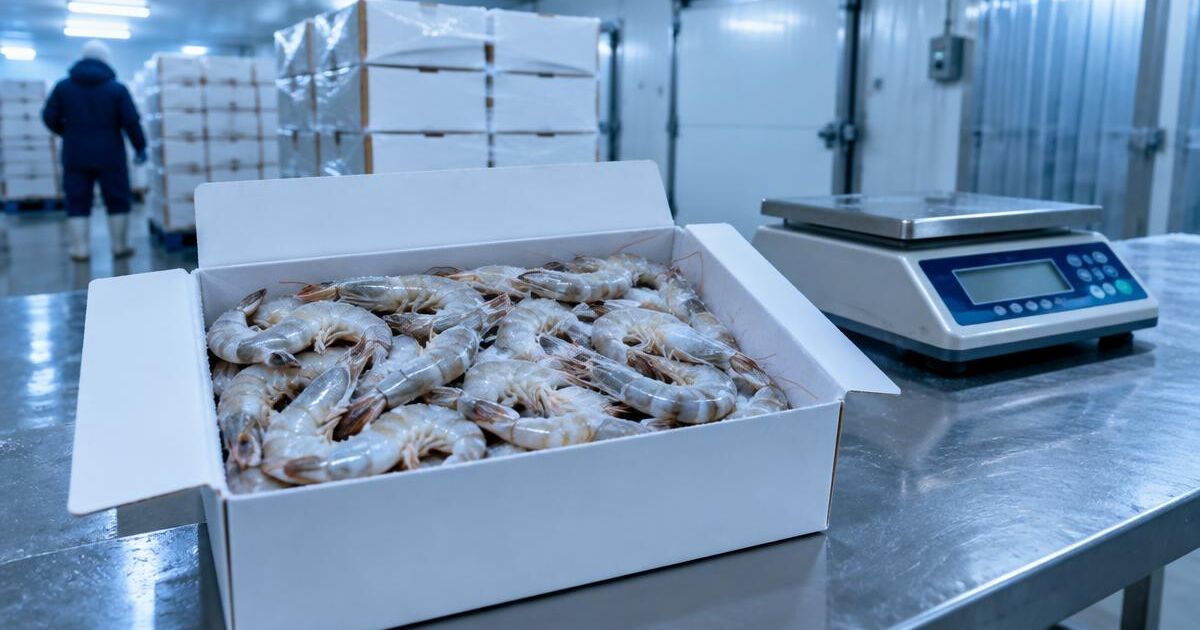
Buyers looking for wholesale shrimp prices quickly find that two quotes for the same count can describe very different amounts of shrimp.
The outcome comes first. Procurement follows.
Plan the production or project → define the output and market → structure a reviewed RFQ → our team approaches suitable counterparties → compare offers. Equipment and production-line procurement remains a separate path: plan an equipment RFQ.
Species and origin come first
Name the species by common and scientific name. Most farmed shrimp in international trade is whiteleg shrimp (Penaeus vannamei, also written Litopenaeus vannamei); black tiger shrimp (Penaeus monodon) is usually offered in larger sizes; wild-caught species differ again. "Shrimp" and "prawn" are used differently from market to market, so the scientific name avoids confusion.
State whether you need farmed or wild-caught product and which origins you accept. Your customers or destination may set requirements on origin, traceability or certification — list them as requirements and ask suppliers to evidence them.
Presentation codes
The presentation changes yield and price per kilogram, so it must be identical across offers. Common trade codes:
- HOSO — head-on, shell-on
- HLSO — headless, shell-on
- PUD — peeled, undeveined
- PD — peeled and deveined
- PDTO / PTO — peeled, deveined (or not) with tail on
- EZ peel — shell cut and deveined for easy peeling
- Butterfly, skewered, breaded or cooked formats — describe the exact preparation
Count size: pieces per unit of weight
A count such as 21/25 means 21 to 25 pieces in one unit of weight. The unit matters: 21/25 per pound and 21/25 per kilogram are very different sizes. A count also depends on the state of the product — raw or cooked, headless or head-on, with or without glaze — so state which one the count refers to.
Ask for the uniformity you need as well: the range within a carton, and how the count will be checked at arrival.
Glaze and net weight: where most price differences hide
Frozen shrimp is usually protected by a thin coating of ice, the glaze. A carton described as 10 kg may contain 10 kg of shrimp plus glaze, or 10 kg including glaze. Two offers at the same price per kilogram can therefore deliver different quantities of shrimp.
Fix the basis in the RFQ: the maximum glaze you accept, and that weights and prices are net of glaze. In the EU, for example, the declared net weight of glazed food must exclude the glaze; check the labelling and net-content rules of your own market. Agree how net weight will be checked (thawing and weighing method) before the first shipment.
Raw or cooked, freezing and treatment
State raw or cooked, and IQF (individually quick frozen) or block frozen. If your market or customers restrict processing aids or additives, write that as a requirement and ask the supplier to declare what is used. Specify the storage temperature in the contract and how it will be monitored in transit.
Packing, volume and terms
Give inner pack and master carton weights, labelling (including private label), pallet pattern, the volume per container and the delivery frequency. Ask every supplier to quote under the same Incoterms® rule and named place, or convert each offer to a delivered cost yourself, as explained in the guide to comparing FOB, CFR and CIF quotes.
Global B2B Group does not publish shrimp prices or market rates. For programmes with a declared value from USD 250,000 per year or season, our team sends your specification to suitable suppliers and returns their offers on the same basis.
Buyer & seller checklist
Editorial suggestions for a complete request — not legal requirements.
- Species and origin: Common and scientific name; farmed or wild; accepted origins
- Presentation: HOSO, HLSO, PUD, PD, PDTO or exact preparation
- Count: Range and unit (per lb or per kg) and the state it refers to
- Glaze: Maximum glaze; weights and price net of glaze; check method
- State: Raw or cooked; IQF or block; declared additives
- Packing and terms: Inner and master carton, labels, volume, Incoterms® and place
Planning the production side? FishMatch
Our specialist platform for shrimp farms, hatcheries, processing plants and other aquaculture projects.
Go to FishMatchOptional next step
This guide is free to use. If you have a programme of USD 250,000 or more per year or season, you can send a request for review. A request is not a guarantee of supply, quality, price or a sale.
Request a reviewed supply programmeFrequently asked questions
- What does 16/20 HLSO mean?
- Headless, shell-on shrimp with 16 to 20 pieces per unit of weight. Confirm whether the unit is the pound or the kilogram and whether the count refers to the glazed or net product.
- Why is one supplier much cheaper for the same count?
- Common reasons are a higher glaze, a gross rather than net weight basis, a different presentation, a different Incoterms® rule, or a different species or origin. Convert the offers to the same net, delivered basis before comparing.
- Do you publish wholesale shrimp prices?
- No. Prices depend on species, size, presentation, glaze, origin, season and terms; suppliers quote against your specification after our team has reviewed the request.
- What is the minimum for a shrimp sourcing request?
- A declared programme value from USD 250,000 per year or season. Smaller requests are kept on file but do not move to supplier outreach.
Sources and editorial note
- EUR-Lex — Regulation (EU) No 1169/2011 on food information to consumers, Annex IX point 5 (net weight of glazed food)
- ICC — Incoterms® rules
Written by the Global B2B Group project team. Published and last reviewed . Regulatory references are examples and change over time; confirm current requirements for your product and destination with the competent authority. This guide is not legal advice.
Related guides and tools
- Wholesale shrimp and prawn sourcing
- How to compare FOB, CFR and CIF quotes
- How to specify high-value seafood
- Product specification builder
- Output sourcing: request a reviewed supply programme
- Knowledge Center — output procurement checklists
- Business Intelligence Center — official trade and market sources
- Separate path: equipment and production-line RFQ builder