
Output sourcing · 9 min read
How to Compare FOB, CFR and CIF Quotes for Produce and Seafood: Landed Cost per Usable Kilogram
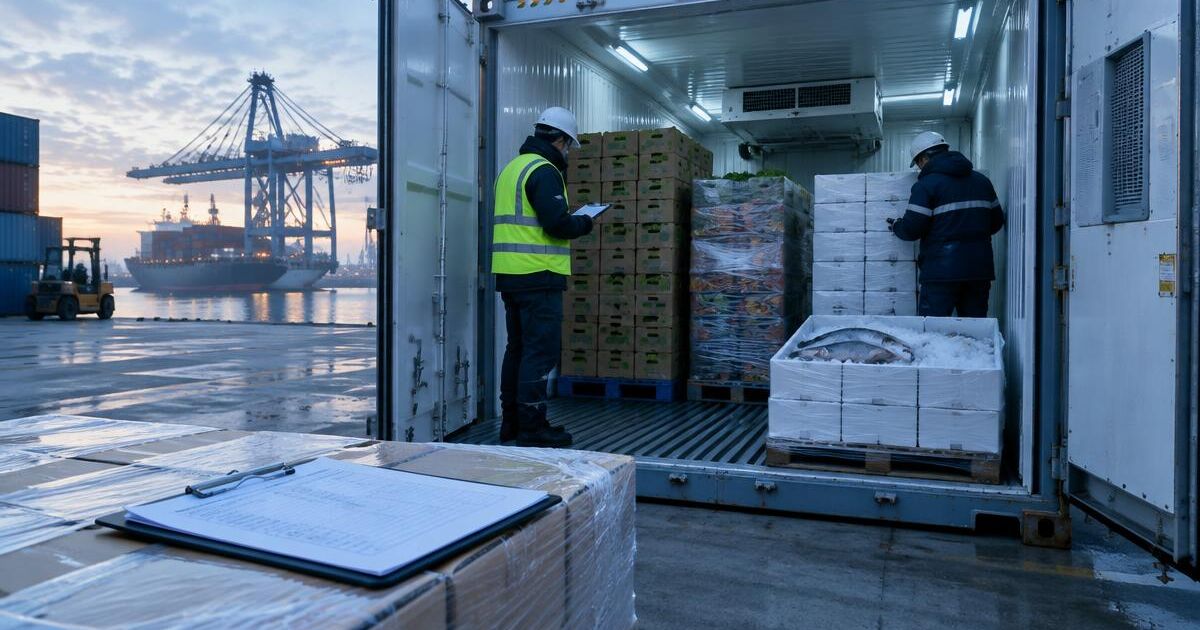
Two suppliers quote the same avocados or the same frozen fish, one FOB and one CIF, and the lower number is not necessarily the cheaper delivery.
The outcome comes first. Procurement follows.
Plan the production or project → define the output and market → structure a reviewed RFQ → our team approaches suitable counterparties → compare offers. Equipment and production-line procurement remains a separate path: plan an equipment RFQ.
Why the lowest quoted price is often not the lowest delivered cost
Agri-food quotes arrive on different bases. One exporter prices FOB at the port of loading, another CFR or CIF at your port, a third delivered to your warehouse. Some quote per kilogram of net product, others per carton, and frozen seafood may be priced on a weight that includes the ice glaze. Until those differences are removed, comparing the headline numbers ranks the terms, not the offers.
Global B2B Group returns supplier offers side by side on the same basis, but the method below works for any buyer comparing quotes, with or without us.
Step 1: Read the Incoterms® rule and the named place
An Incoterms® rule says which party arranges and pays for which part of the journey, and where risk passes from seller to buyer. It is only meaningful together with a named place, for example "CFR Rotterdam" or "FOB Callao". Always check which edition the contract refers to; the ICC publishes the rules and their official guidance.
- FOB (named port of shipment): the seller delivers the goods on board the vessel; the buyer arranges and pays main freight and insurance from there.
- CFR (named port of destination): the seller pays freight to the destination port, but risk passes to the buyer once the goods are on board at the port of shipment.
- CIF (named port of destination): as CFR, plus the seller buys cargo insurance for the buyer — check the level of cover against what you need.
- FOB, CFR and CIF are rules for sea and inland waterway transport. For goods handed over in a container at a terminal, the ICC points buyers to FCA, CPT or CIP instead; many quotes still use the older terms, so ask the supplier which point of delivery they actually mean.
- DAP and DDP put the delivery point at the destination. Under DAP the buyer still clears imports and pays duties; under DDP the seller does.
Step 2: Put every offer on the same unit and weight
Convert all prices to one unit — usually the net kilogram, or the carton when every offer uses the same carton and net weight. Write the conversion down so the team can check it.
- Net versus gross weight: a carton price must state the net weight of product inside.
- Glazed frozen seafood: confirm whether the weight and price are net of glaze. In the EU, for example, the declared net weight of glazed food must exclude the glaze.
- Count-based products (shrimp, eggs, some fruit): keep the count and the weight basis together, e.g. pieces per kilogram on the same frozen or cooked state.
- Currency: convert at one rate you choose and record it; the rate is your assumption, not part of the offer.
Step 3: Add what you still pay under each rule
Build the delivered cost for each offer from the same list of cost lines. Use figures from your forwarder, insurer, broker and customs authority — not averages from the internet.
- Main freight (reefer or dry), if not included
- Cargo insurance, if not included or if the included cover is too low
- Destination terminal handling, port and documentation charges
- Import duties and taxes for the product's tariff classification and origin
- Inspection, sampling, laboratory or veterinary and plant-health fees, where they apply
- Inland transport and cold storage to your warehouse
- Financing cost of payment terms if they differ between offers
Step 4: Divide by the quantity you can actually use
Fresh produce loses weight and some product will be rejected or downgraded; seafood can arrive with more glaze or lower yield than expected. A planning assumption for the usable share makes those risks visible instead of hiding them in the price.
Landed cost per usable unit = total delivered cost ÷ (net quantity × usable share). If your assumption is that 95% of the net quantity is saleable, the usable share is 0.95. The percentage is your own estimate from past deliveries or contract tolerances; agree claims rules with the supplier rather than relying on the assumption.
Step 5: Rank only offers that describe the same product
An offer with a different variety, size, presentation, pack or arrival window is an alternative, not a cheaper version of the same thing. List it separately with the difference stated. Then rank the like-for-like offers by landed cost per usable unit, and weigh lead time, payment terms, documents and the supplier's evidence alongside the number.
The free agricultural landed-cost estimator applies this method to up to several quotes using only the figures you enter, and shows each step of the calculation.
Buyer & seller checklist
Editorial suggestions for a complete request — not legal requirements.
- Rule and place: Incoterms® rule, named place and edition for every quote
- Unit: Net kilogram or identical carton; glaze and count basis stated
- Freight and insurance: Added where the rule leaves them with the buyer
- Destination costs: Port, documents, inspections, duties, inland transport
- Usable share: Your own assumption for rejections, shrink or yield
- Like for like: Different products listed as alternatives, not ranked
Planning the production side? the agricultural products buyer center
Category pages for fresh produce, fish and seafood, shrimp and prawns, and poultry and eggs, each with a reviewed request path.
Go to the agricultural products buyer centerOptional next step
This guide is free to use. If you have a programme of USD 250,000 or more per year or season, you can send a request for review. A request is not a guarantee of supply, quality, price or a sale.
Request a reviewed supply programmeFrequently asked questions
- Is a CIF price always higher than an FOB price for the same goods?
- Usually the number is higher because it includes freight and insurance, but the delivered cost may be lower if the supplier's freight rate is better than yours. Compare delivered cost, not the headline price.
- Should I use FOB or FCA for containerised produce?
- The ICC indicates that FOB, CFR and CIF suit goods loaded on board a vessel, and recommends FCA, CPT or CIP when goods are handed over in a container at a terminal. Agree the rule and delivery point explicitly in the contract.
- Where do the duty and freight figures come from?
- From your own forwarder, insurer, customs broker and the official tariff of the destination. Global B2B Group does not supply market prices, freight rates or duty rates.
- Can Global B2B Group compare the offers for me?
- Yes, for supply programmes with a declared value from USD 250,000 per year or season. Our team returns offers side by side on the same basis; the decision stays with you.
Sources and editorial note
Written by the Global B2B Group project team. Published and last reviewed . Regulatory references are examples and change over time; confirm current requirements for your product and destination with the competent authority. This guide is not legal advice.
Related guides and tools
- Agricultural landed-cost estimator
- How to read a frozen shrimp quote
- Wholesale fresh produce sourcing
- Wholesale fish and seafood sourcing
- Output sourcing: request a reviewed supply programme
- Knowledge Center — output procurement checklists
- Business Intelligence Center — official trade and market sources
- Separate path: equipment and production-line RFQ builder