

Wholesale fish and seafood sourcing for B2B buyers
Farmed and wild-caught fish, shellfish and cephalopods, fresh, chilled or frozen, for importers, retailers, food service and processors.
The short answer
Global B2B Group helps commercial buyers source fish and seafood through one reviewed request. You state species, wild or farmed origin, product form, size, freezing, packing, volume and destination; our project team checks the request and, for programmes with a declared value from USD 250,000 per year or season, contacts suitable producers, processors and exporters on your behalf and returns comparable offers. We do not fish, farm, process, import or ship seafood, and supplier contact runs through our team. The service is free for buyers.
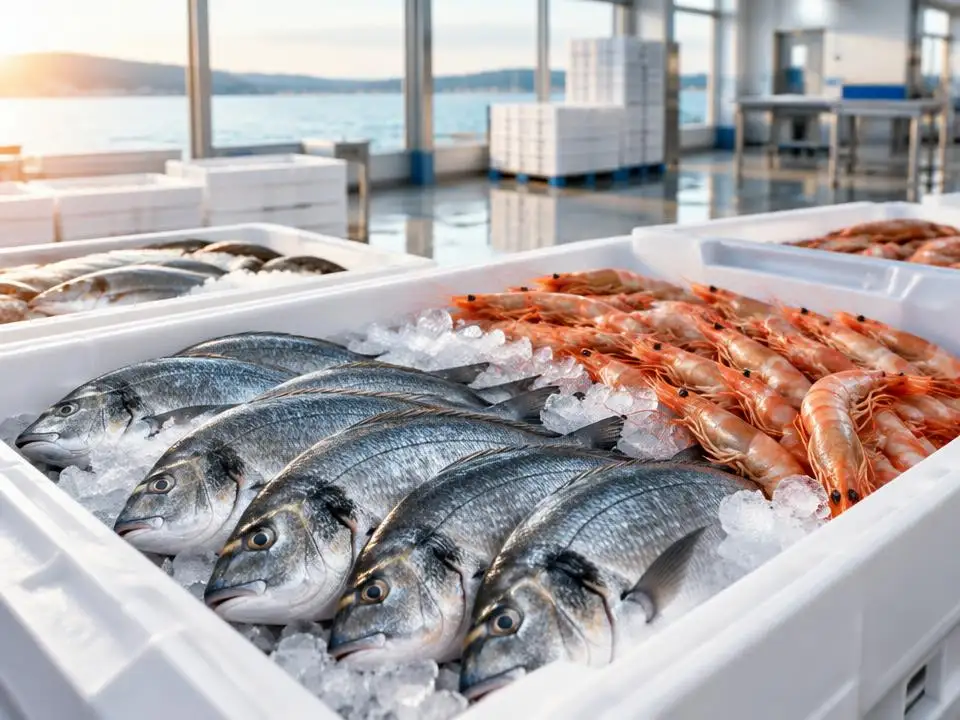
What you can request
Requests are reviewed by species and product form. Typical groups:
Farmed fish
Salmon, trout, sea bass, sea bream, tilapia, pangasius and other aquaculture species.
Wild-caught fish
Whitefish such as cod, hake and pollock, and pelagic species such as tuna and mackerel.
Shellfish and cephalopods
Mussels, crab, lobster, squid and octopus.
Processed formats
Fillets, portions, loins and other formats cut to your specification.
Who uses this
- Seafood importers and distributors
- Retail chains with fresh-counter or frozen ranges
- Food-service and catering buyers
- Processors and re-packers buying raw material
What a supplier needs to quote
Seafood offers are only comparable when every supplier quotes the same product:
- Species
- Common and scientific name, because trade names differ between markets.
- Origin and method
- Wild-caught or farmed, and any required catch area or country of origin.
- Product form
- Whole, gutted, headed and gutted, fillet skin-on or skinless, portions or loins.
- Size
- Weight range per fish or piece, or the size grade you buy against.
- State and freezing
- Fresh, chilled or frozen; IQF, block or interleaved; the glaze you accept and whether weights are net of glaze.
- Packing and volume
- Inner and outer packing, net weight per carton, labelling, volume per shipment and frequency.
- Cold chain, terms and documents
- Storage and transit temperature, Incoterm and port, health and traceability documents your market requires.
Open the request form for
Programme value check
Multiply your own figures to see whether the request reaches the USD 250,000 minimum for an assisted RFQ.
Enter all three figures as positive numbers to see the result.
Calculated only from the figures you enter. It is not a price, quote or approval.
How a sourcing request works
1. Define
Describe the product, specification, volume per delivery, frequency, season, packaging, destination and Incoterm in the free request form.
2. Declare the programme value
State the total annual or seasonal value. Programmes from USD 250,000 move to supplier outreach; smaller requests are kept on file.
3. Review
Our project team checks the request for completeness and fit and asks clarifying questions before anyone is contacted.
4. Compare and decide
We approach suitable producers, packers or exporters on your behalf and return their offers side by side. Any introduction happens only with your approval.
Free tools for this request
Buyer questions
What is the minimum for a seafood sourcing request?
A declared programme value from USD 250,000 per year or season. Smaller requests are kept on file but do not move to supplier outreach.
Can I request both farmed and wild-caught seafood?
Yes. State which you need, or whether you accept either. Availability depends on species, season, quotas and supplier capacity, so we cannot promise a particular origin will be offered.
Will suppliers contact me directly?
No. Our project team handles outreach and responses on your behalf. You decide whether and when to proceed with any supplier.
Which documents should I plan for?
That depends on species and destination. Examples are health certificates and, for wild-caught products in some markets, catch documentation such as the EU catch-certificate scheme or the U.S. Seafood Import Monitoring Program for listed species. Confirm the exact list with the competent authority.
Where do shrimp and prawns fit?
Shrimp and prawns use the same request form, but they have their own page because count size, presentation and glaze change how quotes compare.
What this service does not do
- We do not grow, catch, farm, pack, import, export or ship products, and we do not hold stock.
- We do not publish supplier lists, contact details, live offers or market prices.
- Availability, price and delivery depend on season, origin, health rules and supplier capacity; nothing on this page is an offer or a guarantee.
- Offers are returned as received. Our comparison does not certify quality, food safety, certification status or delivery performance.
- Import rules, duties and documents depend on the product and destination; confirm them with the competent authority.
Other product categories
Farm and plant projects
Planning a fish farm, hatchery, RAS or processing plant instead? Our specialist platform FishMatch covers aquaculture and seafood projects.
FishMatchBuying equipment or a production line instead?
Packing lines, processing lines and special machines are a separate service of Global B2B Group with their own RFQ.
Agricultural production linesReady to send your requirement?
One free request, reviewed by our project team before any supplier is contacted.
Start a sourcing request