
Output sourcing · 11 min read
From Farm to Wholesale Buyer: How to Source Agricultural Produce Across Borders
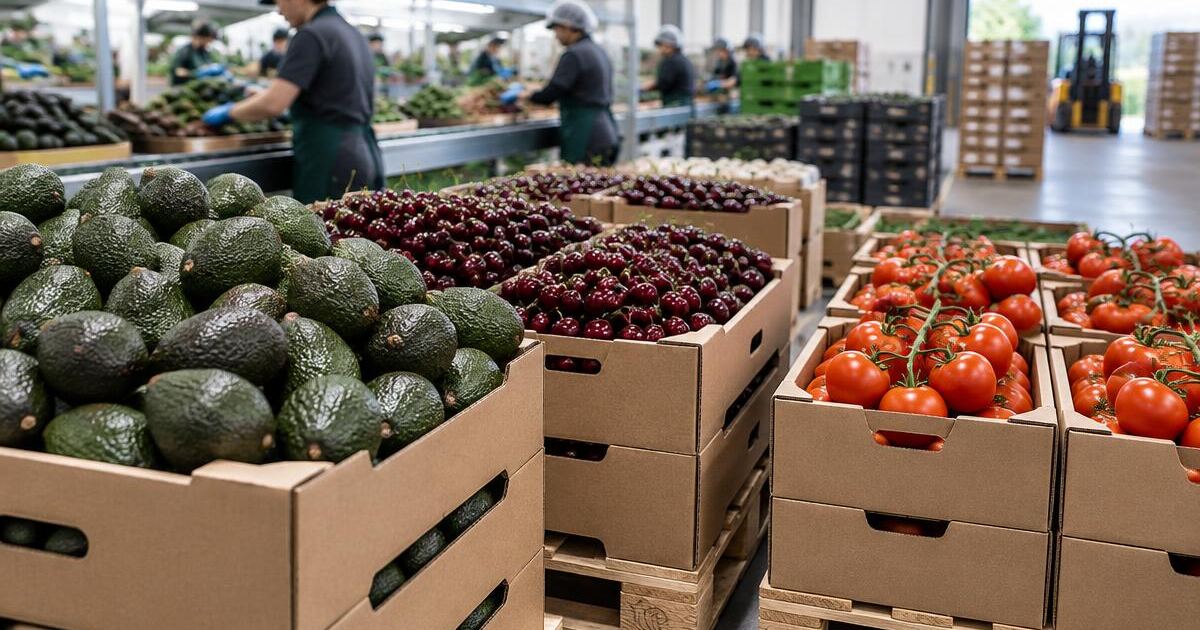
The outcome comes first. Procurement follows.
Plan the production or project → define the output and market → structure a reviewed RFQ → our team approaches suitable counterparties → compare offers. Equipment and production-line procurement remains a separate path: plan an equipment RFQ.
How the farm-to-buyer chain works when you source through us
Cross-border produce moves through several hands: the grower, a packhouse that grades, cools and packs, an exporter that handles documents and bookings, a carrier, the importer of record and finally the wholesale, retail or food-service buyer. Each link adds requirements, and most sourcing problems start where one link assumes something the next did not agree to.
Global B2B Group sits on the buyer side of that chain. You tell us what you need; our team reviews the request, approaches growers, packhouses and exporters that appear to fit, asks them to quote against your specification and returns the offers in one comparable format. Introductions happen only after review and with your approval. Contracts, payment, inspection and delivery are agreed directly between buyer and supplier — we do not take title to goods, act as producer or exporter of record, or take on producer responsibility.
Step 1: Write the buyer brief before you contact anyone
A brief is the document every supplier quotes against. Without it, one exporter prices Class I fruit in 4 kg cartons delivered to your port while another prices Class II in bulk bins at the farm gate, and the numbers cannot be compared. Keep it to one or two pages and write it from the point of view of your own customer.
- End use: retail pack, food-service, further processing, ripening programme or re-export
- Product, variety and type — for example Hass avocado, cherry tomatoes on the vine, Lapins or Santina cherries
- Programme shape: one trial shipment, a seasonal programme or year-round supply across several origins
Step 2: Specify product, grade, size and quality
Name the variety rather than the crop wherever your customers care about it, and refer to a recognised marketing standard so both sides read the grade the same way. UNECE standards for fresh fruit and vegetables are widely used in international trade; many importing countries also apply national standards. State the standard you mean rather than assuming the supplier uses yours.
- Class or grade (for example Extra, Class I, Class II) and the standard it refers to
- Size or calibre band — avocado count per carton, cherry diameter in millimetres, tomato size code
- Ripeness or colour stage at packing and the minimum shelf life you need on arrival
- Defect tolerances and quality parameters such as dry matter for avocados or firmness for cherries, if your market uses them
- Residue limits of the destination market — the buyer should state the market, the supplier must show compliance
Step 3: Volume, harvest window and origin
Most produce is seasonal, so volume only makes sense together with timing. Give the weekly volume, the number of weeks and the total season, and say whether you can accept a ramp-up. Then list the origins you would accept. Counter-seasonal sourcing — for example combining Northern and Southern Hemisphere origins for cherries or avocados — can extend a programme, but each origin has its own harvest calendar, documents and transit time.
- Volume per week, number of weeks and total programme volume
- Required arrival window and how much variation you can accept
- Preferred origins and whether you are open to alternatives
- Trial shipment size before a full programme
Step 4: Packaging, temperature and transit
Packaging and temperature decide whether the fruit arrives saleable. Specify the pack type, net weight, labelling language and pallet configuration, and how you want the product cooled after harvest. Different crops need different storage temperatures and some, such as tomatoes and avocados, are sensitive to chilling injury, so ask the supplier to state the temperature and humidity they will hold and the maximum transit time they can support.
- Carton or crate type, net weight per unit, labelling and barcodes
- Pallet height, cartons per pallet and pallets per container
- Pre-cooling method and set-point temperature during transit — confirmed by the supplier for that crop
- Mode of transport (reefer sea freight or air) and maximum door-to-door time
Step 5: Logistics terms and import requirements
State the Incoterms® rule and named place you want quotes on — for example FOB at the port of loading or CIF at your port — so you can compare like with like and see who arranges freight and insurance. Then list the documents your import market requires. Plant products usually need a phytosanitary certificate issued under the IPPC framework; many markets also require import permits, pest-free area or treatment conditions, certificates of origin and food-safety checks at the border. Requirements differ by product, origin and destination, so confirm them with the competent authority for your route.
Step 6: Submit a qualified sourcing request
When the brief is ready, submit it through our produce sourcing request. Choose the product category, enter the specification, volumes, origin, destination and trade terms, and declare the total programme value. Managed sourcing — where our team approaches suppliers for you — applies to programmes of at least USD 250,000 total value per year or season. Smaller requests are kept on file and reviewed, but do not enter supplier outreach.
After you submit, a person on our team reads the request and may ask clarifying questions. If it qualifies, we approach growers and exporters that fit and return comparable offers. Your name and contact details are not shared with any supplier until you approve an introduction. Producers who want to offer supply use a separate producer registration and review; they do not see buyer requests directly.
When production, packing or cold-chain capacity matters
Some buyers go further than imports: they plan their own greenhouse, packhouse or ripening and cold-storage capacity. Those are separate projects. Crop, greenhouse and seed planning is covered by SeedMatch; packing, grading and pre-cooling lines can be planned through our equipment RFQ; cold-storage and transport infrastructure is handled by ColdMatch. These solutions complement produce sourcing — they are not required to send a sourcing request.
Buyer & seller checklist
Editorial suggestions for a complete request — not legal requirements.
- End use and buyer type: Retail, food-service, processing or re-export; who your customer is
- Product and variety: Crop, variety, type and any variety your customers will not accept
- Grade and size: Class, the standard it refers to, size or count band, defect tolerances
- Quality on arrival: Ripeness stage, minimum shelf life, market-specific quality parameters
- Volume and season: Per week, number of weeks, total programme, trial shipment
- Origins: Preferred origins and openness to alternatives
- Packaging: Pack type, net weight, labelling, pallet configuration
- Temperature and transit: Supplier-confirmed set-point, transport mode, maximum transit time
- Trade terms: Incoterms® rule and named place for every quote
- Documents: Phytosanitary certificate and other destination requirements — confirmed with the authority
- Declared value: Total annual or seasonal programme value; managed sourcing from USD 250,000
Planning the production side? SeedMatch
Our specialist platform for crops, greenhouses, seed and propagation — useful when a buyer wants to understand how a crop is produced, or plans its own growing capacity alongside imports.
Go to SeedMatchOptional next step
This guide is free to use. If you have a programme of USD 250,000 or more per year or season, you can send a request for review. A request is not a guarantee of supply, quality, price or a sale.
Request a reviewed supply programmeFrequently asked questions
- Does Global B2B Group sell avocados, tomatoes or cherries?
- No. We are a buyer-side intermediary. We do not grow, own, store or ship produce and we hold no inventory. Our team reviews your request, approaches suitable growers and exporters and returns comparable offers; the contract is between you and the supplier.
- What is the minimum programme size?
- Managed sourcing applies to programmes with a total value of at least USD 250,000 per year or season. Smaller requests are kept on file and reviewed but do not enter supplier outreach. Sending a request is free for buyers.
- Can I contact the growers directly?
- Not through the platform before review. Introductions are made only after our team has reviewed the request and you approve a specific introduction. Neither side receives the other's contact details before that.
- Do you guarantee supply or prices?
- No. Availability, price and quality depend on the season, origin, specification and the suppliers' own commitments. We help you obtain and compare offers; we do not guarantee supply, quality, price or a completed transaction.
- Which documents will my shipment need?
- It depends on the product, origin and destination. Plant products typically need a phytosanitary certificate; import permits, origin certificates and food-safety checks are also common. Confirm the current requirements with the competent authority for your route.
Sources and editorial note
- UNECE — Standards for fresh fruit and vegetables
- International Plant Protection Convention (IPPC)
- USDA AMS — Fruit grade standards (U.S. example)
- USDA AMS — Vegetable grade standards (U.S. example)
Written by the Global B2B Group project team. Published and last reviewed . Regulatory references are examples and change over time; confirm current requirements for your product and destination with the competent authority. This guide is not legal advice.
Related guides and tools
- Wholesale produce sourcing checklist
- How to source farmed fish and shrimp for wholesale markets
- Poultry and egg sourcing: producers, buyers and production capabilities
- Separate path: sourcing a produce packing and pre-cooling line
- Agri-food import markets: recorded demand by destination
- ColdMatch — cold-chain infrastructure
- Output sourcing: request a reviewed supply programme
- Knowledge Center — output procurement checklists
- Business Intelligence Center — official trade and market sources
- Separate path: equipment and production-line RFQ builder