
Output sourcing · 11 min read
How to Source Farmed Fish and Shrimp for Wholesale Markets
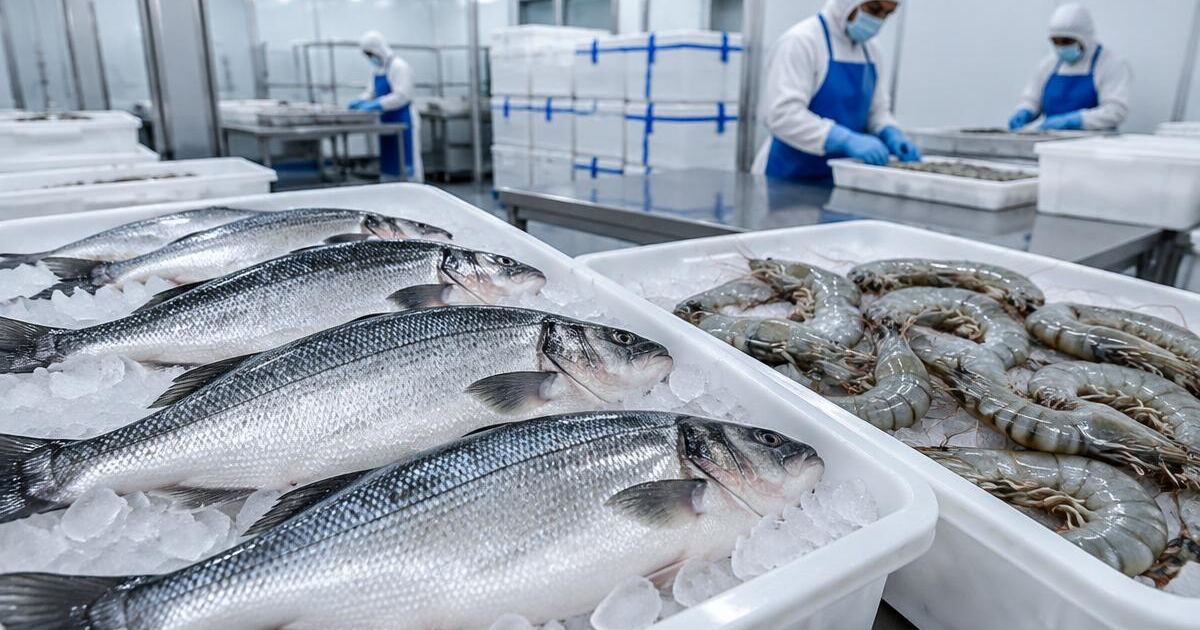
The outcome comes first. Procurement follows.
Plan the production or project → define the output and market → structure a reviewed RFQ → our team approaches suitable counterparties → compare offers. Equipment and production-line procurement remains a separate path: plan an equipment RFQ.
Why farmed seafood needs its own sourcing approach
Farmed fish and shrimp are produced in cycles. A pond, cage or recirculating system is stocked, grown out and harvested, so supply comes in batches whose size, timing and grade depend on stocking plans made months earlier. That makes the harvest schedule, the size distribution at harvest and the processor's capacity just as important as the price per kilo.
Global B2B Group connects qualified wholesale buyers with that production side through a reviewed process. You define the requirement; our team checks it, approaches farms, processors and exporters that appear to fit, and returns comparable offers. We do not farm, process, store or certify seafood, and we make no claim about a supplier's sustainability, certification or stock unless the supplier provides evidence you can review.
Species and production method
Name the species by common and scientific name — trade names differ between markets and some regulators work from the scientific name. Then state whether you need farmed product, wild-caught, or either. If farmed origin matters to your customers, ask for evidence: the farm or establishment, its registration with the competent authority, and how lots are traced from pond or cage to carton. Treat 'farmed' as a claim to be documented, not assumed.
- Common and scientific name — for example whiteleg shrimp (Penaeus vannamei), Atlantic salmon (Salmo salar), European sea bass (Dicentrarchus labrax), tilapia (Oreochromis spp.)
- Farmed, wild-caught or either; production system if it matters (pond, cage, RAS)
- Any certification your customers require — list it as your requirement and ask for the certificate, not an assumption
Size, count and product format
Seafood is priced by size. Shrimp is usually graded by count — pieces per pound or per kilogram, such as 31/40 per lb — and fish by weight band per piece. State the format precisely, because each step of processing changes yield, price and the processor you need.
- Size or count grade and the unit used (per lb or per kg)
- Format: whole, gutted, head-on shell-on, headless, peeled and deveined, fillet or portion
- Fresh, chilled, frozen block or IQF; for frozen product, glaze percentage and whether price is on net or gross weight
- Packing: inner bag or tray size, master carton weight, labelling language and pallet configuration
Harvest schedule and volumes
Ask for a harvest plan, not just a monthly volume. A realistic programme says how many tonnes of which size can be harvested in which weeks, and how much the processor can pack per day. If you need continuous supply, ask whether the supplier staggers stocking across ponds or sites, and what happens when a harvest comes in smaller or larger than planned.
- Volume per shipment, shipments per month and total programme volume
- Harvest weeks and size distribution expected at harvest
- Processing capacity per day and lead time from harvest to loading
- Rule for out-of-spec sizes: re-grade, price adjustment or rejection
Handling and cold-chain requirements
Fresh fish and shrimp lose quality quickly above chilled temperatures, and frozen product must stay frozen throughout storage and transport. Write the temperature you need at each stage — after harvest, during processing, in storage and in transit — and ask the supplier to confirm how it is monitored. For air-freighted fresh product, the time from harvest to arrival matters as much as temperature.
If your bottleneck is your own cold storage or distribution rather than supply, that is an infrastructure project: ColdMatch covers cold rooms, blast freezers and cold-chain logistics planning.
Documents and destination-market rules
Destination rules decide whether a shipment can enter at all. Many markets require the exporting establishment to be approved or listed for that destination, a health certificate issued by the exporting country's competent authority, and traceability records. Some markets add specific programmes — for example the U.S. Seafood Import Monitoring Program for certain species, or the EU's rules against illegal, unreported and unregulated fishing for wild-caught product. FAO guidance on end-to-end traceability is a useful reference for what records to ask for.
Requirements change and differ by species, product form and destination, so confirm the current list with the competent authority for your route before you commit to a supplier.
How to submit a seafood sourcing request
Use our produce and seafood sourcing request, choose 'Fish, shrimp and other seafood' and fill in species, production method, size or count, format, fresh or frozen form, packing, harvest window, documents, volumes, destination and Incoterms® terms. Fields you do not know are recorded as unknown rather than guessed. Declare the total programme value: managed sourcing applies from USD 250,000 per year or season, and smaller requests stay on file without supplier outreach.
Our team reviews each request before any supplier is approached. Supplier identities and your contact details are exchanged only after review and with your approval. Farms and processors that want to offer product register separately and are reviewed before they are considered.
Buyer & seller checklist
Editorial suggestions for a complete request — not legal requirements.
- Species: Common and scientific name
- Production method: Farmed, wild-caught or either — with evidence if it matters
- Size or count: Grade and unit (per lb or per kg), or weight per piece
- Format: Whole, head-on, peeled, fillet or portion
- Form: Fresh, chilled, frozen block or IQF; glaze and net-weight basis
- Packing: Inner pack, master carton, labelling, pallets
- Harvest schedule: Harvest weeks, expected size distribution, processing capacity
- Volumes: Per shipment, per month, total programme
- Cold chain: Temperatures at each stage and how they are monitored
- Documents: Establishment approval, health certificate, traceability, destination programmes
- Trade terms and value: Incoterms® rule and place; declared programme value from USD 250,000
Planning the production side? FishMatch
Our specialist platform for aquaculture — farms, hatcheries, RAS and seafood processing projects. Use it when you plan or expand production capacity rather than buy finished product.
Go to FishMatchOptional next step
This guide is free to use. If you have a programme of USD 250,000 or more per year or season, you can send a request for review. A request is not a guarantee of supply, quality, price or a sale.
Request a reviewed supply programmeFrequently asked questions
- Do you supply fish or shrimp from your own farms?
- No. Global B2B Group does not farm, process or hold seafood. We review buyer requests and approach farms, processors and exporters on the buyer's behalf, then present comparable offers.
- Can you confirm a supplier is sustainable or certified?
- We do not certify suppliers. If your market requires a certification, list it in your request; we ask suppliers for the certificate and you review it. We do not state that a supplier holds a certification unless it has provided evidence.
- How is shrimp size specified?
- Usually as a count: the number of pieces per pound or per kilogram, such as 31/40 per lb. State the unit, the format (head-on, headless, peeled) and whether the price is on net or glazed weight.
- What is the minimum request size?
- Managed sourcing applies to programmes of at least USD 250,000 total value per year or season. Requests below that are stored and reviewed but do not enter supplier outreach. Buyer requests are free.
- Where do I go if I want to build a fish or shrimp farm?
- Production projects — farms, hatcheries, RAS and processing plants — are handled by our specialist platform FishMatch. This guide covers buying finished product.
Sources and editorial note
- FAO — End-to-end traceability for fisheries and aquaculture
- FAO/WHO Codex Alimentarius — Code of Practice for Fish and Fishery Products
- NOAA Fisheries — Seafood Import Monitoring Program (U.S. example)
- European Commission — Illegal, unreported and unregulated fishing rules (EU example)
Written by the Global B2B Group project team. Published and last reviewed . Regulatory references are examples and change over time; confirm current requirements for your product and destination with the competent authority. This guide is not legal advice.
Related guides and tools
- From Pond to Port: wholesale fish and shrimp specification guide
- From farm to wholesale buyer: sourcing produce across borders
- Poultry and egg sourcing: producers, buyers and production capabilities
- Separate path: fish and shrimp packaging lines
- ColdMatch — cold storage and cold-chain infrastructure
- Output sourcing: request a reviewed supply programme
- Knowledge Center — output procurement checklists
- Business Intelligence Center — official trade and market sources
- Separate path: equipment and production-line RFQ builder