
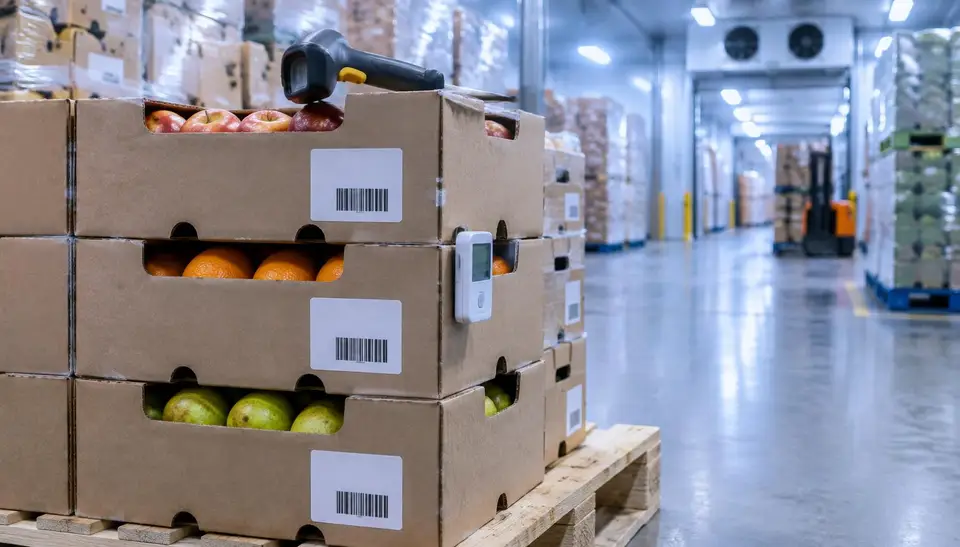

Importing fresh produce, seafood, poultry and eggs into the United States
Which agency checks what — FDA, APHIS, FSIS, NOAA and CBP — and what to settle with suppliers before you accept an offer.
Prepared by the Global B2B Group project team · Last reviewed · Scope: United States federal requirements. State rules and product-specific orders are not covered here.
Which US rules apply to an imported food shipment?
FDA must receive prior notice for all food for humans and animals imported or offered for import into the United States. Importers covered by FDA's Foreign Supplier Verification Programs (FSVP) rule must carry out risk-based verification that their foreign suppliers produce food to US safety standards. Fresh fruit and vegetables must meet APHIS plant-health requirements, listed by commodity and origin in the ACIR database. Poultry and egg products may come only from countries and establishments found eligible by FSIS, and are reinspected on arrival. Shrimp falls under NOAA's Seafood Import Monitoring Program, and CBP handles the customs entry.
FDA prior notice
FDA states that prior notice must be provided for all food for humans and animals imported or offered for import into the United States (21 CFR Part 1, Subpart I). Its purpose is to let FDA target inspections at ports of entry. Prior notice is a per-shipment filing; it does not approve a product or a supplier.
Foreign Supplier Verification Programs (FSVP)
Under the FSVP rule, covered importers must perform risk-based activities to verify that imported food is produced in a manner that gives the same level of public-health protection as the US preventive-controls and produce-safety provisions, is not adulterated, and — for human food — is not misbranded with respect to allergen labelling. The rule includes exemptions and modified requirements — check FDA's guidance for your product and role.
In practice, FSVP means the importer needs supplier information — hazard analysis, audits or test results — before the first shipment, so ask for it in the request rather than after award.
APHIS plant health: fresh fruit and vegetables
USDA APHIS publishes the plant-health import requirements for fresh fruit and vegetables — admissible origins, permits, treatments and inspection — in its Agricultural Commodity Import Requirements (ACIR) database, which replaced the former FAVIR database on 1 October 2022. Requirements are set per commodity and per origin.
Poultry and egg products: FSIS eligibility
USDA FSIS is responsible for imported meat, poultry and egg products. Products must come from countries and establishments certified as eligible after an FSIS equivalence determination, and must be presented for FSIS reinspection at an official import establishment after CBP and APHIS requirements are met. APHIS separately restricts some animal products because of the animal-disease status of the region of origin.
Seafood and shrimp: NOAA SIMP
NOAA's Seafood Import Monitoring Program requires importers of covered species groups to report and keep data from the point of harvest to entry into US commerce. Shrimp is a covered species group; NOAA states compliance for shrimp became effective on 31 December 2018. Seafood is also FDA-regulated food, so prior notice and FSVP apply as relevant.
| Product group | Agencies usually involved | Start with |
|---|---|---|
| Fresh fruit and vegetables | FDA (prior notice, FSVP), APHIS (plant health), CBP (entry) | APHIS ACIR for your commodity and origin |
| Fish and shrimp | FDA (prior notice, FSVP), NOAA (SIMP for covered species), CBP | NOAA SIMP species list; FDA prior notice |
| Poultry meat and egg products | FSIS (eligibility and reinspection), APHIS (animal health), CBP | FSIS Import & Export Library for eligible countries and establishments |
| All food | CBP customs entry; FDA prior notice | CBP basic import guidance |
Put these in a US-bound sourcing request
- Who is the US importer of record, and who files prior notice
- Exact product, HS code if known, origin and — for produce — the APHIS ACIR requirement for that origin
- Supplier information the importer needs for FSVP (for example hazard analysis or audit reports)
- For poultry and egg products: the FSIS-eligible country and establishment number
- For shrimp and other covered seafood: the harvest and processing data needed for SIMP
- Port of entry, arrival window, and the claims procedure if a shipment is held
Our team turns these points into one reviewed request and approaches suitable suppliers on your behalf. Buyers pay nothing; sourcing programmes start from USD 250,000 per year or season, and every requirement is confirmed per shipment rather than assumed.
Frequently asked questions
Is FDA prior notice required for every food import?
FDA states that prior notice must be provided for all food for humans and animals imported or offered for import into the United States, under 21 CFR Part 1, Subpart I.
Where are APHIS import requirements for fresh fruit and vegetables?
In APHIS's Agricultural Commodity Import Requirements (ACIR) database, which replaced the FAVIR database on 1 October 2022. Requirements are listed per commodity and origin.
Can poultry or egg products be imported from any country?
No. FSIS states that meat, poultry and egg products must come from countries and establishments certified as eligible after its equivalence process, and are reinspected at an official import establishment.
Does the Seafood Import Monitoring Program cover shrimp?
Yes. NOAA lists shrimp as a covered species group, with compliance effective from 31 December 2018. Importers report harvest-to-entry data.
Sources
- U.S. FDA — Prior Notice of Imported Foods — checked 23 October 2026
- U.S. FDA — Filing Prior Notice of Imported Foods — checked 23 October 2026
- U.S. FDA — FSMA Final Rule on Foreign Supplier Verification Programs (FSVP) — checked 23 October 2026
- USDA APHIS — Agricultural Commodity Import Requirements (ACIR) database — checked 23 October 2026
- USDA APHIS — FAVIR replaced by ACIR effective 1 October 2022 — checked 23 October 2026
- USDA FSIS — Import guidance for meat, poultry and egg products — checked 23 October 2026
- NOAA Fisheries — Seafood Import Monitoring Program — checked 23 October 2026
- U.S. Customs and Border Protection — Basic import and export — checked 23 October 2026
This guide summarises official sources for planning a sourcing request. It is not legal or customs advice; rules change and depend on the product, HS code, origin, destination and date — confirm them with the authority or your customs broker before you ship.