
Buyer guide · Structured sourcing
From farm procurement to market: a practical sourcing framework for produce, seafood, poultry and egg buyers
How procurement teams turn a need into a precise brief, compare suppliers and technology on evidence, negotiate a price that fits the brief, explore financing and plan what happens after production — and when a structured sourcing platform helps.
Prepared by the Global B2B Group project team · Published · Last reviewed · English edition
Why use a structured sourcing process for agricultural procurement?
A structured sourcing process makes every supplier respond to the same written brief — specification, volumes, timing, destination, quality and documents — so offers can be compared on evidence instead of claims. It also forces decisions on technology, total cost of ownership, financing and the route to market before money is committed. A platform such as Global B2B Group runs that process on the buyer's behalf: our team scopes the request, approaches suitable producers, manufacturers and service providers, and returns comparable offers. It is useful for complex or multi-supplier projects; the buyer still verifies suppliers, contracts and compliance.
When a structured sourcing platform helps — and when it may not
It tends to help when the project crosses borders, involves several suppliers (for example produce supply plus packing, cold storage and logistics), uses equipment you have not bought before, or needs financing and a documented decision trail for management or lenders.
It may add little when you buy a small, repeat order from a supplier you already trust on a stable specification. Using a platform is never legally required; it is one way to organise sourcing. Assisted sourcing on Global B2B Group applies to projects and supply programmes of USD 250,000 or more; the guides and tools are free for anyone.
The procurement workflow: seven stages from brief to market
Each stage below ends with what the buyer should verify personally. The platform organises the work; it does not replace the buyer's own due diligence.
1. Turn the need into a precise brief or RFQ
Write down what success looks like before asking for prices. A brief that suppliers can quote the same way removes most later disputes.
- Product or equipment specification: variety or species, grade, size or count, capacity, inputs and outputs.
- Volumes and timing: per shipment, per season or per year; delivery or installation window.
- Destination and delivery terms: country, port or site, and the Incoterms® rule with a named place.
- Quality, certification and documentation required by your customers and your destination.
- Budget assumptions: target range, currency, payment terms and what the budget includes.
Verify yourself: That the brief reflects your customers' and regulators' requirements, not a supplier's catalogue.
2. Identify and compare suppliers against your actual requirements
Producers, manufacturers and service providers are compared on what they can evidence for your brief — not on their marketing. A supplier being "screened" or introduced is not the same as being independently certified.
- Evidence: current certificates (check the issuer, scope and expiry in the certification body's own register), audit reports, test results and samples.
- Capacity: volumes or output they can commit for your window, and what else competes for that capacity.
- References: comparable customers or projects you can contact yourself.
- Risks: single-origin or single-plant dependence, seasonality, logistics, financial stability and sanctions or export restrictions.
Verify yourself: Certificates and references directly with the issuer or the reference — never only from documents the supplier sends.

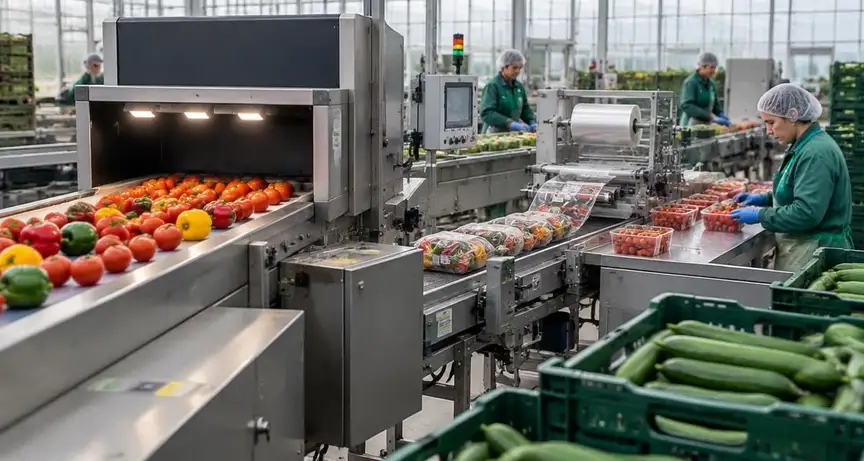
Illustrative image: weighing and packing technology should be tested on your own product before acceptance. 3. Evaluate innovative technology and solutions on fit and total cost
Grading, packing, freezing, cold-chain monitoring or traceability technology should be judged on whether it solves your bottleneck at an acceptable lifetime cost.
- Total cost of ownership: purchase price, installation, energy, consumables, spare parts, maintenance contracts, training and expected downtime.
- Implementation: site requirements, utilities, integration with existing lines and software, and a realistic start-up plan.
- Support: local service, spare-part lead times, remote support and warranty terms.
- Operational fit: your products, volumes, staff skills and food-safety rules. Ask for acceptance tests (factory and site) tied to measurable performance.
Verify yourself: Performance claims in a test on your own product, and service availability in your country.
4. Compare quotations and negotiate a price that fits the brief
Normalise every offer to the same scope, unit and delivery term, then negotiate with evidence. No process can promise the lowest price or guaranteed savings — the aim is a price that fits the brief and current market evidence.
- Line up offers on the same specification, quantity, Incoterms® rule, currency and validity.
- Separate supplier quotes from dated market estimates, and note the source and date of each.
- Negotiate on what actually moves cost: scope, volume commitment, payment terms, delivery window, warranty and service.
- Record what each offer leaves out or does not confirm.
Verify yourself: The final contract terms — price, quality, inspection, claims and liability — with your own legal adviser.
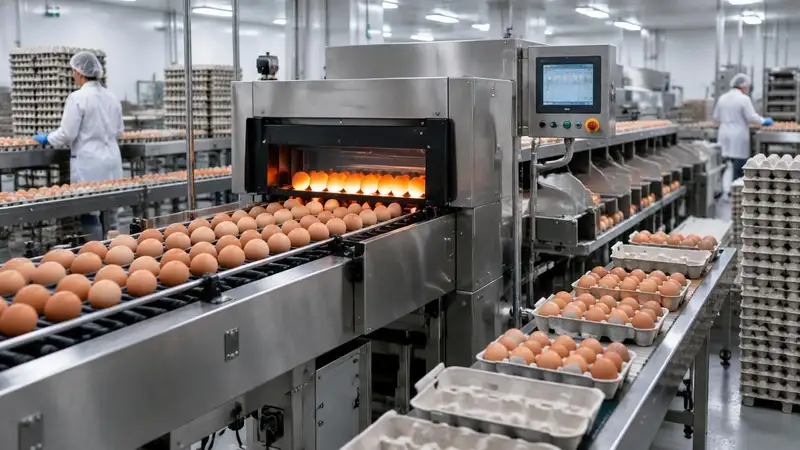
Illustrative image: grading and inspection steps turn your quality specification into consistent output. 5. Explore financing options for the project
Some projects become feasible with financing such as equipment leasing, supplier credit, commercial bank loans, export-credit-agency-backed facilities or development-finance programmes. All are subject to lender or partner availability, due diligence, eligibility and approval.
- Prepare the project file lenders usually ask for: scope, supplier offers, budget, cash-flow assumptions and the offtake plan.
- Compare cost, tenor, security and currency risk across options.
- Global B2B Group's Financing Center explains the options and helps you prepare; it does not lend, and no financing is guaranteed.
Verify yourself: Eligibility, terms and approval directly with each lender or programme.
6. Plan what happens after production
Output only creates value if it reaches buyers in the condition and with the documents they require. Plan this before you buy equipment or sign supply contracts.
- Quality specification and grading for your target buyers and markets.
- Traceability: lot coding and records that link product to origin, processing and shipment.
- Packaging, labelling and cold chain or logistics from packhouse to destination.
- Documentation: phytosanitary or health certificates, origin documents and market-specific requirements.
- Route to market: qualifying output can be offered against buyer requests that Global B2B Group handles, through the producer and supplier channel. This does not promise a sale, a buyer, a price, export clearance or acceptance.
Verify yourself: Destination import requirements with the competent authority and your buyers' specifications in writing.
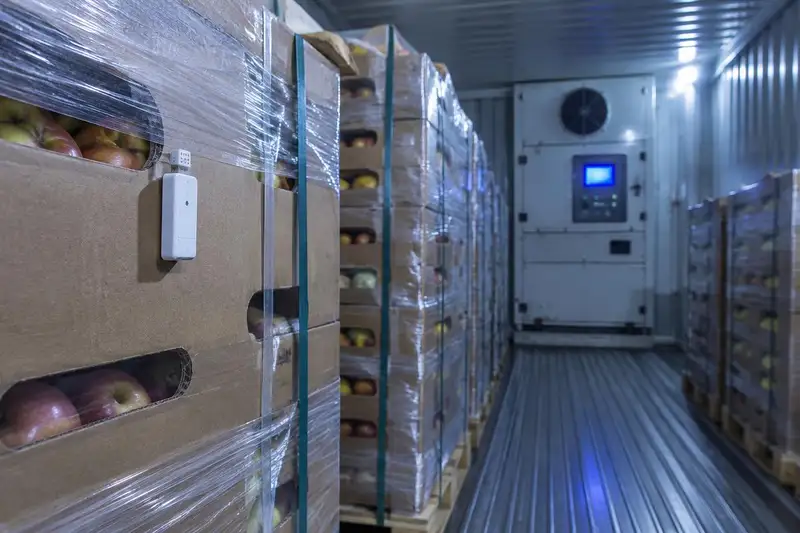
Illustrative image: cold chain and temperature records are part of the plan for what happens after production. 7. Use the Global B2B Group RFQ workflow as the practical next step
Submit one structured brief. Our team reviews and clarifies it, approaches suitable producers, manufacturers and service providers on your behalf, and returns comparable offers with each figure labelled. Buyers and suppliers are not put in direct contact before review: supplier identities are shared only after review and with your approval. The service is free for buyers and applies to projects and supply programmes of USD 250,000 or more.
Verify yourself: That the shortlisted offers meet your brief before you approve any introduction.
Checklist table: what to define, ask for and verify at each stage
Use this table to run the process yourself or to brief our team. It lists what buyers usually need — not prices, supplier claims or outcomes.
| Stage | Define in the brief | Ask suppliers for | Verify yourself |
|---|---|---|---|
| Brief / RFQ | Specification, volumes, timing, destination, documents, budget assumptions | Clarifying questions and any deviations from the brief | Customer and regulatory requirements |
| Supplier comparison | Evaluation criteria and their weight | Certificates, audits, capacity, references, samples | Certificates in the issuer's register; references directly |
| Technology | Bottleneck, capacity, utilities, integration | Total cost of ownership, implementation plan, service terms | Performance on your own product; local service |
| Quotations | Unit, Incoterms® rule, currency, validity | Itemised quotes with inclusions and exclusions | Contract terms with your legal adviser |
| Financing | Budget, timeline, offtake plan | Supplier credit or payment terms, if offered | Eligibility and terms with each lender |
| After production | Target buyers, grade, packaging, cold chain | Traceability, packing and logistics capabilities | Destination import rules and buyer specifications |
Common mistakes
- Asking for prices before the specification, volume and delivery term are fixed — offers then cannot be compared.
- Treating a supplier's own certificate copy as proof without checking the issuer's register.
- Comparing equipment on purchase price only and ignoring energy, consumables, service and downtime.
- Assuming the lowest quote is the best value without checking what it excludes.
- Counting on financing before a lender has completed due diligence and approved it.
- Buying production capacity without a written plan and buyer requirements for the output.
- Skipping a written decision trail, which lenders, auditors and management often ask for later.
Project and sourcing RFQ checklist
Tick what you can confirm, download or print the list, and use it to complete the request form. Mark open items — our team can help close them.
Turn your project into one structured request
Send a project brief or RFQ. Our team reviews it with you, approaches suitable producers, manufacturers and service providers on your behalf and returns offers you can compare on the same basis. Buyers pay nothing; assisted sourcing applies to projects and supply programmes of USD 250,000 or more. Supplier identities are shared only after review and with your approval.
Frequently asked questions
Is it mandatory to use a sourcing platform for agricultural procurement?
No. Using a platform is never legally required. A structured process — with or without a platform — mainly helps on complex, cross-border or multi-supplier projects where offers are hard to compare.
What does Global B2B Group do in this process?
We are a buyer-side sourcing and procurement intermediary. Our team reviews your brief, approaches suitable producers, manufacturers and service providers on your behalf and presents comparable offers. We are not a producer, manufacturer, lender, certifier or regulator, and we do not buy or resell goods.
Can I contact suppliers directly through the platform?
Not before review. Our team handles supplier outreach; supplier identities are shared only after the request has been reviewed and you have approved an introduction. Contracts are then made directly between buyer and supplier.
Is there a minimum project size?
Assisted sourcing applies to projects and supply programmes of USD 250,000 or more. Smaller requests are kept on file without supplier outreach. The guides, checklists and calculators are free for anyone.
Will the platform get me the lowest price?
No one can promise that. The process aims for a price that fits your brief and current market evidence, by comparing offers on the same basis and negotiating on scope, volume and terms.
Does Global B2B Group provide financing?
No. The Financing Center explains options such as leasing, supplier credit, bank loans and export-credit or development-finance programmes and helps you prepare a project file. Any financing depends on the lender's availability, due diligence, eligibility rules and approval.
Can I sell my output through Global B2B Group?
Producers can make qualifying output known through the supplier channel, and our team may consider it against buyer requests we handle. This does not guarantee a sale, buyer, price, export clearance or acceptance.
This guide is general buyer education, not legal, tax, financing, food-safety or compliance advice, and it names no supplier. Requirements differ by product, country and date — confirm them with the competent authority and your own advisers. Global B2B Group is a buyer-side sourcing and procurement intermediary: it is not a producer, manufacturer, lender, certifier, inspector, lawyer or regulator, it does not buy or resell goods, and it does not guarantee prices, savings, financing, sales, export clearance or results.