
Grades, protected names and buyer-defined requirements
Premium produce starts with a measurable specification
UNECE Extra Class is a defined top quality class for table grapes, citrus and tomatoes; it is not an automatic designation for every fruit in those groups.[1]
Registered EU geographical indications protect names linked to origin; PDO and PGI are distinct legal schemes, not generic synonyms for a high grade.[4]
Free for buyers. One reviewed request; our team approaches suitable independent suppliers and returns comparable proposals — you never deal with a supplier directly, and suppliers cannot pay for placement. Assisted sourcing applies to programmes of USD 250,000 or more per year or season.
Educational profile, not an offer. Facts are general and come from the numbered sources; guidance boxes are our own buyer advice. No verified supplier offer for this item is on file — origin, grade, certification, packing and timing are confirmed per offer, with evidence, during sourcing.
Products in premium produce & seafood
11 of 11
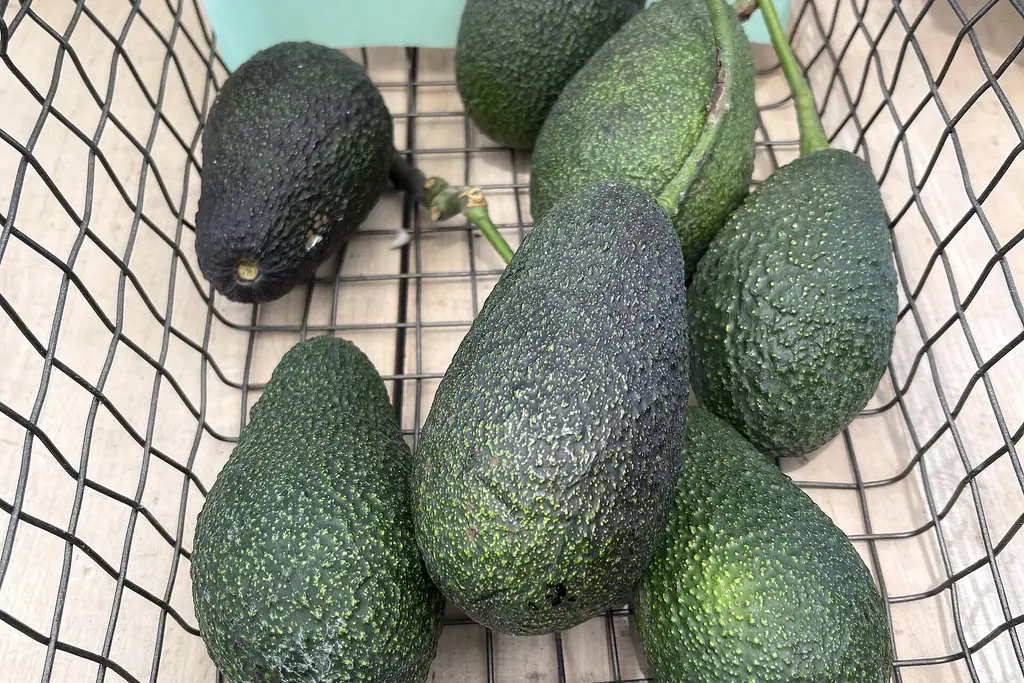
Photo: Missvain, CC BY 4.0, via Wikimedia Commons. Illustrative; not a photo of any offer. Avocados
Persea americana Mill.
Hass and green-skin avocado specifications for importers: UNECE classes, sizing, ripeness, cold chain and documents to set before a sourcing RFQ.
- Hass
- Fuerte — green-skin
- Reed — green-skin
Top quality class defined in the reference standard.
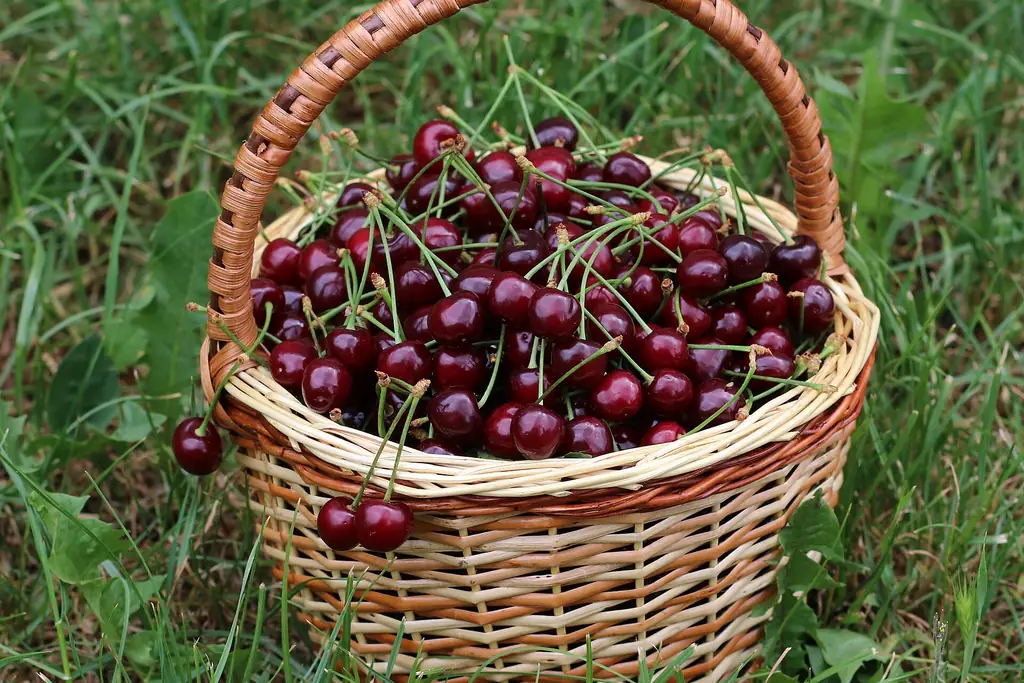
Photo: George Chernilevsky, Public domain, via Wikimedia Commons. Illustrative; not a photo of any offer. Cherries
Prunus avium (L.) L.; Prunus cerasus L.
Cherry varieties for import compared — Santina, Lapins, Regina and more — with UNECE classes, sizing, origin seasons and cold-chain specs for your RFQ.
- Sweet cherries
- Sour cherries
- Picota / stemless presentation
- Bing
- Santina
- Regina
Top quality class defined in the reference standard.

Photo: Rob Hille, CC BY-SA 3.0, via Wikimedia Commons. Illustrative; not a photo of any offer. Blueberries
Vaccinium spp.
Blueberry specifications for importers: highbush and rabbiteye types, quality classes, sizing and cold-chain checks to set before a sourcing RFQ.
- Southern highbush
- Northern highbush
- Rabbiteye
Top quality class defined in the reference standard.
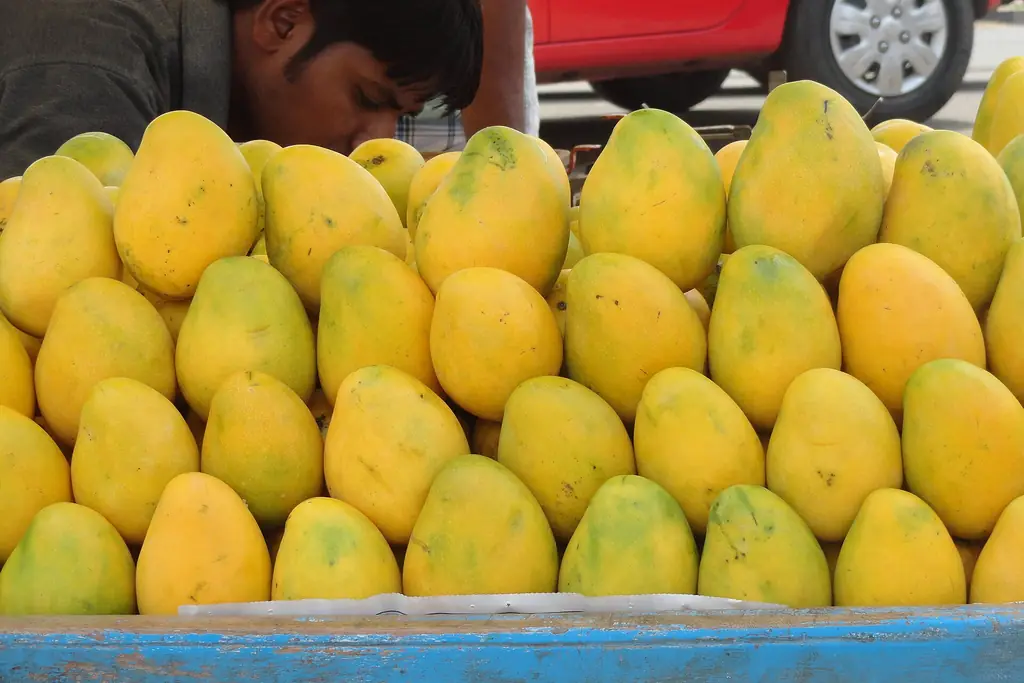
Photo: Bhaskaranaidu, CC BY-SA 3.0, via Wikimedia Commons. Illustrative; not a photo of any offer. Mangoes
Mangifera indica L.
Compare mangoes varieties, UNECE quality classes, sizing, origin seasons, and cold-chain requirements before preparing a wholesale sourcing RFQ.
- Tommy Atkins
- Kent
- Keitt
- Ataulfo / Honey
- Haden
- Francis
Top quality class defined in the reference standard.
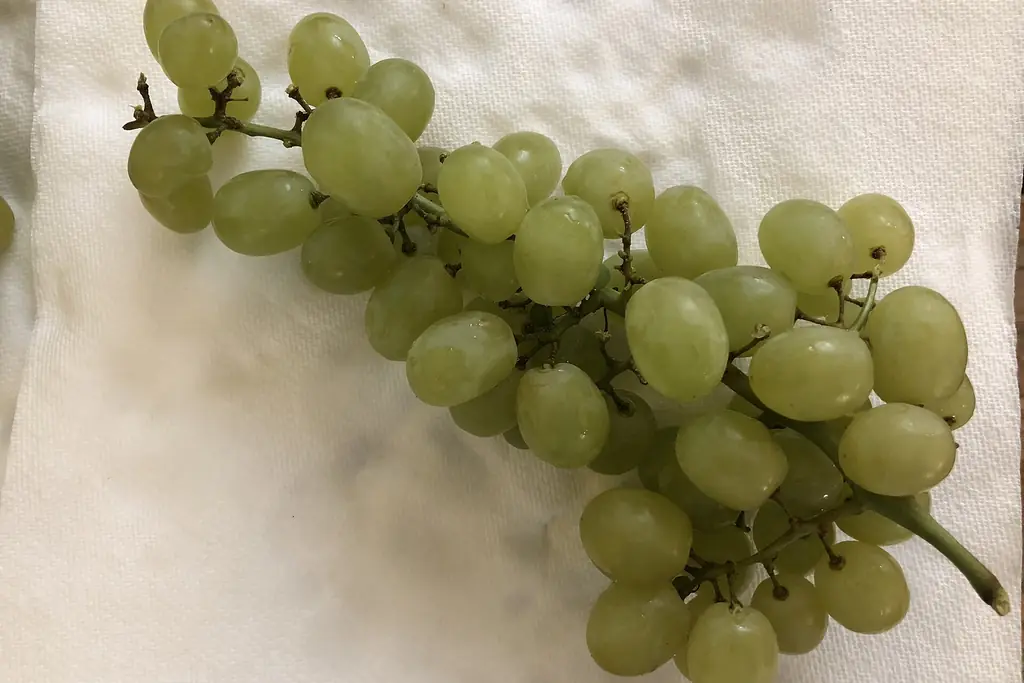
Photo: Famartin, CC BY-SA 4.0, via Wikimedia Commons. Illustrative; not a photo of any offer. Table grapes
Vitis vinifera L.
Table grape specifications for importers: seedless, seeded and red or black cultivars, UNECE classes, bunch sizes and storage specs for an RFQ.
- Seedless
- Seeded
- Red and black cultivars
Top quality class defined in the reference standard.
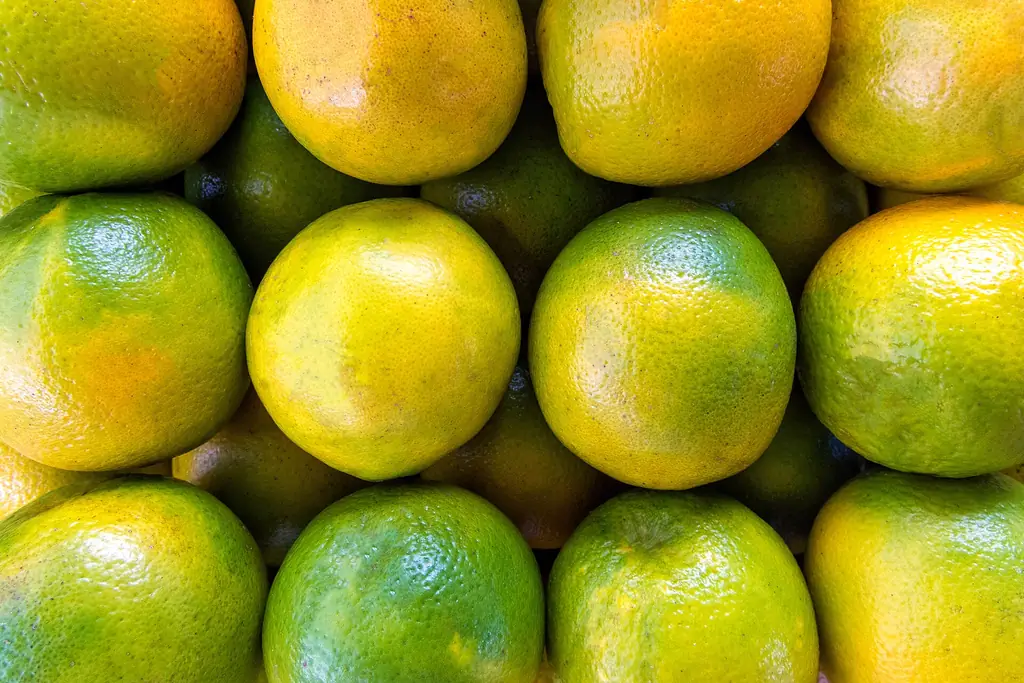
Photo: Wilfredor, CC BY-SA 4.0, via Wikimedia Commons. Illustrative; not a photo of any offer. Citrus
Citrus specifications for importers: oranges, mandarins, lemons, limes and grapefruit, quality classes, sizing and handling to set in your RFQ.
- Oranges
- Mandarins
- Lemons
- Limes
- Grapefruit
Top quality class defined in the reference standard.
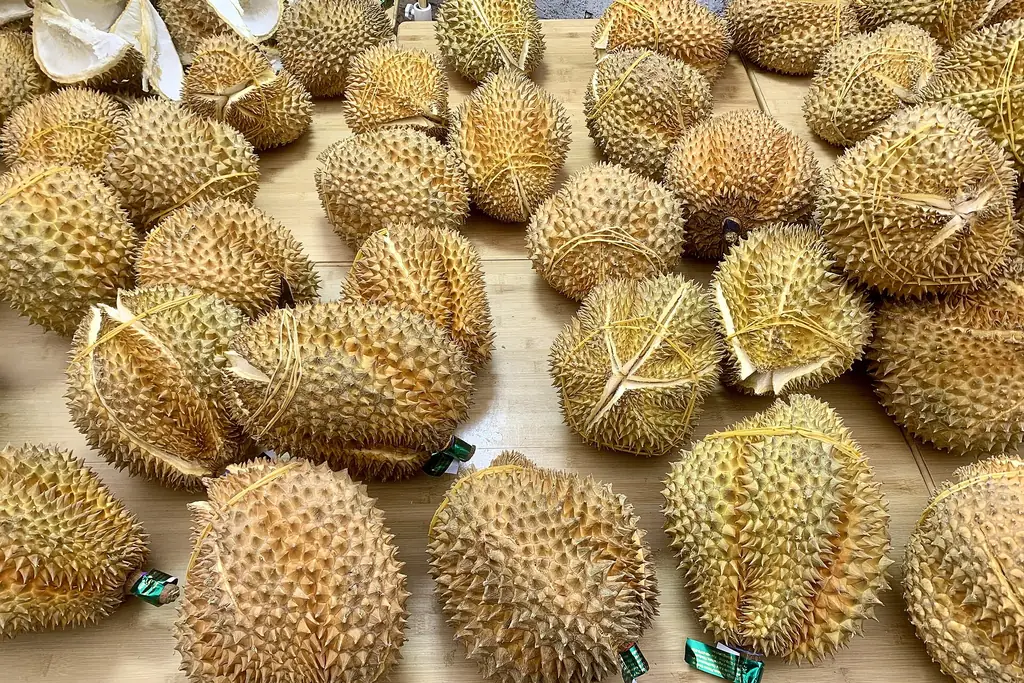
Photo: Dudva, CC0, via Wikimedia Commons. Illustrative; not a photo of any offer. Durian
Durio zibethinus
Durian for import: Musang King, Monthong, Black Thorn and Ri6, fresh, frozen whole fruit and frozen pulp, grades and China access documents.
- Monthong
- Musang King
- Black Thorn
- Ri6
- Fresh whole fruit
- Frozen whole fruit
Top quality class defined in the reference standard.

Photo: Krzysztof Golik, CC BY-SA 4.0, via Wikimedia Commons. Illustrative; not a photo of any offer. Table eggs
Bulk and wholesale table eggs: US Grades AA, A and B, EU Classes A and B, weight classes and the specs and documents to set before an RFQ.
- US Grade AA
- US Grade A
- US Grade B
- EU Class A
- EU Class B
Top quality class defined in the reference standard.
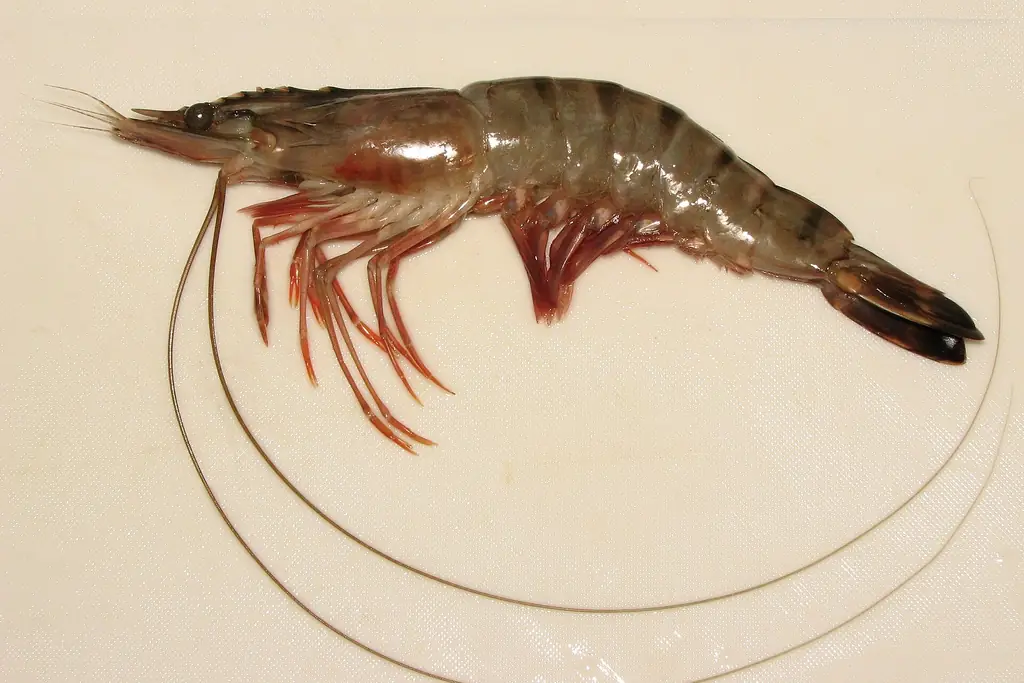
Photo: Epipelagic, CC BY-SA 3.0, via Wikimedia Commons. Illustrative; not a photo of any offer. Black tiger shrimp
Penaeus monodon
Black tiger shrimp and prawns (P. monodon) for import: presentations, sizes and counts, net weight, cold-chain requirements and documents for an RFQ.
- HOSO — head-on, shell-on
- HLSO — headless, shell-on
- PD — peeled and deveined
- PUD — peeled, undeveined
- PDTO — peeled, deveined, tail-on
- Cooked shrimp
No separate premium grade in the sources used.
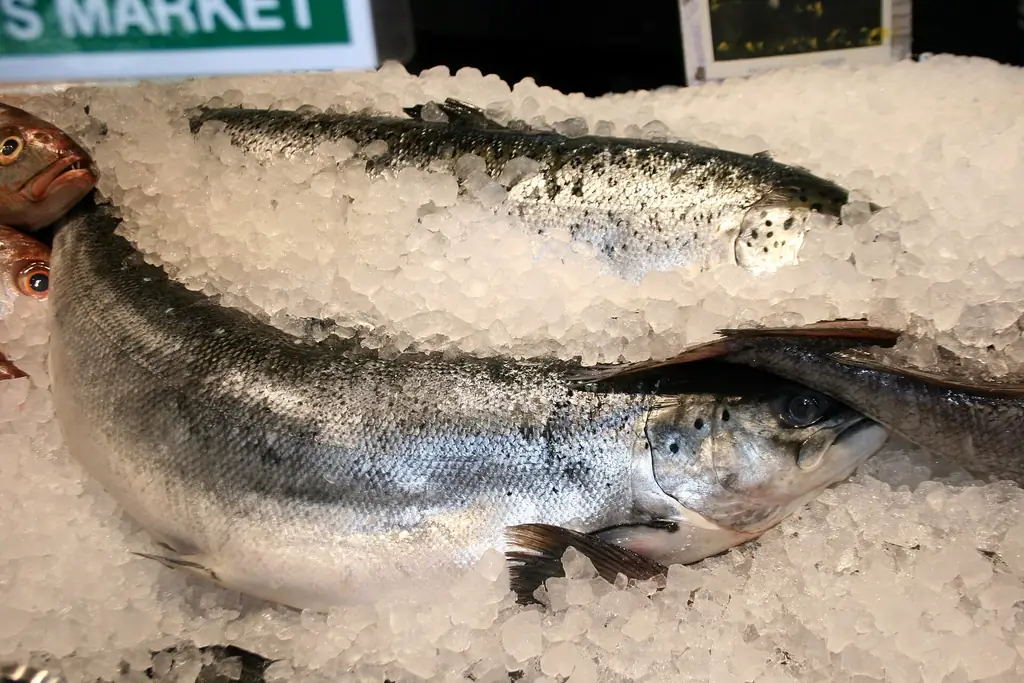
Photo: JMK, CC BY-SA 4.0, via Wikimedia Commons. Illustrative; not a photo of any offer. Atlantic salmon
Salmo salar
Wholesale farmed Atlantic salmon: whole, HOG, headed and gutted, fillets and portions, fresh or frozen, with the specs and documents to set in an RFQ.
- Whole or gutted, head-on
- HOG — head-on, gutted
- Headed and gutted
- Fillets — skin-on or skinless
- Fillet sections and portions
- Fresh/chilled or quick frozen
No separate premium grade in the sources used.

Photo: THOR, CC BY 2.0, via Wikimedia Commons. Illustrative; not a photo of any offer. Caviar (sturgeon roe)
Acipenseridae
Buying caviar wholesale? Identify the sturgeon species, reconcile the label and documents, and set cold-chain and pack specs before you send an RFQ.
- Siberian sturgeon
- Russian sturgeon
- White sturgeon
- Huso huso
- Hybrids
No separate premium grade in the sources used.
Compare at a glance
Each row summarises the product profile; the storage line is quoted from the named source. Open a profile for the full, sourced detail.
| Product | Types covered | Reference standard | Top class defined | Storage and handling |
|---|---|---|---|---|
| Avocados | Hass, Fuerte — green-skin, Reed — green-skin | UNECE Standard FFV-42 Avocados, 2023 edition | Yes | Mature-green fruit has an optimum storage range of 5–13°C, depending on cultivar and duration. (UC Davis Postharvest Technology Center) |
| Cherries | Sweet cherries, Sour cherries, Picota / stemless presentation, Bing, Santina | UNECE Standard FFV-13 Cherries, 2023 edition | Yes | Optimum storage temperature is −0.5 ± 0.5°C. (UC Davis Postharvest Technology Center) |
| Blueberries | Southern highbush, Northern highbush, Rabbiteye | UNECE Standard FFV-57 Berry fruits, 2023 edition | Yes | Blueberries have an optimum storage temperature of about 0 ± 0.5°C and a stated storage life of one to two weeks. (UC Davis Postharvest Technology Center) |
| Mangoes | Tommy Atkins, Kent, Keitt, Ataulfo / Honey, Haden | UNECE Standard FFV-45 Mangoes, 2023 edition | Yes | Optimum temperature is 13°C for mature-green mangoes and 10°C for partially ripe or ripe fruit. (UC Davis Postharvest Technology Center) |
| Table grapes | Seedless, Seeded, Red and black cultivars | UNECE Standard FFV-19: Table grapes, 2025 edition | Yes | Recommended berry storage temperature is −1 to 0°C. (UC Davis Postharvest Technology Center) |
| Citrus | Oranges, Mandarins, Lemons, Limes, Grapefruit | UNECE Standard FFV-14: Citrus fruit, 2025 edition | Yes | Oranges: 3–8°C for up to three months, depending on cultivar, harvest maturity and production area. (UC Davis Postharvest Technology Center) |
| Durian | Monthong, Musang King, Black Thorn, Ri6, Fresh whole fruit | Standard for Durian (CODEX STAN 317-2014) | Yes | UC Davis recommends 13–15°C and 90–95% relative humidity for durian, with storage potential of 3–5 weeks for mature unripe fruit or 7–14 days for ripe fruit. (UC Davis Postharvest Research and Extension Center) |
| Table eggs | US Grade AA, US Grade A, US Grade B, EU Class A, EU Class B | Commission Delegated Regulation (EU) 2023/2465 | Yes | U.S. consumer guidance is to refrigerate eggs at 40°F or below. (USDA FSIS) |
| Black tiger shrimp | HOSO — head-on, shell-on, HLSO — headless, shell-on, PD — peeled and deveined, PUD — peeled, undeveined, PDTO — peeled, deveined, tail-on | CXS 92-1981: Standard for Quick Frozen Shrimps or Prawns (2014 text) | No | Chilled fish and shellfish should be held as close as possible to 0 °C, using sufficient ice or suitable refrigeration. (Codex Alimentarius Commission) |
| Atlantic salmon | Whole or gutted, head-on, HOG — head-on, gutted, Headed and gutted, Fillets — skin-on or skinless, Fillet sections and portions | CXS 190-1995: Standard for Quick Frozen Fish Fillets (2014 text) | No | Chilled fish and shellfish should be held as close as possible to 0 °C, using sufficient ice or suitable refrigeration. (Codex Alimentarius Commission) |
| Caviar (sturgeon roe) | Siberian sturgeon, Russian sturgeon, White sturgeon, Huso huso, Hybrids | Standard for Sturgeon Caviar (CXS 291-2010) | No | CXS 291-2010 specifies −4 to 0 °C for wholesale storage and transport; it separately specifies +2 to +4 °C during packaging, storage and retail. (FAO / WHO Codex Alimentarius) |
Key points
Short answers to the questions buyers ask first. Each answer comes from the numbered sources below.
- What Extra Class actually requires
- For table grapes, Extra requires “superior quality” and berries that are “firm, firmly attached, evenly spaced along the stalk” with bloom virtually intact.[1]
- Size and uniformity are separate decisions
- Table grape sizing is by bunch weight, with a 75 g minimum for Extra and Class I except packages intended for single servings.[1]
- PDO and PGI: protected names, not decorative labels
- Names registered as geographical indications are legally protected against imitation and misuse within the EU and in non-EU countries covered by specific protection agreements.[4]
- Turn the remaining premium brief into acceptance criteria
- Grape maturity normally requires at least 16° Brix, with specified sugar/acid-ratio alternatives for fruit from 12.5° to below 16° Brix.[1]
How products are chosen for this collection
General buyer guidance
- Included with a standard-defined top class: fruit and eggs whose profile cites a standard that defines a top class (for example UNECE Extra Class or US Grade AA). Each card and the comparison table say “Top class defined: Yes”.
- Included with a buyer-defined premium specification: shrimp, salmon and caviar, where the cited standards set no premium class. Premium is then what you specify and accept — species, size or count, presentation, freezing, documents — and the table says “No”.
- Not a reason for inclusion: a brand, a supplier's own grade name, price or the word premium. No product here is an offer, and no supplier is named.
- Exotic fruit such as durian is included because its cited standards define classes; access rules for your destination still apply and are listed on its profile.
What Extra Class actually requires
- For table grapes, Extra requires “superior quality” and berries that are “firm, firmly attached, evenly spaced along the stalk” with bloom virtually intact.[1]
- For citrus, Extra requires “superior quality” and fruit “characteristic of the variety and/or commercial type.”[2]
- For tomatoes, Extra fruit “must be firm” and “free from greenbacks and other defects,” apart from the specified very slight superficial defects.[3]
- Across these three standards, very slight superficial defects in Extra must not affect general appearance, quality, keeping quality or presentation in the package.[1],[2],[3]
General buyer guidance
- Use the exact standard, edition and class in the RFQ instead of relying on the word premium.
- Specify how sampling and acceptance will address the applicable class tolerances.
Size and uniformity are separate decisions
- Table grape sizing is by bunch weight, with a 75 g minimum for Extra and Class I except packages intended for single servings.[1]
- FFV-19 sets no minimum berry diameter, so a berry-diameter target is an additional purchasing requirement.[1]
- Citrus size codes are species-specific: orange code 6 is 70–80 mm, while lemon code 6 is 48–57 mm.[2]
- Under the citrus diameter-range option, the maximum package spread is 10 mm when the smallest fruit is below 60 mm, increasing to 15 mm at 60 to below 80 mm.[2]
- Tomato sizing provisions exclude trusses and are optional for cherry/cocktail fruit below 40 mm, irregular ribbed fruit and Class II.[3]
General buyer guidance
- Pair every size code with the fruit type, millimeter range and pack format.
- Define additional uniformity or diameter targets explicitly rather than attributing them to a class that does not prescribe them.
PDO and PGI: protected names, not decorative labels
- Names registered as geographical indications are legally protected against imitation and misuse within the EU and in non-EU countries covered by specific protection agreements.[4]
- PDO identifies products with the strongest links to place; every part of production, processing and preparation must take place in the specified region.[4]
- PGI emphasizes a quality, reputation or other characteristic essentially attributable to geographical origin; at least one production, processing or preparation stage must take place in the region.[4]
- The Commission identifies eAmbrosia as the official database of EU GI registers; the registers provide geographical and production specifications.[4]
General buyer guidance
- If requesting a registered name, identify the precise registration and ask for evidence against its product specification.
- Do not substitute an origin statement or a premium label for evidence supporting use of a protected name.
Turn the remaining premium brief into acceptance criteria
- Grape maturity normally requires at least 16° Brix, with specified sugar/acid-ratio alternatives for fruit from 12.5° to below 16° Brix.[1]
- Citrus maturity requirements differ by type: lemons require at least 20% juice, while Persian limes require 42%.[2]
- Tomato maturity must allow the fruit to continue ripening and reach a satisfactory degree of ripeness.[3]
General buyer guidance
- Outside a named class or protected designation, use premium in a wholesale RFQ only as shorthand for your own measurable purchasing specification, not as an independent quality claim.
- Set measurable maturity, size, defect, pack and arrival-condition limits and explain the inspection method.
- Compare proposals on the same shipment window, destination, delivery terms and documentation requirements.
- Do not assume that any listed product, origin or variety is premium by default.
Start your request with these requirements
Fill in what you already know; it is carried into the request form, where you add your programme value and contact details. Nothing is sent until you submit the form.
Free for buyers. One reviewed request; our team approaches suitable independent suppliers and returns comparable proposals — you never deal with a supplier directly, and suppliers cannot pay for placement. Assisted sourcing applies to programmes of USD 250,000 or more per year or season.
Frequently asked questions
Is all produce in this category premium?
No automatic classification is implied. The cited UNECE standards define Extra through specific quality requirements; use those requirements and your purchasing brief to assess an offer.[1],[2],[3]
Does Extra Class define every size requirement?
No. Grape sizing is by bunch weight, while citrus has species-specific diameter provisions. Tomato sizing includes exemptions and optional cases. State additional size requirements separately.[1],[2],[3]
Is a PGI the same as Extra Class?
No. PGI concerns a registered name linked to geographical origin; Extra is a quality class under the relevant commercial standard.[4],[2]
Where can a protected name be checked?
The Commission points to eAmbrosia for the official EU GI registers and to register information on product geography and production specifications.[4]
Related guides and tools
- Premium cherry imports into China: decide the lot, route and arrival window
- Traceable premium produce sourcing
- Global B2B Opportunities Center: verified trade corridors
- Wholesale fruit and vegetable sourcing: send a reviewed RFQ
- Premium produce sourcing
- RFQ and proposal review checklist
- Compare landed-cost assumptions
Other catalogue categories
Farm, plant or input projects
Production projects behind this category are handled by our specialist platform.
SeedMatchSources
Numbers in the text point to these sources. Dates are those shown on each source, or the date we checked an undated page.
- 1.UNECE Standard FFV-19: Table grapes, 2025 edition (opens in a new tab) — UNECE, 2025
- 2.UNECE Standard FFV-14: Citrus fruit, 2025 edition (opens in a new tab) — UNECE, 2025
- 3.UNECE Standard FFV-36: Tomatoes, 2017 edition (opens in a new tab) — UNECE, 2017
- 4.Geographical indications and quality schemes explained (opens in a new tab) — European Commission, page checked 2026-10-25
Category guide last reviewed 2026-10-25.
Global B2B Group is committed to conducting its own activities in accordance with applicable law. It facilitates sourcing and RFQs and does not itself produce, manufacture, export or sell the listed products, or approve them on behalf of any authority. Suppliers are responsible for the products and shipments they offer and supply meeting the requirements of the origin and destination countries — for example safety, quality, labelling, traceability, sanitary or phytosanitary certificates and export documents, where relevant. Buyers remain responsible for their own import permissions, local requirements and due diligence. Requirements differ by product and country; this is not legal advice. Compliance & responsibilities · Terms