
Seafood procurement essentials
Shrimp and prawns: buy against a clear specification
Commercial presentation and processing state are separate choices: whole, headed, peeled, or filleted products are not interchangeable specifications.[2]
Quick frozen seafood requires a thermal-center endpoint of −18 °C or colder, followed by deep-frozen distribution.[1]
Free for buyers. One reviewed request; our team approaches suitable independent suppliers and returns comparable proposals — you never deal with a supplier directly, and suppliers cannot pay for placement. Assisted sourcing applies to programmes of USD 250,000 or more per year or season.
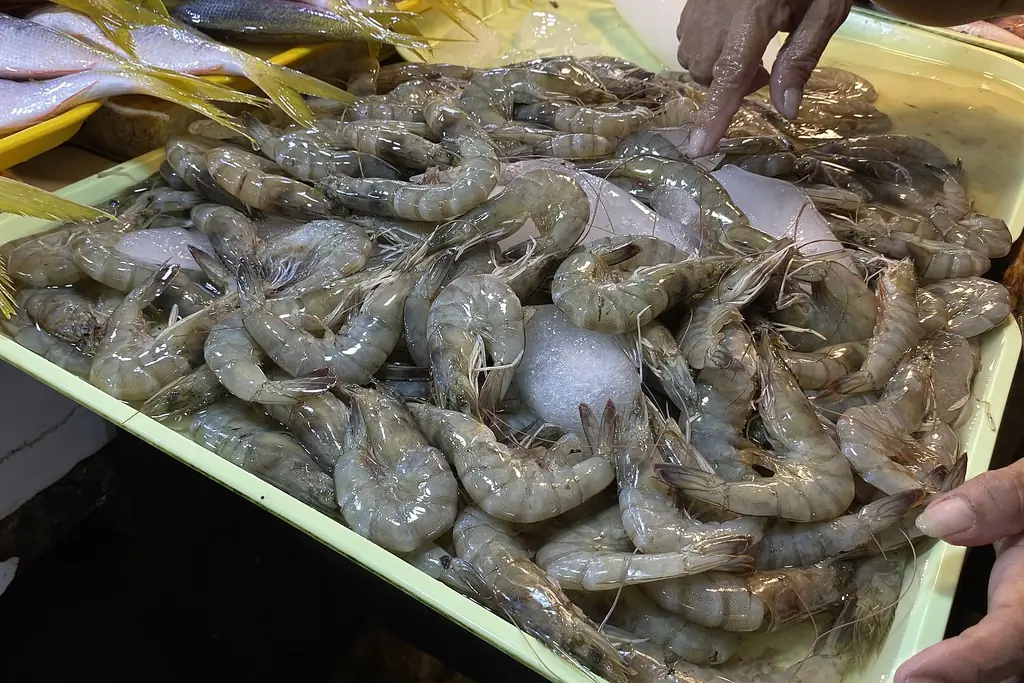
Educational profile, not an offer. Facts are general and come from the numbered sources; guidance boxes are our own buyer advice. No verified supplier offer for this item is on file — origin, grade, certification, packing and timing are confirmed per offer, with evidence, during sourcing.
Products in shrimp and prawns
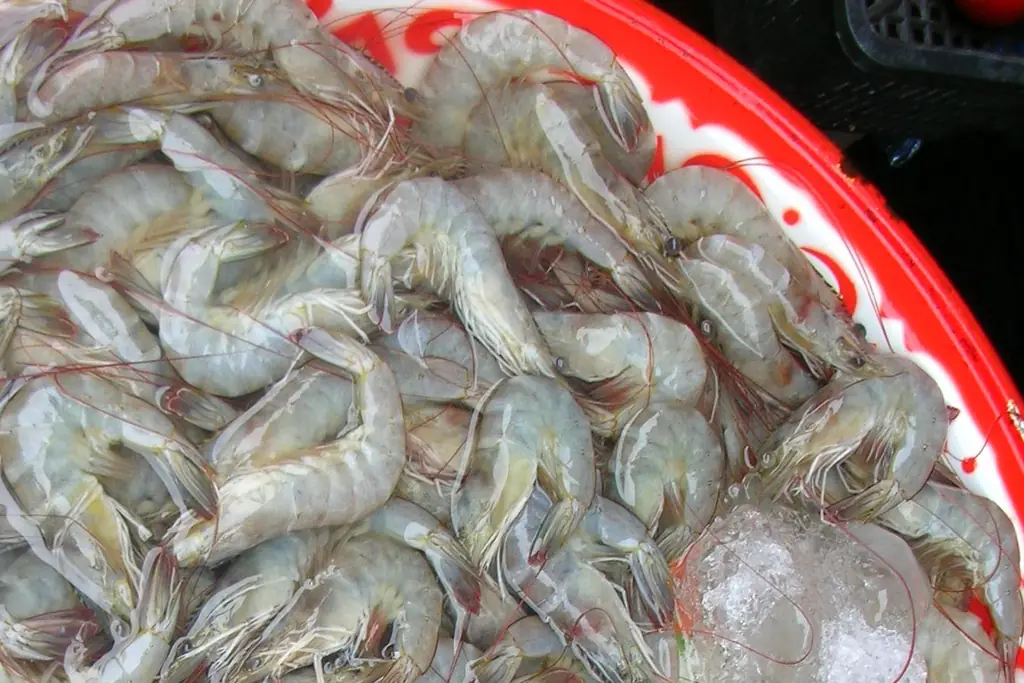
Photo: Xufanc, CC BY-SA 3.0, via Wikimedia Commons. Illustrative; not a photo of any offer. Whiteleg shrimp
Penaeus vannamei
Compare whiteleg shrimp presentations, harvest cycles, sizes, net weight, cold-chain requirements, and sourcing documents with a practical buyer guide.
- HOSO — head-on, shell-on
- HLSO — headless, shell-on
- PD — peeled and deveined
- PUD — peeled, undeveined
- PDTO — peeled, deveined, tail-on
- Cooked shrimp
No separate premium grade in the sources used.
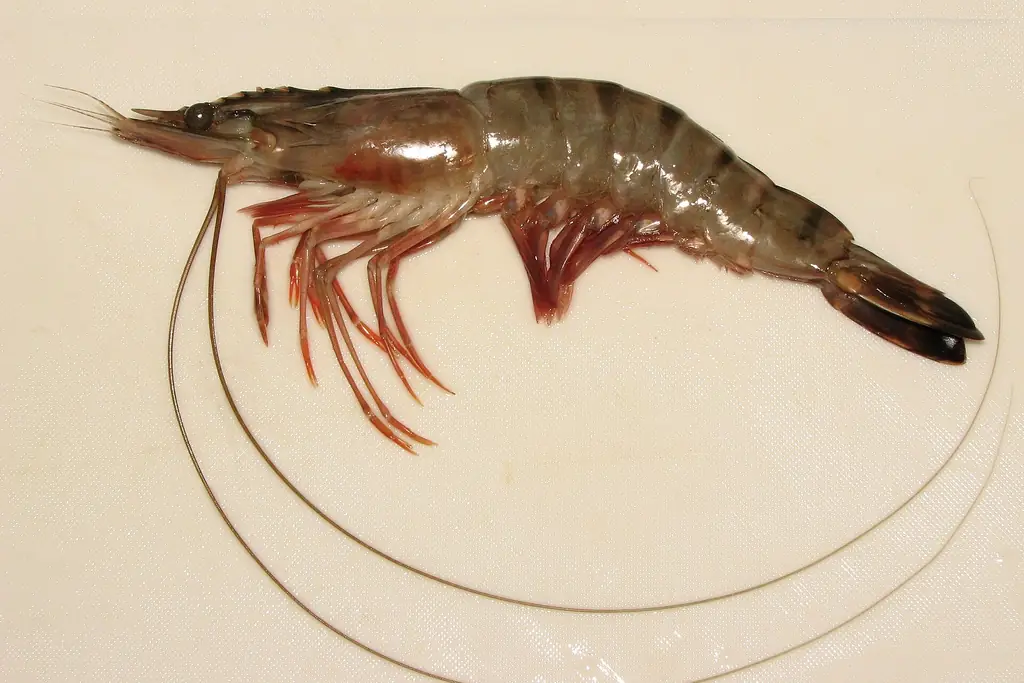
Photo: Epipelagic, CC BY-SA 3.0, via Wikimedia Commons. Illustrative; not a photo of any offer. Black tiger shrimp
Penaeus monodon
Black tiger shrimp and prawns (P. monodon) for import: presentations, sizes and counts, net weight, cold-chain requirements and documents for an RFQ.
- HOSO — head-on, shell-on
- HLSO — headless, shell-on
- PD — peeled and deveined
- PUD — peeled, undeveined
- PDTO — peeled, deveined, tail-on
- Cooked shrimp
No separate premium grade in the sources used.
Compare at a glance
Each row summarises the product profile; the storage line is quoted from the named source. Open a profile for the full, sourced detail.
| Product | Types covered | Reference standard | Top class defined | Storage and handling |
|---|---|---|---|---|
| Whiteleg shrimp | HOSO — head-on, shell-on, HLSO — headless, shell-on, PD — peeled and deveined, PUD — peeled, undeveined, PDTO — peeled, deveined, tail-on | CXS 92-1981: Standard for Quick Frozen Shrimps or Prawns (2014 text) | No | Chilled fish and shellfish should be held as close as possible to 0 °C, using sufficient ice or suitable refrigeration. (Codex Alimentarius Commission) |
| Black tiger shrimp | HOSO — head-on, shell-on, HLSO — headless, shell-on, PD — peeled and deveined, PUD — peeled, undeveined, PDTO — peeled, deveined, tail-on | CXS 92-1981: Standard for Quick Frozen Shrimps or Prawns (2014 text) | No | Chilled fish and shellfish should be held as close as possible to 0 °C, using sufficient ice or suitable refrigeration. (Codex Alimentarius Commission) |
Key points
Short answers to the questions buyers ask first. Each answer comes from the numbered sources below.
- Start with species and production, not a generic trade name
- Whiteleg shrimp is Penaeus vannamei, native to the eastern Pacific.[6]
- Compare presentations on the same preparation basis
- Raw headless shrimp retain the shell but have the head removed.[2]
- Make count, glaze, and net contents auditable
- Shrimp count may be expressed per unit weight or per package.[1]
- Separate harvest planning from cold-chain control
- Quick freezing requires −18 °C or colder at the thermal center after thermal stabilization.[1],[2]
- Match destination labeling and wild-catch documents to the lot
- Article 35 of Regulation 1379/2013 requires commercial designation, scientific name, production method, and catch or farming area for covered products offered to EU final consumers or mass caterers.[4]
Start with species and production, not a generic trade name
- Whiteleg shrimp is Penaeus vannamei, native to the eastern Pacific.[6]
- Black tiger shrimp is Penaeus monodon, a separate penaeid species.[7]
- Whiteleg shrimp production includes both pond and controlled raceway systems.[6]
- Black tiger shrimp farming includes extensive, semi-intensive, and intensive pond systems.[7]
General buyer guidance
- Keep scientific identity, origin, production system, and processing presentation in separate RFQ fields.
Compare presentations on the same preparation basis
- Raw headless shrimp retain the shell but have the head removed.[2]
- Peeled shrimp have the head and shell removed.[2]
- Deveining adds opening of the back and removal of the gut to peeling.[2]
- Tropical Penaeus marketing forms include tail-on, tail-off, easy-peel, and butterfly products.[2]
- Quick frozen shrimp may be raw, partially cooked, or fully cooked.[1]
General buyer guidance
- Attach a preparation diagram and define the retained parts before comparing yields.
Make count, glaze, and net contents auditable
- Shrimp count may be expressed per unit weight or per package.[1]
- Count per unit weight is calculated using actual deglazed weight.[1]
- Declared net contents of glazed shrimp exclude glaze.[1]
- Glaze water must be potable or clean seawater.[1]
General buyer guidance
- Set a numeric size band and unit, a net-weight basis, and an agreed sampling method; do not compare gross carton weights alone.
Separate harvest planning from cold-chain control
- Quick freezing requires −18 °C or colder at the thermal center after thermal stabilization.[1],[2]
- Chilled fish and shellfish should be held as close as possible to 0 °C.[2]
- Frozen storage should maintain −18 °C or colder with minimal fluctuations.[2]
- Reduced-oxygen seafood packs require specific controls for Clostridium botulinum.[3]
General buyer guidance
- Ask each proposed origin to substantiate production timing and delivery schedules rather than assuming one global season.
Match destination labeling and wild-catch documents to the lot
- Article 35 of Regulation 1379/2013 requires commercial designation, scientific name, production method, and catch or farming area for covered products offered to EU final consumers or mass caterers.[4]
- For aquaculture, Article 38 links the labeled country to more than half of final weight or more than half the rearing period.[4]
- The EU IUU scheme uses flag-state-validated catch certificates for covered wild-caught marine fishery imports; this is distinct from farm production documentation.[5]
- The Commission states that use of CATCH is mandatory for EU operators and authorities for fishery imports from January 10, 2026.[5]
General buyer guidance
- Have a destination specialist confirm the scope, exemptions, and document requirements for your actual product and customs code.
Start your request with these requirements
Fill in what you already know; it is carried into the request form, where you add your programme value and contact details. Nothing is sent until you submit the form.
Free for buyers. One reviewed request; our team approaches suitable independent suppliers and returns comparable proposals — you never deal with a supplier directly, and suppliers cannot pay for placement. Assisted sourcing applies to programmes of USD 250,000 or more per year or season.
Frequently asked questions
Does glaze count toward net contents?
No. The cited frozen product standards exclude glaze from declared net contents.[1]
What is the quick-freezing endpoint?
The thermal center must reach −18 °C or colder after thermal stabilization; storage and distribution must then maintain the deep-frozen condition.[1]
Are farm systems the same as product presentations?
No. Codex processing guidance distinguishes preparation operations such as heading, peeling, and filleting from the production history of the animal.[2]
Does a catch certificate establish farmed origin?
No. The EU IUU catch-certificate mechanism addresses covered wild-caught marine products; it should not be confused with documentation of aquaculture production.[5]
Related guides and tools
Other catalogue categories
Farm, plant or input projects
Production projects behind this category are handled by our specialist platform.
FishMatchSources
Numbers in the text point to these sources. Dates are those shown on each source, or the date we checked an undated page.
- 1.CXS 92-1981: Standard for Quick Frozen Shrimps or Prawns (2014 text) (opens in a new tab) — Codex Alimentarius Commission, page checked 2026-10-25
- 2.CXC 52-2003: Code of Practice for Fish and Fishery Products (opens in a new tab) — Codex Alimentarius Commission, page checked 2026-10-25
- 3.Fish and Fishery Products Hazards and Controls Guidance (opens in a new tab) — U.S. Food and Drug Administration, page checked 2026-10-25
- 4.Regulation (EU) No 1379/2013, Articles 35 and 38 (opens in a new tab) — European Parliament and Council, page checked 2026-10-25
- 5.Illegal fishing: EU catch certification scheme (opens in a new tab) — European Commission, page checked 2026-10-25
- 6.Cultured Aquatic Species Information Programme: Penaeus vannamei (opens in a new tab) — Food and Agriculture Organization of the United Nations, page checked 2026-10-25
- 7.Cultured Aquatic Species Information Programme: Penaeus monodon (opens in a new tab) — Food and Agriculture Organization of the United Nations, page checked 2026-10-25
Category guide last reviewed 2026-10-25.
Global B2B Group is committed to conducting its own activities in accordance with applicable law. It facilitates sourcing and RFQs and does not itself produce, manufacture, export or sell the listed products, or approve them on behalf of any authority. Suppliers are responsible for the products and shipments they offer and supply meeting the requirements of the origin and destination countries — for example safety, quality, labelling, traceability, sanitary or phytosanitary certificates and export documents, where relevant. Buyers remain responsible for their own import permissions, local requirements and due diligence. Requirements differ by product and country; this is not legal advice. Compliance & responsibilities · Terms