
Certification and buyer documentation
Certified organic produce
Certified organic describes conformity with an organic production and control system, not a fruit or vegetable type; assess the specific operator and product against the destination market's requirements.[1],[5],[10]
Certification decisions belong to the relevant authority or authorized certification body: USDA-accredited certifiers issue USDA organic certificates, while Japan requires certified operators and the Organic JAS logo for covered organic labeling.[2],[7]
An operator certificate is not a substitute for required import documentation: US organic shipments require an NOP Import Certificate, and EU organic imports require an electronic certificate of inspection in TRACES.[4],[5]
Free for buyers. One reviewed request; our team approaches suitable independent suppliers and returns comparable proposals — you never deal with a supplier directly, and suppliers cannot pay for placement. Assisted sourcing applies to programmes of USD 250,000 or more per year or season.
Educational profile, not an offer. Facts are general and come from the numbered sources; guidance boxes are our own buyer advice. No verified supplier offer for this item is on file — origin, grade, certification, packing and timing are confirmed per offer, with evidence, during sourcing.
Products in certified organic produce
3 of 3
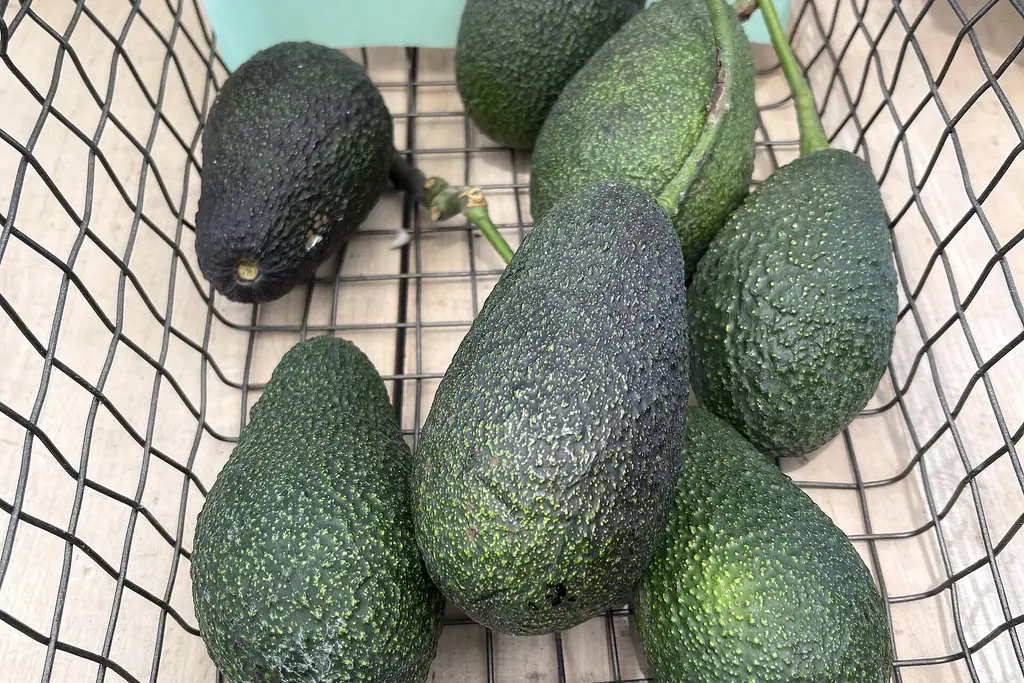
Photo: Missvain, CC BY 4.0, via Wikimedia Commons. Illustrative; not a photo of any offer. Certified organic avocados
Persea americana Mill.
How to source certified organic Hass and green-skin avocados: certification routes, NOP import certificates, EU TRACES, Organic JAS and buyer checks.
- Hass
- Fuerte — green-skin
- Reed — green-skin
Top quality class defined in the reference standard.
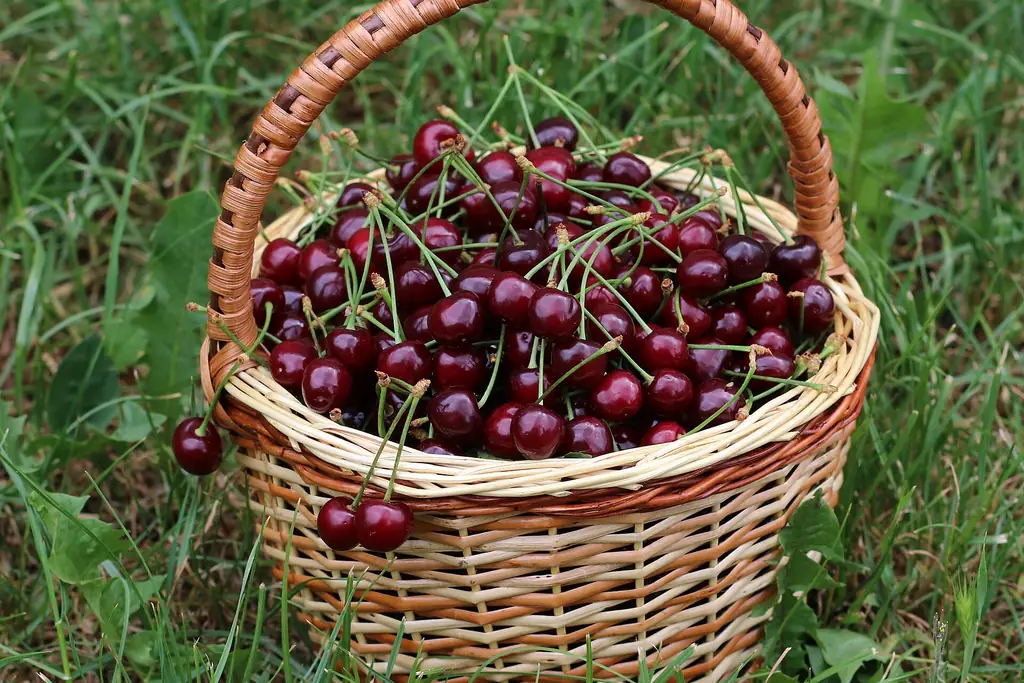
Photo: George Chernilevsky, Public domain, via Wikimedia Commons. Illustrative; not a photo of any offer. Certified organic cherries
Prunus avium (L.) L.; Prunus cerasus L.
Source certified organic sweet cherries: what the certificate must cover, US NOP import certificates, EU TRACES inspection certificates and RFQ checks.
- Sweet cherries
- Sour cherries
- Picota / stemless presentation
- Bing
- Santina
- Regina
Top quality class defined in the reference standard.
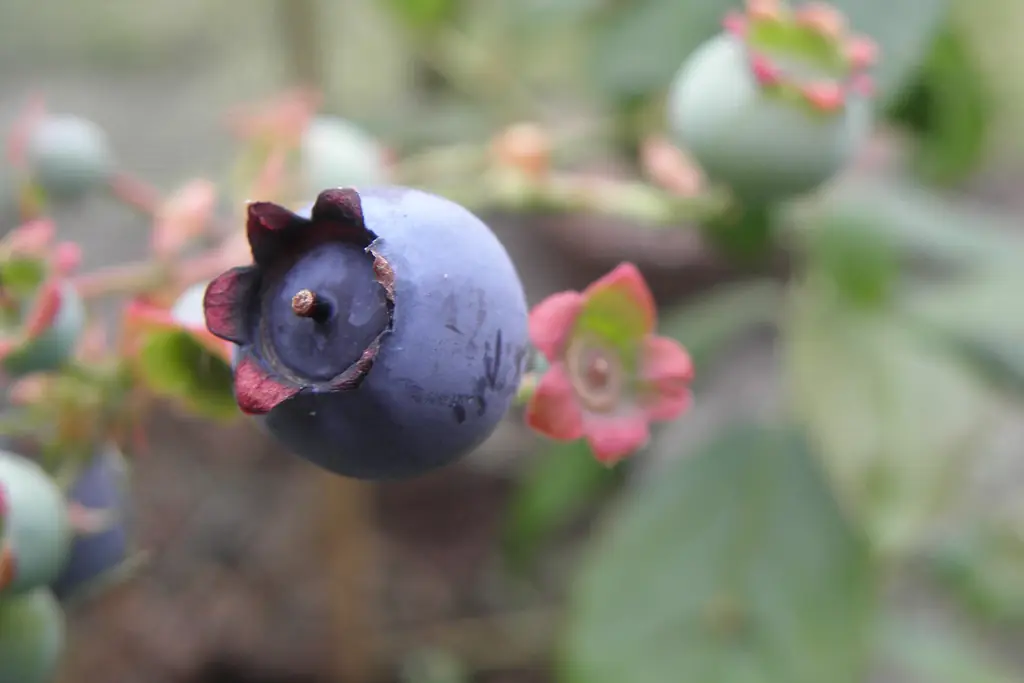
Photo: Rob Hille, CC BY-SA 3.0, via Wikimedia Commons. Illustrative; not a photo of any offer. Certified organic blueberries
Vaccinium spp.
Certified organic blueberries for import programmes: certification scope, shipment documents for the US, EU and Japan, and what to state in your RFQ.
- Southern highbush
- Northern highbush
- Rabbiteye
Top quality class defined in the reference standard.
Compare at a glance
Each row summarises the product profile; the storage line is quoted from the named source. Open a profile for the full, sourced detail.
| Product | Types covered | Reference standard | Top class defined | Storage and handling |
|---|---|---|---|---|
| Certified organic avocados | Hass, Fuerte — green-skin, Reed — green-skin | UNECE Standard FFV-42 Avocados, 2023 edition | Yes | Mature-green fruit has an optimum storage range of 5–13°C, depending on cultivar and duration. (UC Davis Postharvest Technology Center) |
| Certified organic cherries | Sweet cherries, Sour cherries, Picota / stemless presentation, Bing, Santina | UNECE Standard FFV-13 Cherries, 2023 edition | Yes | Optimum storage temperature is −0.5 ± 0.5°C. (UC Davis Postharvest Technology Center) |
| Certified organic blueberries | Southern highbush, Northern highbush, Rabbiteye | UNECE Standard FFV-57 Berry fruits, 2023 edition | Yes | Blueberries have an optimum storage temperature of about 0 ± 0.5°C and a stated storage life of one to two weeks. (UC Davis Postharvest Technology Center) |
Key points
Short answers to the questions buyers ask first. Each answer comes from the numbered sources below.
- What certified organic means — and who certifies
- Codex CXG 32-1999 provides guidelines for organic production, processing, labeling, inspection, certification and import controls; it is guidance for national systems, not a worldwide certificate issued by Codex.[1]
- United States — National Organic Program
- Under USDA's certification process, an operation selects a USDA-accredited certifying agent; the agent reviews its application and inspection report and issues the organic certificate. Maintaining certification involves annual review and inspection.[2]
- European Union — organic legislation and TRACES
- The Commission's organic trade guidance identifies Regulation (EU) 2018/848 as part of the framework governing recognition of third-country organic systems and requires imported products marketed as organic to meet EU organic legislation.[5]
- Japan — Organic JAS and labeling
- MAFF states that only registered business entities certified by an accredited certification body may apply the Organic JAS logo to verify compliance with the relevant organic JAS requirements.[7]
- Brazil — MAPA, certification and the CNPO
- MAPA distinguishes certification by an accredited organic conformity assessment body from registration for direct sales without certification. Certification may involve an audit certifier or a participatory organic assessment body, known as an OPAC.[8]
- Canada — Canada Organic Regime
- The Canada Organic Regime is the certification system in Part 13 of the Safe Food for Canadians Regulations. Its additional requirements apply to organic-labeled imports and interprovincial trade, and to products displaying the Canada organic logo.[10]
- Equivalence and recognition are limited in scope
- The Commission states that recognition of equivalent countries applies to the product categories for which each country is recognized; other categories require the appropriate alternative certification route.[5]
- What buyers should request for each offer
- Codex includes inspection, certification and recordkeeping within its organic control framework. USDA's import rules and the EU's TRACES requirements add shipment-related documentation, while MAPA identifies product certificates and commercial transaction declarations as buyer evidence.[1],[4],[5],[8]
What certified organic means — and who certifies
- Codex CXG 32-1999 provides guidelines for organic production, processing, labeling, inspection, certification and import controls; it is guidance for national systems, not a worldwide certificate issued by Codex.[1]
- Codex describes certification as written or equivalent assurance by an official certification body or an officially recognized certification body that identified foods or food-control systems conform to requirements.[1]
General buyer guidance
- Treat organic as a documented status of a specific supplier's product, not a default property of any product in the catalogue. The organic avocado, cherry and blueberry profiles below explain the documents to request; none of them describes an existing offer.
- Ask the competent authority or authorized certifier to resolve questions about certification scope or validity; do not treat marketplace copy as certification evidence.
United States — National Organic Program
- Under USDA's certification process, an operation selects a USDA-accredited certifying agent; the agent reviews its application and inspection report and issues the organic certificate. Maintaining certification involves annual review and inspection.[2]
- USDA identifies the Organic INTEGRITY Database as its listing of certified organic operations worldwide; it also includes operations certified under trade-partner programs that export to the United States.[4]
- The Strengthening Organic Enforcement rule took effect on March 20, 2023, with an implementation date of March 19, 2024. USDA states that each imported organic shipment must be associated with an NOP Import Certificate after implementation.[3],[4]
- Exporting certifiers generate NOP Import Certificates in INTEGRITY. USDA-accredited certifiers and certifiers recognized under NOP equivalence or recognition arrangements may issue them; these import certificates are not publicly accessible in the database.[4]
General buyer guidance
- Look up the operator through the Organic INTEGRITY Database linked from USDA's import-certificate page, then compare its identity, status and product scope with the offer.
- Request the relevant NOP Import Certificate through the shipment's responsible parties rather than expecting a public database search to reveal it.
European Union — organic legislation and TRACES
- The Commission's organic trade guidance identifies Regulation (EU) 2018/848 as part of the framework governing recognition of third-country organic systems and requires imported products marketed as organic to meet EU organic legislation.[5]
- All organic products imported into the EU require the appropriate electronic certificate of inspection, administered through TRACES; the Commission states that goods without it will not be released from their port of arrival.[5]
- The applicable inspection and certification route depends on origin and product category: the Commission distinguishes countries covered by trade agreements or equivalence recognition from other countries where Commission-recognized control bodies or authorities carry out certification.[5]
- The EU organic logo may be used only on products certified as organic by an authorized control agency or body; the logo is not a substitute for certification.[6]
General buyer guidance
- Follow the Commission's current links to recognized countries and control bodies, and check the body's authorization for the origin and product category.
- Confirm the applicable TRACES certificate-of-inspection process with the importer and control body before shipment.
Japan — Organic JAS and labeling
- MAFF states that only registered business entities certified by an accredited certification body may apply the Organic JAS logo to verify compliance with the relevant organic JAS requirements.[7]
- MAFF prohibits selling agricultural products and processed foods with organic names or claims without the Organic JAS logo.[7]
General buyer guidance
- Ask the responsible certified operator or importer to identify the applicable JAS certification and labeling route for the offered produce.
- Do not assume that a foreign organic logo alone permits an organic label in Japan.
Brazil — MAPA, certification and the CNPO
- MAPA distinguishes certification by an accredited organic conformity assessment body from registration for direct sales without certification. Certification may involve an audit certifier or a participatory organic assessment body, known as an OPAC.[8]
- MAPA states that producers registered only for uncertified direct sales cannot sell to third parties; the permitted channels are direct consumer sales and government purchases. Certified products may also supply supermarkets, stores, restaurants, hotels and industry.[8]
- MAPA's CNPO page provides the national producer register and links to the list of organic conformity assessment bodies. MAPA advises buyers that an invoice describing goods as organic is not full evidence of origin and identifies product certificates and commercial transaction declarations as supporting documents.[9],[8]
General buyer guidance
- For a B2B offer, request the product certificate, check the producer in the CNPO and check the responsible certifier or OPAC against MAPA's list.
- Match the certificate and transaction documentation to the offered product and production unit; do not treat a register entry as proof of a particular lot.
Canada — Canada Organic Regime
- The Canada Organic Regime is the certification system in Part 13 of the Safe Food for Canadians Regulations. Its additional requirements apply to organic-labeled imports and interprovincial trade, and to products displaying the Canada organic logo.[10]
- CFIA oversees the regime and accredits certification bodies; certification bodies verify compliance with the Canadian Organic Standards and issue certificates.[10]
- Imported organic products may be certified to the Canadian Organic Standards by a CFIA-accredited body or certified under an applicable equivalency arrangement, subject to that arrangement's requirements.[10]
General buyer guidance
- Identify the certification route accepted for the particular import and ask for evidence that the product and certifying body meet that route's conditions.
Equivalence and recognition are limited in scope
- The Commission states that recognition of equivalent countries applies to the product categories for which each country is recognized; other categories require the appropriate alternative certification route.[5]
- CFIA states that exports under equivalency arrangements must meet the Canada Organic Regime and the arrangement's terms, as well as the importing country's labeling requirements.[10]
- MAPA states that certification to international standards such as NOP, EU or JAS does not automatically establish organic status in Brazil; Brazilian requirements must be met.[8]
General buyer guidance
- Check the current arrangement for the specific destination, origin, product category, certifier and any additional conditions. Do not infer worldwide acceptance from one organic certificate.
- Ask the competent authority or certifier to confirm the applicable route before relying on an equivalence claim.
What buyers should request for each offer
- Codex includes inspection, certification and recordkeeping within its organic control framework. USDA's import rules and the EU's TRACES requirements add shipment-related documentation, while MAPA identifies product certificates and commercial transaction declarations as buyer evidence.[1],[4],[5],[8]
General buyer guidance
- Request a current certificate naming the legal operator and relevant production or handling units, the certifier, the applicable standard and the offered product scope.
- Check any expiry or validity dates shown and confirm current status with the official register or issuing certifier; do not assume every scheme uses an identical expiry format.
- Request transaction or import certificates where required, including the relevant NOP Import Certificate or EU electronic certificate of inspection.
- Request lot identifiers and records linking the offer, packing, invoice and shipment to the certified product and responsible operators.
- Keep agroecological, regenerative, pesticide-free, free-range and natural claims separate from certified-organic status. Ask for distinct evidence for each claim rather than accepting one as a substitute for another.
- For this marketplace, submit one reviewed RFQ; our team approaches independent suppliers, and buyers do not contact suppliers directly. Global B2B Group does not certify, approve or vouch for organic status and is not a grower, exporter, importer, seller or certifier. Producers and exporters remain responsible for compliance.
Start your request with these requirements
Fill in what you already know; it is carried into the request form, where you add your programme value and contact details. Nothing is sent until you submit the form.
Free for buyers. One reviewed request; our team approaches suitable independent suppliers and returns comparable proposals — you never deal with a supplier directly, and suppliers cannot pay for placement. Assisted sourcing applies to programmes of USD 250,000 or more per year or season.
Frequently asked questions
Is a product organic because its farm uses no pesticides?
No. That statement alone does not establish certified-organic status. Organic certification involves conformity with a broader production and control system; USDA's process includes application review, inspection and a certifier's decision. Request certification evidence for the operator and product.[1],[2]
How do I check an organic certificate?
As buyer guidance, compare the operator name, product scope, certifier and current status with the offer, using the official register and issuing certifier. USDA identifies INTEGRITY as its operation listing; Brazil provides the CNPO and a list of conformity assessment bodies. Check shipment documents separately where required.[4],[9],[8]
Does Global B2B Group certify organic produce?
No. Global B2B Group does not certify, approve or vouch for organic status. Certification must be established through the competent authority or authorized certifier and product-specific documents. For example, USDA-accredited certifying agents issue USDA organic certificates, and CFIA-accredited certification bodies perform certification under Canada's regime.[2],[10]
Does one organic certificate cover every destination?
Do not assume so. EU equivalence recognition is limited to recognized product categories; Canada's arrangements have their own terms; MAPA states that NOP, EU and JAS certificates are not automatically recognized as Brazilian organic certification.[5],[10],[8]
Related guides and tools
Other catalogue categories
Farm, plant or input projects
Production projects behind this category are handled by our specialist platform.
SeedMatchSources
Numbers in the text point to these sources. Dates are those shown on each source, or the date we checked an undated page.
- 1.Guidelines for the Production, Processing, Labelling and Marketing of Organically Produced Foods — CXG 32-1999 (opens in a new tab) — Codex Alimentarius Commission, FAO/WHO, Adopted 1999; amendments through 2013
- 2.Becoming a Certified Operation (opens in a new tab) — USDA Agricultural Marketing Service, page checked 2026-10-25
- 3.Strengthening Organic Enforcement (opens in a new tab) — USDA Agricultural Marketing Service, Effective March 20, 2023; implementation March 19, 2024
- 4.Electronic Organic Import Certificates (opens in a new tab) — USDA Agricultural Marketing Service, page checked 2026-10-25
- 5.Trade in organics (opens in a new tab) — European Commission, page checked 2026-10-25
- 6.The organic logo (opens in a new tab) — European Commission, page checked 2026-10-25
- 7.Organic JAS (opens in a new tab) — Japan Ministry of Agriculture, Forestry and Fisheries, page checked 2026-10-25
- 8.Regularização da Produção Orgânica (opens in a new tab) — Brazil Ministério da Agricultura e Pecuária, Updated September 30, 2026
- 9.Cadastro Nacional de Produtores Orgânicos (CNPO) (opens in a new tab) — Brazil Ministério da Agricultura e Pecuária, Updated October 21, 2026
- 10.Regulating organic products in Canada (opens in a new tab) — Canadian Food Inspection Agency, page checked 2026-10-25
Category guide last reviewed 2026-10-25.
Global B2B Group is committed to conducting its own activities in accordance with applicable law. It facilitates sourcing and RFQs and does not itself produce, manufacture, export or sell the listed products, or approve them on behalf of any authority. Suppliers are responsible for the products and shipments they offer and supply meeting the requirements of the origin and destination countries — for example safety, quality, labelling, traceability, sanitary or phytosanitary certificates and export documents, where relevant. Buyers remain responsible for their own import permissions, local requirements and due diligence. Requirements differ by product and country; this is not legal advice. Compliance & responsibilities · Terms