
Commercial produce specifications
Fresh fruit & vegetables: specify quality before origin
UNECE produce standards distinguish minimum quality requirements, commercial classes, sizing where applicable, package presentation, and marking.[1],[2],[3],[4]
Storage targets differ sharply: cherries need a near-freezing chain, while mature-green mangoes have an optimum temperature of 13°C.[6],[8]
Free for buyers. One reviewed request; our team approaches suitable independent suppliers and returns comparable proposals — you never deal with a supplier directly, and suppliers cannot pay for placement. Assisted sourcing applies to programmes of USD 250,000 or more per year or season.
Educational profile, not an offer. Facts are general and come from the numbered sources; guidance boxes are our own buyer advice. No verified supplier offer for this item is on file — origin, grade, certification, packing and timing are confirmed per offer, with evidence, during sourcing.
Products in fresh fruit & vegetables
8 of 8
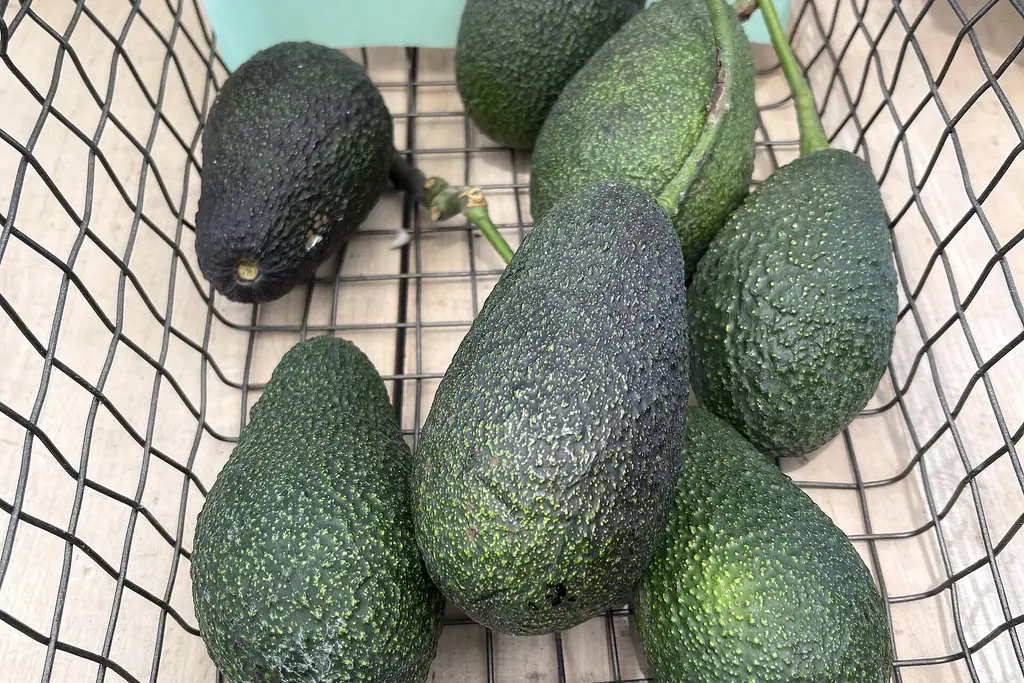
Photo: Missvain, CC BY 4.0, via Wikimedia Commons. Illustrative; not a photo of any offer. Avocados
Persea americana Mill.
Hass and green-skin avocado specifications for importers: UNECE classes, sizing, ripeness, cold chain and documents to set before a sourcing RFQ.
- Hass
- Fuerte — green-skin
- Reed — green-skin
Top quality class defined in the reference standard.
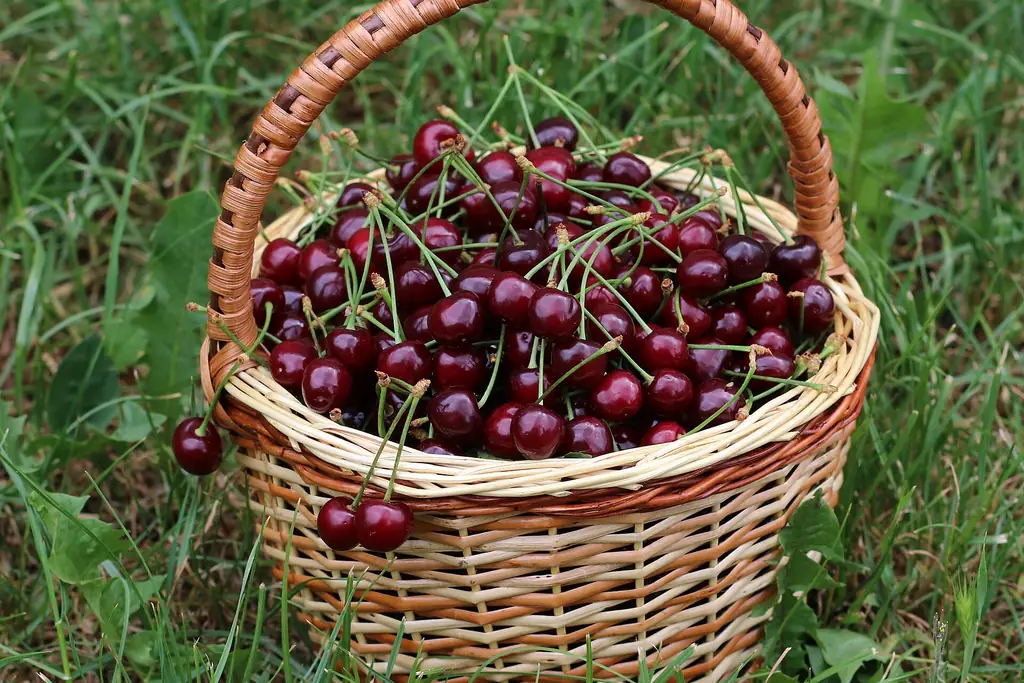
Photo: George Chernilevsky, Public domain, via Wikimedia Commons. Illustrative; not a photo of any offer. Cherries
Prunus avium (L.) L.; Prunus cerasus L.
Cherry varieties for import compared — Santina, Lapins, Regina and more — with UNECE classes, sizing, origin seasons and cold-chain specs for your RFQ.
- Sweet cherries
- Sour cherries
- Picota / stemless presentation
- Bing
- Santina
- Regina
Top quality class defined in the reference standard.
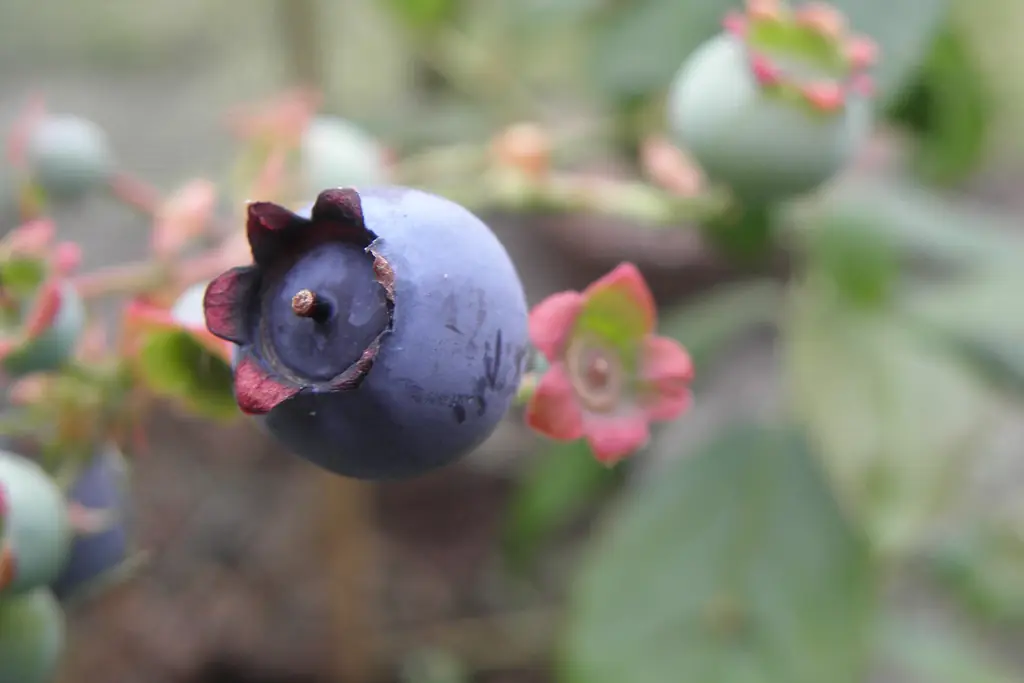
Photo: Rob Hille, CC BY-SA 3.0, via Wikimedia Commons. Illustrative; not a photo of any offer. Blueberries
Vaccinium spp.
Blueberry specifications for importers: highbush and rabbiteye types, quality classes, sizing and cold-chain checks to set before a sourcing RFQ.
- Southern highbush
- Northern highbush
- Rabbiteye
Top quality class defined in the reference standard.
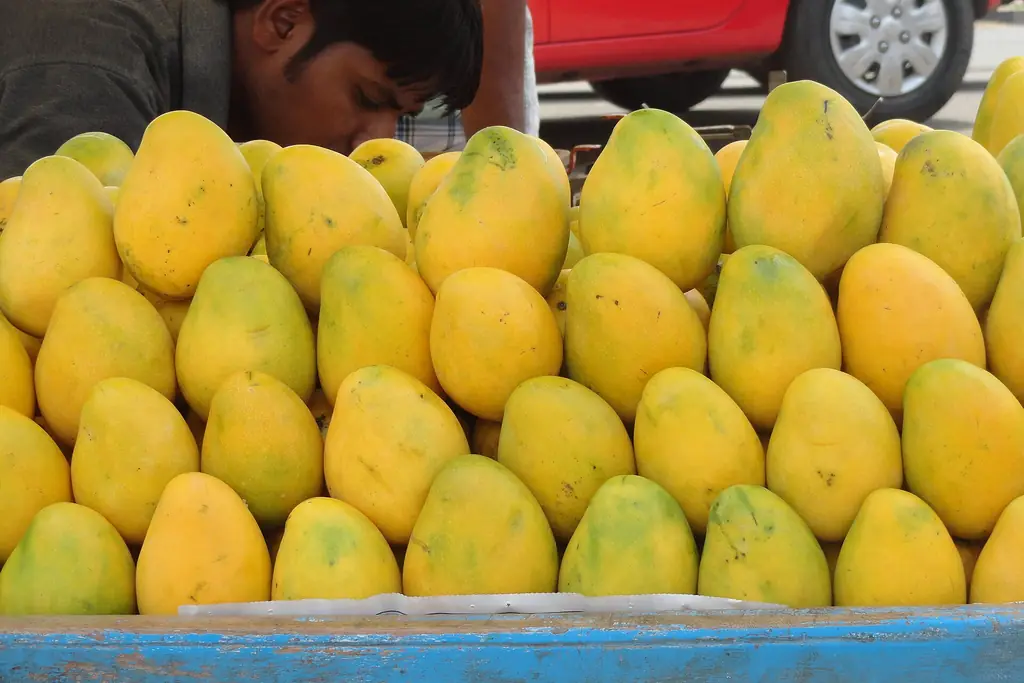
Photo: Bhaskaranaidu, CC BY-SA 3.0, via Wikimedia Commons. Illustrative; not a photo of any offer. Mangoes
Mangifera indica L.
Compare mangoes varieties, UNECE quality classes, sizing, origin seasons, and cold-chain requirements before preparing a wholesale sourcing RFQ.
- Tommy Atkins
- Kent
- Keitt
- Ataulfo / Honey
- Haden
- Francis
Top quality class defined in the reference standard.
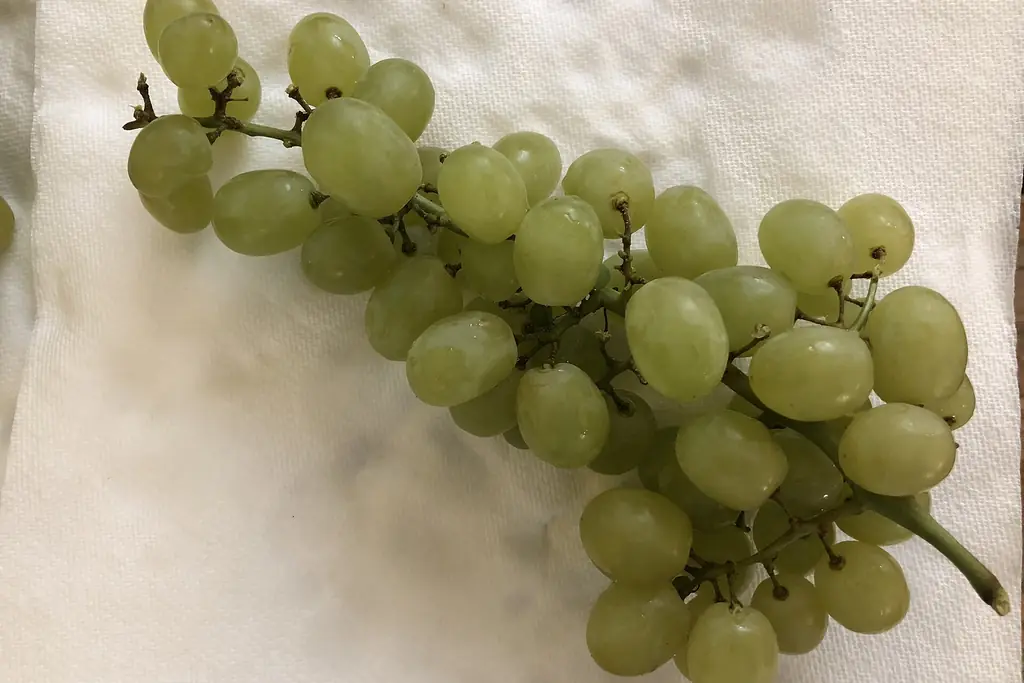
Photo: Famartin, CC BY-SA 4.0, via Wikimedia Commons. Illustrative; not a photo of any offer. Table grapes
Vitis vinifera L.
Table grape specifications for importers: seedless, seeded and red or black cultivars, UNECE classes, bunch sizes and storage specs for an RFQ.
- Seedless
- Seeded
- Red and black cultivars
Top quality class defined in the reference standard.
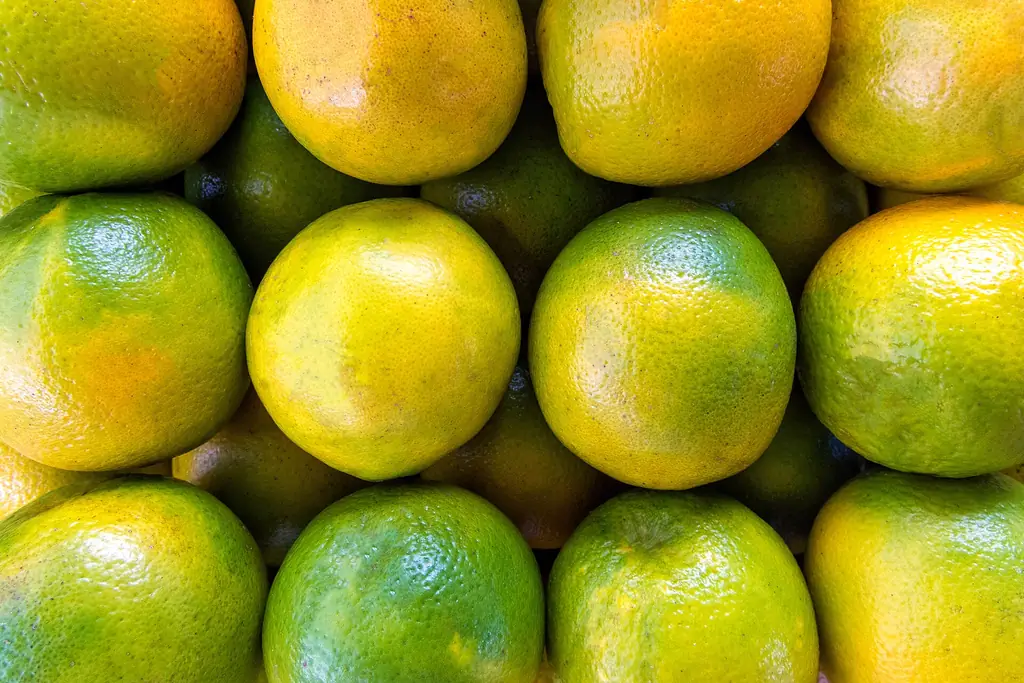
Photo: Wilfredor, CC BY-SA 4.0, via Wikimedia Commons. Illustrative; not a photo of any offer. Citrus
Citrus specifications for importers: oranges, mandarins, lemons, limes and grapefruit, quality classes, sizing and handling to set in your RFQ.
- Oranges
- Mandarins
- Lemons
- Limes
- Grapefruit
Top quality class defined in the reference standard.
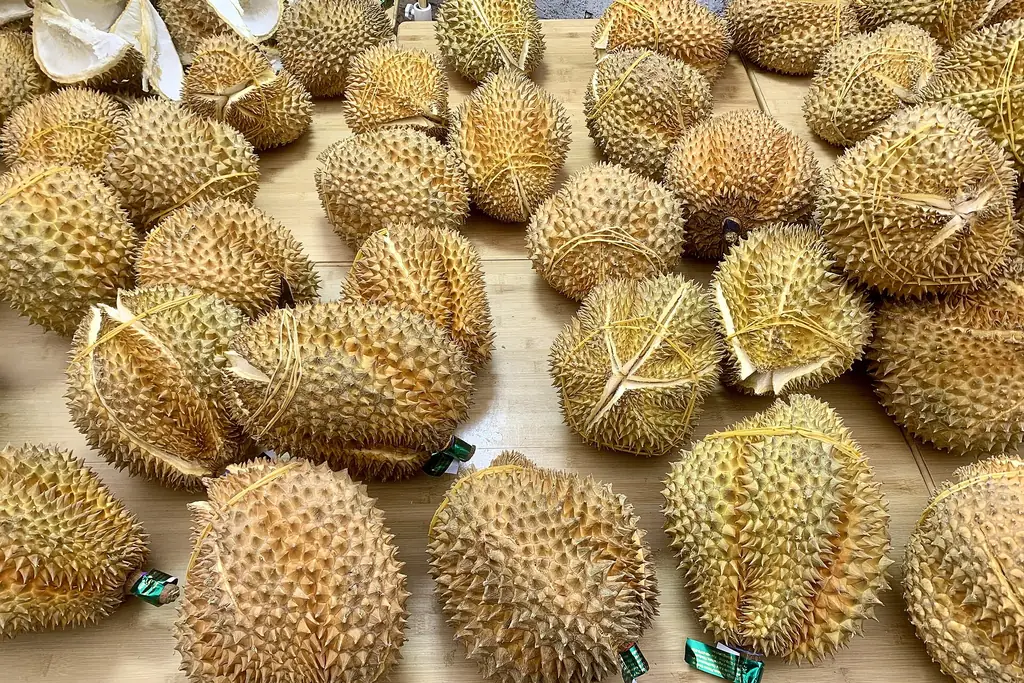
Photo: Dudva, CC0, via Wikimedia Commons. Illustrative; not a photo of any offer. Durian
Durio zibethinus
Durian for import: Musang King, Monthong, Black Thorn and Ri6, fresh, frozen whole fruit and frozen pulp, grades and China access documents.
- Monthong
- Musang King
- Black Thorn
- Ri6
- Fresh whole fruit
- Frozen whole fruit
Top quality class defined in the reference standard.
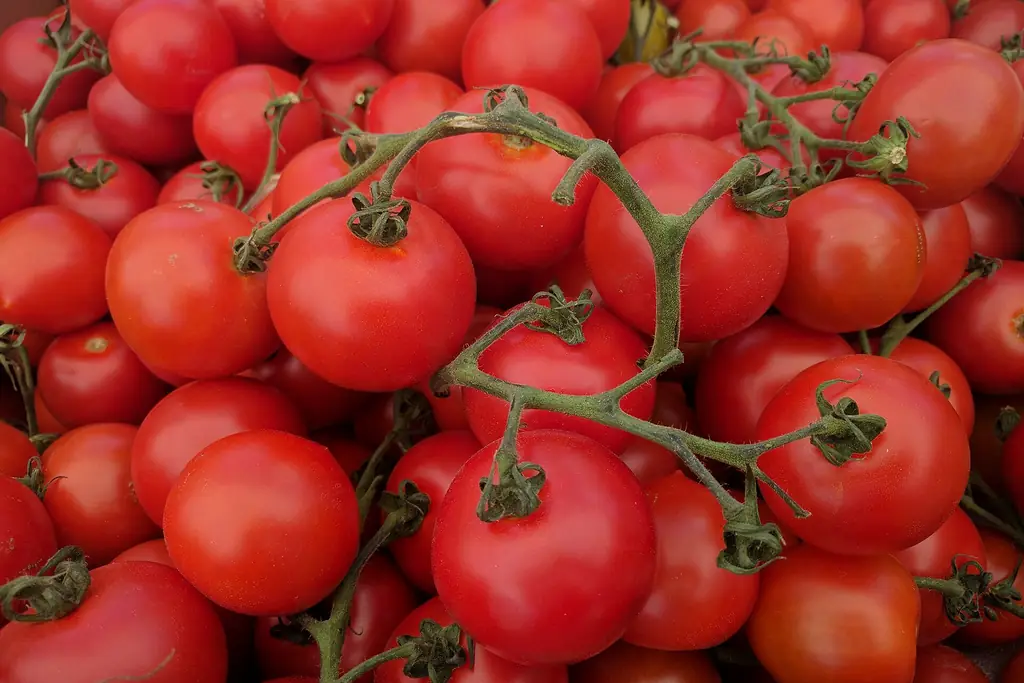
Photo: Grendelkhan, CC BY-SA 3.0, via Wikimedia Commons. Illustrative; not a photo of any offer. Tomatoes
Solanum lycopersicum L.
Bulk and wholesale tomatoes for import: round, ribbed, cherry and truss types, quality classes, ripeness stages and handling to set in your RFQ.
- Round
- Ribbed
- Oblong / elongated
- Cherry / cocktail
- Trusses
Top quality class defined in the reference standard.
Compare at a glance
Each row summarises the product profile; the storage line is quoted from the named source. Open a profile for the full, sourced detail.
| Product | Types covered | Reference standard | Top class defined | Storage and handling |
|---|---|---|---|---|
| Avocados | Hass, Fuerte — green-skin, Reed — green-skin | UNECE Standard FFV-42 Avocados, 2023 edition | Yes | Mature-green fruit has an optimum storage range of 5–13°C, depending on cultivar and duration. (UC Davis Postharvest Technology Center) |
| Cherries | Sweet cherries, Sour cherries, Picota / stemless presentation, Bing, Santina | UNECE Standard FFV-13 Cherries, 2023 edition | Yes | Optimum storage temperature is −0.5 ± 0.5°C. (UC Davis Postharvest Technology Center) |
| Blueberries | Southern highbush, Northern highbush, Rabbiteye | UNECE Standard FFV-57 Berry fruits, 2023 edition | Yes | Blueberries have an optimum storage temperature of about 0 ± 0.5°C and a stated storage life of one to two weeks. (UC Davis Postharvest Technology Center) |
| Mangoes | Tommy Atkins, Kent, Keitt, Ataulfo / Honey, Haden | UNECE Standard FFV-45 Mangoes, 2023 edition | Yes | Optimum temperature is 13°C for mature-green mangoes and 10°C for partially ripe or ripe fruit. (UC Davis Postharvest Technology Center) |
| Table grapes | Seedless, Seeded, Red and black cultivars | UNECE Standard FFV-19: Table grapes, 2025 edition | Yes | Recommended berry storage temperature is −1 to 0°C. (UC Davis Postharvest Technology Center) |
| Citrus | Oranges, Mandarins, Lemons, Limes, Grapefruit | UNECE Standard FFV-14: Citrus fruit, 2025 edition | Yes | Oranges: 3–8°C for up to three months, depending on cultivar, harvest maturity and production area. (UC Davis Postharvest Technology Center) |
| Durian | Monthong, Musang King, Black Thorn, Ri6, Fresh whole fruit | Standard for Durian (CODEX STAN 317-2014) | Yes | UC Davis recommends 13–15°C and 90–95% relative humidity for durian, with storage potential of 3–5 weeks for mature unripe fruit or 7–14 days for ripe fruit. (UC Davis Postharvest Research and Extension Center) |
| Tomatoes | Round, Ribbed, Oblong / elongated, Cherry / cocktail, Trusses | UNECE Standard FFV-36: Tomatoes, 2017 edition | Yes | Standard mature-green harvest stage MG2 has fully developed seeds that are not cut when the fruit is sliced, with advanced gel formation in at least one locule. (UC Davis Postharvest Technology Center) |
Key points
Short answers to the questions buyers ask first. Each answer comes from the numbered sources below.
- Quality classes and lot tolerances
- Extra, Class I, and Class II are commercial quality classes in the avocado, cherry, berry-fruit, and mango standards.[1],[2],[3],[4]
- Sizing and package uniformity
- Avocados are sized by weight or count, whereas cherry size is the maximum equatorial diameter.[1],[2]
- Cold chain, chilling sensitivity, and ethylene
- Cherries have an optimum storage temperature of −0.5 ± 0.5°C and 90–95% relative humidity.[6]
- Phytosanitary certification and market access
- ISPM 12 provides requirements and guidance for preparing and issuing phytosanitary certificates for export and re-export.[9]
Quality classes and lot tolerances
- Extra, Class I, and Class II are commercial quality classes in the avocado, cherry, berry-fruit, and mango standards.[1],[2],[3],[4]
- Extra requires superior quality and permits only very slight superficial defects that do not impair overall appearance, quality, keeping quality, or presentation.[1],[2],[3],[4]
- Class I accommodates specified slight defects, while Class II accommodates broader defects provided minimum and essential quality requirements are retained.[1],[2],[3],[4]
- For these four standards, Extra has a 5% lot tolerance below Extra but meeting Class I, with no more than 0.5% in total of Class II quality; cherries also have specific split and worm-eaten limits.[1],[2],[3],[4]
- Class I tolerances are not identical across products: the berry standard permits at most 2% in total below Class II or minimum requirements, or decayed, within its 10% tolerance; avocado and mango standards use 1%.[3],[1],[4]
General buyer guidance
- Name the product standard and edition rather than relying on an undefined premium label.
- Agree the sampling plan and acceptance thresholds in the purchase specification.
Sizing and package uniformity
- Avocados are sized by weight or count, whereas cherry size is the maximum equatorial diameter.[1],[2]
- Mango codes A, B, C, and D represent 100–350 g, 351–550 g, 551–800 g, and above 800 g respectively; within-package weight spreads are limited to 75, 100, 125, and 150 g.[4]
- FFV-57 has no berry-fruit sizing requirement, so a blueberry diameter threshold is not a UNECE class definition.[3]
- Cherry packages must be uniform in origin, variety, and quality and reasonably uniform in size; Extra also requires uniform coloring and ripeness.[2]
General buyer guidance
- State whether your size specification is a standard code, diameter threshold, weight band, or contractual count.
Cold chain, chilling sensitivity, and ethylene
- Cherries have an optimum storage temperature of −0.5 ± 0.5°C and 90–95% relative humidity.[6]
- Mature-green mangoes have an optimum of 13°C, compared with 10°C for partially ripe and ripe fruit.[8]
- Mature-green avocados have an optimum range of 5–13°C depending on cultivar and duration; ripe fruit has an optimum of 2–4°C.[5]
- Mango chilling injury depends on cultivar, ripeness, temperature, and duration, so the coldest possible setting is not always the safest.[8]
- Ethylene can induce and synchronize avocado and mango ripening, but it does not accelerate cherry ripening.[5],[8],[6]
- Blueberries respond to ethylene but should be harvested near full ripe because flavor does not improve after harvest.[7]
General buyer guidance
- Request a commodity- and maturity-specific temperature plan, temperature logs, and a receiving inspection procedure.
- Assess mixed-load compatibility before combining products in one shipment.
Phytosanitary certification and market access
- ISPM 12 provides requirements and guidance for preparing and issuing phytosanitary certificates for export and re-export.[9]
- ISPM 7 addresses the phytosanitary certification systems established by national plant protection organizations.[9]
- Peru’s June 2025 blueberry report describes SENASA registration of production areas for export campaigns and destination-linked export controls.[10]
General buyer guidance
- Confirm current origin-to-destination market access with the relevant plant protection authorities before booking.
- Ask which permits, registrations, additional declarations, inspections, and treatments apply to your specific commodity and destination.
- Do not treat a commercial quality class as a substitute for destination plant-health clearance.
Package marking and labeling
- The four UNECE standards require prescribed package particulars grouped on one side, legible, indelible, and visible from outside.[1],[2],[3],[4]
- Identification includes the packer and/or dispatcher/exporter name and physical address, or an officially recognized code subject to the standard’s conditions.[1],[2],[3],[4]
- Country of origin and commercial class are marking elements in these standards.[1],[2],[3],[4]
- Avocado markings require the variety, while cherry variety and size markings are optional; stemless or sour cherry descriptions are required where appropriate.[1],[2]
- An official control mark is optional in these standards rather than a prerequisite for the commercial class.[1],[2],[3],[4]
General buyer guidance
- Approve a destination-specific carton artwork proof and reconcile it with the packing list before dispatch.
Start your request with these requirements
Fill in what you already know; it is carried into the request form, where you add your programme value and contact details. Nothing is sent until you submit the form.
Free for buyers. One reviewed request; our team approaches suitable independent suppliers and returns comparable proposals — you never deal with a supplier directly, and suppliers cannot pay for placement. Assisted sourcing applies to programmes of USD 250,000 or more per year or season.
Frequently asked questions
Does Extra mean zero defects in the entire lot?
No. Extra sets strict fruit-level requirements but also permits defined lot tolerances, normally 5% meeting Class I with a small Class II sublimit in these standards.[1],[2],[3],[4]
Does every product have a UNECE size code?
No. Mangoes have A–D weight codes and avocados have a weight/count scale, but FFV-57 sets no berry sizing requirements.[4],[1],[3]
Can all fresh produce travel at the same temperature?
No. Cherry optimum storage is near −0.5°C, while mature-green mango optimum storage is 13°C and chilling injury depends on exposure conditions.[6],[8]
What is the role of a phytosanitary certificate?
ISPM 12 addresses preparation and issuance of export and re-export phytosanitary certificates; ISPM 7 addresses the national certification system. Confirm the applicable destination requirements separately.[9]
Related guides and tools
Other catalogue categories
Farm, plant or input projects
Production projects behind this category are handled by our specialist platform.
SeedMatchSources
Numbers in the text point to these sources. Dates are those shown on each source, or the date we checked an undated page.
- 1.UNECE Standard FFV-42 Avocados, 2023 edition (opens in a new tab) — UNECE, 2023
- 2.UNECE Standard FFV-13 Cherries, 2023 edition (opens in a new tab) — UNECE, 2023
- 3.UNECE Standard FFV-57 Berry fruits, 2023 edition (opens in a new tab) — UNECE, 2023
- 4.UNECE Standard FFV-45 Mangoes, 2023 edition (opens in a new tab) — UNECE, 2023
- 5.Avocado — Produce Facts (opens in a new tab) — UC Davis Postharvest Technology Center, February 1999
- 6.Cherry — Produce Facts (opens in a new tab) — UC Davis Postharvest Technology Center, May 1996
- 7.Bushberry — Produce Facts (opens in a new tab) — UC Davis Postharvest Technology Center, August 1998
- 8.Mango — Produce Facts (opens in a new tab) — UC Davis Postharvest Technology Center, February 1997
- 9.ISPM 12 — Phytosanitary certificates (opens in a new tab) — IPPC / FAO, April 7, 2023
- 10.Peru Blueberry Annual (GAIN PE2025-0010) (opens in a new tab) — USDA Foreign Agricultural Service, 13 June 2025
Category guide last reviewed 2026-10-25.
Global B2B Group is committed to conducting its own activities in accordance with applicable law. It facilitates sourcing and RFQs and does not itself produce, manufacture, export or sell the listed products, or approve them on behalf of any authority. Suppliers are responsible for the products and shipments they offer and supply meeting the requirements of the origin and destination countries — for example safety, quality, labelling, traceability, sanitary or phytosanitary certificates and export documents, where relevant. Buyers remain responsible for their own import permissions, local requirements and due diligence. Requirements differ by product and country; this is not legal advice. Compliance & responsibilities · Terms