
Sourcing education
Eggs: a buyer specification guide
U.S. shell egg standards distinguish quality grades AA, A, and B from weight classes.[3]
EU Class A and Class B eggs are regulated under Delegated Regulation (EU) 2023/2465, which repealed Regulation (EC) 589/2008.[1]
Free for buyers. One reviewed request; our team approaches suitable independent suppliers and returns comparable proposals — you never deal with a supplier directly, and suppliers cannot pay for placement. Assisted sourcing applies to programmes of USD 250,000 or more per year or season.
Educational profile, not an offer. Facts are general and come from the numbered sources; guidance boxes are our own buyer advice. No verified supplier offer for this item is on file — origin, grade, certification, packing and timing are confirmed per offer, with evidence, during sourcing.
Products in eggs
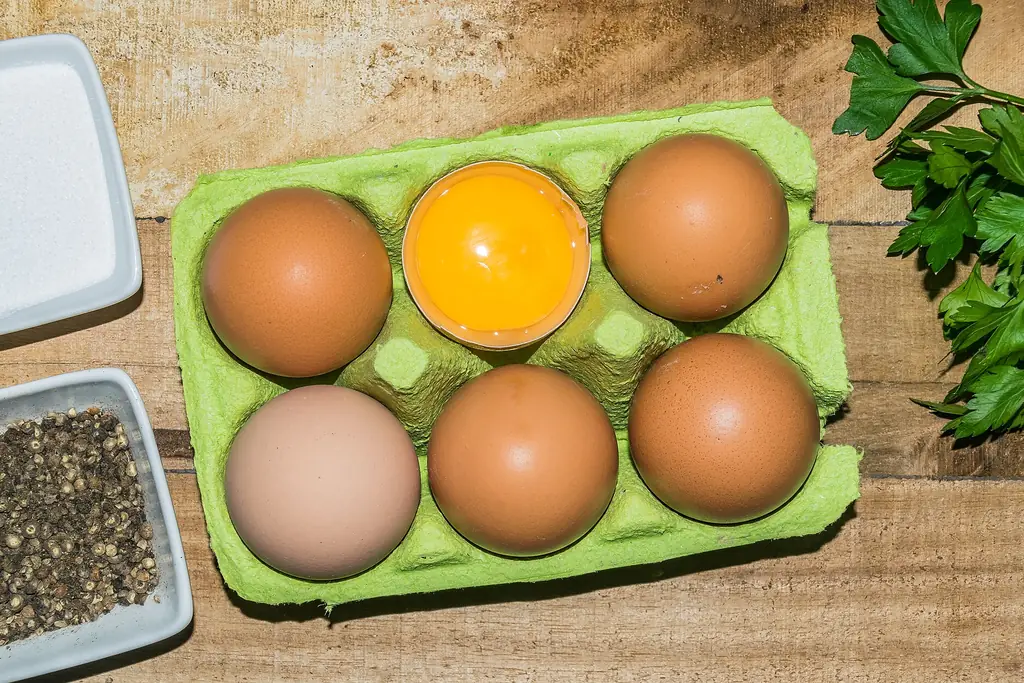
Photo: Krzysztof Golik, CC BY-SA 4.0, via Wikimedia Commons. Illustrative; not a photo of any offer. Table eggs
Bulk and wholesale table eggs: US Grades AA, A and B, EU Classes A and B, weight classes and the specs and documents to set before an RFQ.
- US Grade AA
- US Grade A
- US Grade B
- EU Class A
- EU Class B
Top quality class defined in the reference standard.
Key points
Short answers to the questions buyers ask first. Each answer comes from the numbered sources below.
Grades and weight classes
Production-system labeling
Cold chain and shelf-life rules
- U.S. consumer guidance is to refrigerate eggs at 40°F or below.[2]
- Keep refrigerated eggs in their carton in the refrigerator rather than in the door.[2]
- FSIS advises using refrigerated raw shell eggs within three to five weeks.[2]
- EU Class A eggs generally must not be chilled below 5°C before sale; transport of up to 24 hours and retail storage of up to 72 hours are exceptions to the chilled classification.[1]
- EU Class A packs advise consumers to keep eggs chilled after purchase.[1]
- The EU best-before date is no more than 28 days after laying.[1]
General buyer guidance
- Separate pre-sale handling instructions from after-purchase instructions; confirm destination rules.
Hatching eggs: a separate input
General buyer guidance
- Handle hatching-egg enquiries separately from food-egg RFQs through HatchMatch.
- Specify incubation purpose and desired hatchery documentation in that separate enquiry.
Start your request with these requirements
Fill in what you already know; it is carried into the request form, where you add your programme value and contact details. Nothing is sent until you submit the form.
Free for buyers. One reviewed request; our team approaches suitable independent suppliers and returns comparable proposals — you never deal with a supplier directly, and suppliers cannot pay for placement. Assisted sourcing applies to programmes of USD 250,000 or more per year or season.
Frequently asked questions
Related guides and tools
Other catalogue categories
Farm, plant or input projects
Production projects behind this category are handled by our specialist platform.
HatchMatchSources
Numbers in the text point to these sources. Dates are those shown on each source, or the date we checked an undated page.
- 1.Commission Delegated Regulation (EU) 2023/2465 (opens in a new tab) — European Commission / EUR-Lex, 2023-11-08
- 2.Shell Eggs from Farm to Table (opens in a new tab) — USDA FSIS, page checked 2026-10-25
- 3.United States Standards, Grades, and Weight Classes for Shell Eggs (opens in a new tab) — USDA AMS, 2000-07-20
Category guide last reviewed 2026-10-25.
Global B2B Group is committed to conducting its own activities in accordance with applicable law. It facilitates sourcing and RFQs and does not itself produce, manufacture, export or sell the listed products, or approve them on behalf of any authority. Suppliers are responsible for the products and shipments they offer and supply meeting the requirements of the origin and destination countries — for example safety, quality, labelling, traceability, sanitary or phytosanitary certificates and export documents, where relevant. Buyers remain responsible for their own import permissions, local requirements and due diligence. Requirements differ by product and country; this is not legal advice. Compliance & responsibilities · Terms