
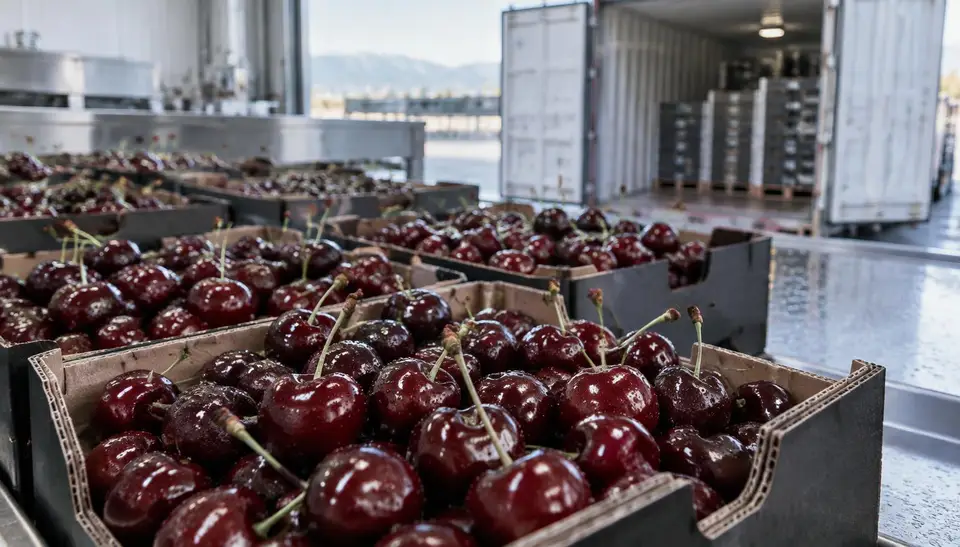

Sourcing produce from South Africa: how importers compare offers before they commit
What 2024 export data shows by product, how South African growers sell, what export inspection covers — and how one reviewed RFQ lets you compare several exporters on the same basis.
Prepared by the Global B2B Group project team · Published · Last reviewed · Scope: Exports from South Africa to any destination. Destination import rules, protocols and registrations differ by product and country and change over time — confirm them for each programme.
How do international importers source produce from South Africa?
Often through an exporter, marketing company or agent rather than the farm itself. Export consignments are inspected by the PPECB against the importing country's minimum requirements. Global B2B Group is an independent, buyer-first sourcing service: our team reviews your RFQ, approaches suitable South African exporters and other origins on your behalf, and returns offers you can compare. Buyers pay nothing; assisted sourcing starts at USD 250,000 per year or season.
How South African growers sell: buyers usually enter through established channels
South African growers may use different channels for domestic wholesale markets, supermarket sales and exports. For an importer, the realistic counterparty is usually an exporter or marketing company, not the orchard.
Global B2B Group does not replace those channels. Where a grower sells exports through an appointed exporter, that exporter is the party our team would approach for your request; supplier identities are checked privately and are not published.
What South Africa exported in 2024, by product
WITS, which publishes UN Comtrade data, reports South Africa's 2024 exports as follows. Figures describe recorded trade, not current availability, prices or which exporters have supply — use them to see where each product already ships.
- HS 081040 groups blueberries with cranberries and other Vaccinium fruit, so it is not a blueberry-only figure.
- Tomato and onion exports in 2024 went mainly to neighbouring African countries; ask about destination experience when you request offers for other markets.
- Cherries are a small export line. A protocol opening China to South African cherries was signed on 8 September 2026; it sets conditions and does not approve any specific orchard, packhouse or shipment. Status checked 25 October 2026: China has published the requirements, but first commercial shipments still await China's final confirmation — treat access as pending verification.
| Product (HS code) | Export value | Quantity | Main reported destinations (by value) |
|---|---|---|---|
| Apples (080810) | ≈ 577.0 million | 671,162 t | United Kingdom, United Arab Emirates, Bangladesh |
| Pears and quinces (080820) | ≈ 244.0 million | 261,510 t | Netherlands, Russian Federation, United Arab Emirates |
| Avocados (080440) | ≈ 204.6 million | 82,784 t | Netherlands, United Kingdom, Russian Federation |
| Cranberries, bilberries and other Vaccinium fruit, incl. blueberries (081040) | ≈ 154.4 million | 26,340 t | United Kingdom, Netherlands, United Arab Emirates |
| Plums and sloes (080940) | ≈ 103.0 million | 68,987 t | Netherlands, United Kingdom, United Arab Emirates |
| Peaches incl. nectarines (080930) | ≈ 56.7 million | 28,698 t | United Kingdom, Netherlands, United Arab Emirates |
| Onions and shallots (070310) | ≈ 34.0 million | 125,697 t | Mozambique, Angola, United Kingdom |
| Dates (080410) | ≈ 27.9 million | 8,843 t | Netherlands, United Kingdom, Turkey |
| Cherries (080920) | ≈ 7.9 million | 1,014 t | United Kingdom, Netherlands, United Arab Emirates |
| Tomatoes (070200) | ≈ 5.1 million | 19,849 t | Mozambique, Lesotho, Namibia |
Export inspection: what the PPECB covers — and what it doesn't
The Perishable Products Export Control Board (PPECB), mandated by South Africa's national agriculture department (named on PPECB's page as the Department of Agriculture, Forestry and Fisheries), carries out end-point inspection of perishable products destined for export. Its inspections cover compliance with minimum export standards, including quality, phytosanitary aspects and marking requirements of the importing country. PPECB states that it is an approved third country inspection system under European Commission Regulation 543/2011, which it says means less frequent checks at EU ports of import.
PPECB inspection does not replace your own destination requirements — import permits, protocols, registrations, residue limits and labelling at your end — or the quality terms you agree with the exporter. Write those into the RFQ so every offer is quoted against them.
One channel or a multi-supplier RFQ: a factual comparison
Both routes are legitimate; which suits you depends on your programme. The table compares how each works, not the quality of any company.
- A direct relationship may suit you if you already know the exporter, need only one product and window, and want to negotiate yourself.
- A multi-supplier RFQ may suit you if you are entering South African supply for the first time, need several products or windows, or want comparable offers before committing.
| Factor | Approaching one exporter or agent directly | Multi-supplier RFQ through Global B2B Group |
|---|---|---|
| Who you deal with | One exporter or marketing company and its growers | Our team, who approach several suitable exporters on your behalf; introductions follow review and your approval |
| Comparing offers | One offer at a time, in that exporter's format | Offers laid out on the same specification, terms and document list |
| Origins and seasons | That exporter's growers and windows | South Africa alongside other origins you allow, to cover more of the year |
| Specification | Agreed in conversation with that exporter | Written once in the RFQ: variety, size, grade, packaging, volume, window, destination, documents |
| Confidentiality | Your identity known to the exporter from the start | Your identity shared with a supplier only when you approve an introduction |
| Cost to the buyer | Depends on the exporter's terms | Free for buyers; we are paid by the supplier side, only after a project proceeds, and suppliers cannot pay for inclusion or ranking |
| Minimum | Set by each exporter | Assisted sourcing from USD 250,000 per year or season, not per shipment |
| Decision | You negotiate and contract with the exporter | You choose, negotiate and contract; we do not buy, sell or ship produce |
What to specify for each product in a South African RFQ
We do not hold stock or publish availability. Each product below is a request category: supply, grade and timing are confirmed with suppliers for your specific request.
| Product | Specify at least |
|---|---|
| Avocados | Variety (e.g. Hass or green-skin), count per carton, minimum dry matter and test method, ripeness on arrival |
| Apples and pears | Variety, count or size, colour and firmness, storage history (fresh-harvest or stored fruit) |
| Stone fruit (peaches, nectarines, plums) | Variety or colour group, size, firmness/pressure range, pack format |
| Cherries | Variety, calibre in mm, stem condition, air or sea, destination protocol |
| Blueberries | Berry size, punnet format, firmness, air or sea |
| Dates | Variety (e.g. Medjool), size grade, fresh or dried, pack format |
| Onions | Colour, size range, dry-skin quality, bag or carton format |
| Tomatoes | Type (round, vine, cherry), size, colour stage at dispatch, pack format |
| All products | Volume per week and season total, delivery window, destination port, Incoterm, certifications your customers require, documents, residue requirements |
What Global B2B Group does — and does not do — for South African produce
We do
- Reviews your RFQ and completes the specification with you, free for buyers
- Approaches suitable South African exporters (and other origins you allow) on your behalf and coordinates the supplier communication
- Returns offers laid out on the same basis, each price labelled as a supplier quote or an estimate
We do not
- Grow, pack, export, import or sell produce, or hold stock
- Bypass a grower's appointed exporter, or claim a relationship with any grower named on this page
- Confirm availability, prices, certifications, export approvals or delivery dates before suppliers have done so for your request
Put these in a South African produce request
- Products, varieties and the grade or quality standard you buy to
- Volume per week and season total, with the delivery window at your port
- Destination country and port, and who is importer of record
- Packaging, labelling and palletisation
- Certifications your customers require and the documents each shipment needs
- Incoterm, currency and quote validity
- Whether you are open to other origins to cover the rest of the year
Our team turns these points into one reviewed request and approaches suitable suppliers on your behalf. Buyers pay nothing; sourcing programmes start from USD 250,000 per year or season, and every requirement is confirmed per shipment rather than assumed.
Request a South African produce programme
For importers, distributors, wholesalers, retailers, food-service buyers and processors. Buyer RFQs are free. The USD 250,000 minimum applies to the total annual or seasonal programme value you declare — not to each shipment. Smaller programmes are kept on file but do not enter supplier outreach.
Fields marked * are required. Leave anything you don't know blank — it is recorded as "unknown", not guessed. We do not list or promise stock; every offer is sourced for your request. Availability, origin, certificates, prices and lead times are confirmed only after verification for your request; the producer or supplier remains responsible for the product and its documents.
How we evaluate fit and compare offers
Selling produce rather than buying? Use the producer and exporter form
Frequently asked questions
Can I buy directly from South African farms?
Some growers sell exports only through appointed exporters or marketing companies. An exporter or marketing company is usually the realistic counterparty.
Is Global B2B Group a supplier or exporter?
No. We are an independent, buyer-first sourcing service. Our team reviews your RFQ, approaches suitable exporters on your behalf and coordinates the communication; we do not grow, export, import or sell produce.
Which South African products can I request?
Avocados, apples, pears, stone fruit, cherries, blueberries, dates, onions and tomatoes are all request categories. We do not list stock: supply, grade and timing are confirmed with suppliers for each request.
What does PPECB inspection mean for an importer?
The PPECB inspects perishable exports against minimum export standards, including quality, phytosanitary aspects and marking. Your own destination requirements and the quality terms in your contract still apply.
Is there a minimum and a fee?
Buyers pay nothing. Assisted sourcing applies to programmes of USD 250,000 or more per year or season, not per shipment; smaller requests are kept on file without supplier outreach.
Sources
- PPECB — Product Inspection Services (export inspection of perishable products) — checked 25 October 2026
- WITS (UN Comtrade data) — South Africa exports of avocados (HS 080440), 2024 — checked 25 October 2026
- WITS — South Africa exports of apples (HS 080810), 2024 — checked 25 October 2026
- WITS — South Africa exports of pears and quinces (HS 080820), 2024 — checked 25 October 2026
- WITS — South Africa exports of peaches incl. nectarines (HS 080930), 2024 — checked 25 October 2026
- WITS — South Africa exports of plums and sloes (HS 080940), 2024 — checked 25 October 2026
- WITS — South Africa exports of cherries (HS 080920), 2024 — checked 25 October 2026
- WITS — South Africa exports of cranberries, bilberries and other Vaccinium fruit incl. blueberries (HS 081040), 2024 — checked 25 October 2026
- WITS — South Africa exports of dates (HS 080410), 2024 — checked 25 October 2026
- WITS — South Africa exports of onions and shallots (HS 070310), 2024 — checked 25 October 2026
- WITS — South Africa exports of tomatoes (HS 070200), 2024 — checked 25 October 2026
- South African Government — protocol opening China to South African cherries (8 September 2026) — checked 25 October 2026
This guide summarises official sources for planning a sourcing request. It is not legal or customs advice; rules change and depend on the product, HS code, origin, destination and date — confirm them with the authority or your customs broker before you ship.