
Sourcing food for the UAE: a buyer's method for produce, seafood, shrimp, poultry and eggs
How importers, distributors, retailers, foodservice and institutional buyers in the UAE turn a need into a specification, check suppliers and documents, plan the cold chain and send one RFQ that suppliers can quote like for like.
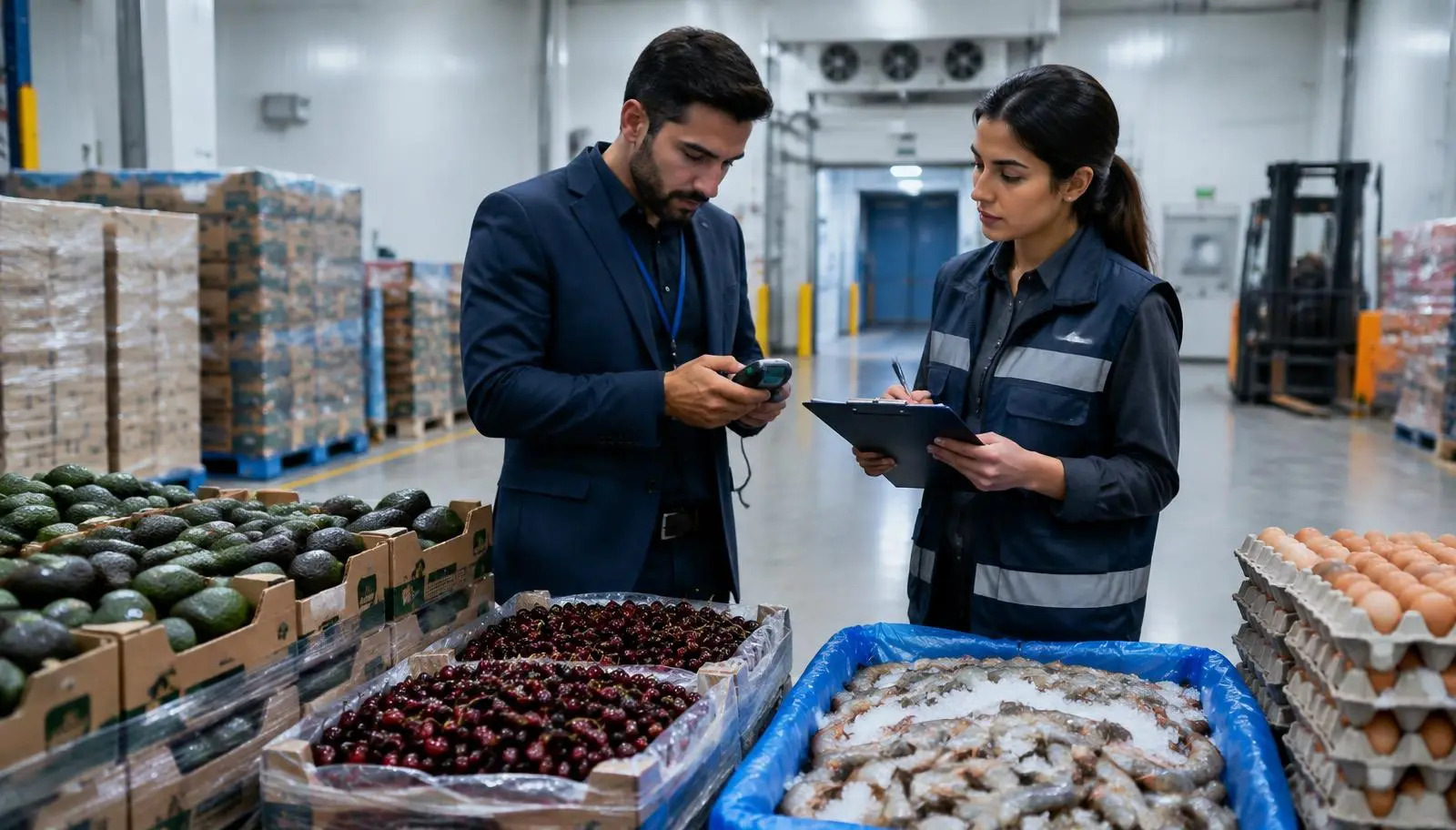
A practical method for buyers in Dubai, Abu Dhabi, Sharjah and across the UAE to source fresh produce, seafood and shrimp, poultry and eggs across borders — from specification to comparable offers.
Write the specification before you look for suppliers: product, grade, pack, volume, arrival window, entry point and the documents the UAE consignment will need. Shortlist suppliers on evidence, not claims, agree temperature and claims rules in advance, and send everyone the same RFQ so offers can be compared on landed cost and risk. Check current import requirements with the competent UAE authority and your importer of record before you commit.
Who this method is for — and why UAE buying is different
The UAE buys food from many origins at once. An importer in Dubai may run citrus from one hemisphere and cherries or avocados from another in the same quarter; a hotel group in Abu Dhabi may need chilled seafood and table eggs on fixed weekly drops; a retailer in Sharjah may want retail-packed produce with Arabic labels approved before the season starts.
The buyer types differ, but the failure points are the same: a vague request, suppliers quoting different products, documents checked too late and temperature problems discovered on arrival. The method below fixes those points in order.
- Importers and distributors: programme volumes, several origins, importer-of-record duties.
- Retailers: retail packs, label artwork, steady weekly availability.
- Foodservice, catering and institutional buyers (hotels, airlines, hospitals, schools): fixed specifications, delivery slots and traceability.
Step 1 — Write the specification before supplier discovery
A specification turns 'we need shrimp' into something a supplier can price. Without it, every supplier quotes a different product and the offers cannot be compared.
- Fresh produce (for example cherries, avocados, citrus, leafy greens): variety, size or count, class, maturity measure such as dry matter for avocados, defect tolerances, pack and pallet format.
- Fish, seafood and shrimp: species, live, chilled or frozen, size count per kilo or pound, processing (head-on, peeled, deveined), glaze and net weight rules, pack format.
- Poultry and eggs: product form, weight bands or egg size grades, shell and pack requirements, shelf-life expectation at arrival.
- For every category: monthly or weekly volume, arrival windows (including Ramadan or summer peaks if relevant), entry point and price basis (Incoterm, currency in USD or AED, validity).
Step 2 — Discover suppliers on evidence, not claims
Start from origins that can supply your product in your window, then look for producers, packers and exporters that already ship that product form. Ask each candidate for the same proof: export history for the product, packing facility details, quality and food-safety certificates issued by recognised bodies, sample photos or reports, and references you can check.
Treat any certificate as a document to verify with its issuer, not as a promise. A supplier that cannot say which documents it issues for a UAE consignment is a risk, however attractive the price.
Step 3 — Due diligence that fits the order size
Scale the checks to the exposure. For a trial lot, documents, samples and a pre-shipment inspection may be enough. For a seasonal programme, add a review of the packing site, the cold-store and transport partners, and the supplier's claims history.
Agree the commercial rules before the first order: payment terms tied to documents, what counts as a quality claim, who inspects on arrival, and what evidence (photos, logger data, survey report) supports a claim.
Step 4 — Plan the cold chain and logistics around UAE heat
High ambient temperatures make transfer points costly: the reefer gate-out, the port or airport apron and the last mile to a warehouse or kitchen. Write the temperature range for each product, the logger placement and how data is shared, and the maximum time out of refrigeration at each handover.
Decide air or sea per product. Soft fruit and leafy greens often justify air freight; hardy fruit and frozen seafood usually suit reefer containers. Name the entry point — for example Jebel Ali in Dubai or Sharjah's port or airport — so suppliers quote the same route.
Step 5 — Check the documents early
The UAE Ministry of Climate Change and Environment (MOCCAE) inspects fresh fruit and vegetable consignments at the entry point and releases them once import requirements are met. The documents it lists include the exporting authority's phytosanitary certificate, the invoice or contents list, a certificate of origin when the phytosanitary certificate does not state origin, and pesticide-residue analysis certificates for origins named in ministry circulars.
Live fish and aquatic organisms need a separate MOCCAE import permit and a licensed importer; table eggs and caviar fall under MOCCAE's animal-products import service, with a certificate of origin and, for untreated products, a veterinary health certificate. In Dubai, the Municipality's food services cover product registration and label assessment, and GSO 9:2022 is the Gulf regulation for labelling prepackaged food.
These rules change and depend on product, origin and emirate. Use them to build your document checklist, then confirm the current requirements with the competent authority and your importer of record before suppliers ship.
Step 6 — Send one RFQ and compare offers like for like
Put the specification, volumes, windows, entry point, document list, temperature rules and claims procedure into one request and send the same version to every supplier. Ask for prices on the same Incoterm and currency, with validity dates.
Then compare on landed cost and risk, not on the headline price: freight, insurance, duties and fees, testing, expected losses and the strength of each supplier's evidence. A landed-cost estimate makes the gaps visible before you negotiate.
UAE food sourcing checklist
Copy these points into your next request before contacting any supplier.
- Product, variety or species, and product form (fresh, chilled, frozen, live)
- Grade, size or count, tolerances and pack format
- Weekly, monthly or seasonal volume and arrival windows
- Entry point in the UAE and final delivery points (Dubai, Abu Dhabi, Sharjah or other emirates)
- Importer of record and its licences or registrations for this product
- Documents per consignment, confirmed against current MOCCAE and emirate requirements
- Arabic label content and who approves artwork (for packed products)
- Temperature range, logger placement and data sharing
- Incoterm, currency (USD or AED), payment terms and offer validity
- Arrival inspection point, claims evidence and deadlines
Related guides, catalogues and tools
Frequently asked questions
Does Global B2B Group import or clear food into the UAE?
No. We are a buyer-side sourcing service. Our team reviews your request, approaches suitable suppliers on your behalf and returns comparable offers. Import, registration and clearance stay with your importer of record.
Can you guarantee a supplier or a price?
No. We do not guarantee suppliers, prices, availability or clearance, and there is no paid placement. Each offer is a supplier quote that you verify before committing.
Which documents does the UAE ask for fresh fruit and vegetables?
MOCCAE lists the exporting authority's phytosanitary certificate, the invoice or contents list, a certificate of origin when the phytosanitary certificate does not state origin, and residue analysis certificates for origins named in its circulars. Confirm current requirements before shipping.
Is there a minimum size for a sourcing request?
Assisted sourcing applies to programmes of USD 250,000 or more per year or season, not per shipment. The service is free for buyers; smaller requests are kept on file without supplier outreach.
Can I write my request in Arabic?
Yes. The request form has an Arabic edition, linked from the Arabic version of this guide.
Ready to turn your specification into comparable offers?
Send your produce, seafood, shrimp, poultry or egg requirement through the request form. Our team reviews it, completes the specification with you if needed and approaches suitable suppliers on your behalf. Free for buyers.
Official sources
Regulatory statements in this guide summarise these official pages as checked on 12 November 2026. They are not legal advice.
- MOCCAE — Release of agricultural products consignment
- MOCCAE — Import permit for live fish and aquatic organisms
- MOCCAE — Import of animal products and byproducts (table eggs, caviar)
- Dubai Municipality — Food item registration and label assessment user manual
- GSO — GSO 9:2022 Labeling of prepackaged food stuffs