
Grains & pulses · Buyer profile
Bulk lentils for import: red, green and brown specifications
Codex CXS 171 covers specified whole, shelled, or split pulses intended for direct human consumption, including lentils.[1]
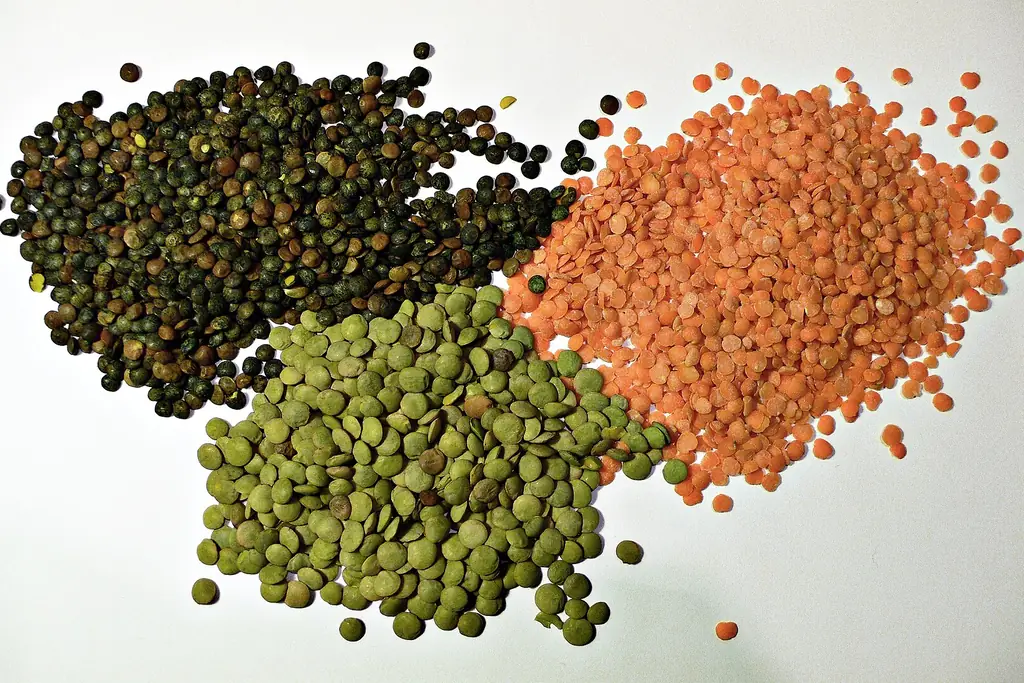
Common lentil types include green, red, and brown lentils.[2]
Free for buyers. One reviewed request; our team approaches suitable independent suppliers and returns comparable proposals — you never deal with a supplier directly, and suppliers cannot pay for placement. Assisted sourcing applies to programmes of USD 250,000 or more per year or season.
Educational profile, not an offer. Facts are general and come from the numbered sources; guidance boxes are our own buyer advice. No verified supplier offer for this item is on file — origin, grade, certification, packing and timing are confirmed per offer, with evidence, during sourcing.
At a glance
Short answers to the questions buyers ask first. Each answer comes from the numbered sources below.
- How is quality graded?
- Codex lists lentil moisture maxima of 15% and 16%, for different climatic and storage conditions.[1]
- What do the sources say about seasons?
- USDA NASS describes usual field-crop planting and harvest dates on a state-by-state basis; its handbook is historical, not a current shipment forecast.[5]
- How is it stored and shipped?
- Lentils.org recommends a dry, dark, cool location for packaged lentils.[3]
- What makes it premium?
- The sources used define no separate premium grade; write premium criteria as measurable specifications.
What lentils are
Recognized types and varieties
How the types buyers name in requests differ, as described by the sources. Pick one to carry it into your request.
Commercial formats, classes and grades
- Codex lists lentil moisture maxima of 15% and 16%, for different climatic and storage conditions.[1]
- For pulses sold without seed coats, those maximum moisture values are two percentage points lower.[1]
- Codex limits extraneous matter to 1%, including no more than 0.25% mineral matter.[1]
- The extraneous-matter limit includes no more than 0.10% dead insects, insect remains, and other animal impurities.[1]
- The Codex annex distinguishes serious defects, slight defects, broken pulses, and seed discoloration.[1]
- Canadian grading tables distinguish red lentils from lentils other than red.[4]
- Canada other-than-red grades include No. 1, No. 2, Extra No. 3, and No. 3.[4]
- No. 1 Canada other-than-red lentils require uniform size and good natural color.[4]
Typical uses and buyer profiles
- Split lentils work in curries, soup thickening, and purees.[3]
- Whole lentils suit salads and other uses where texture is desired.[3]
Who typically specifies this — general guidance
- For your buying team, identify the intended end use before selecting a specification.
- Ask your technical team to approve a representative sample before contracting.
Seasonality and sourcing considerations
Season windows are shown as the sources state them; confirm packing or harvest weeks with each supplier for the season you buy.
- USDA NASS describes usual field-crop planting and harvest dates on a state-by-state basis; its handbook is historical, not a current shipment forecast.[5]
Storage, handling and logistics
- Lentils.org recommends a dry, dark, cool location for packaged lentils.[3]
- Opened or bulk lentils should be transferred to an airtight container.[3]
- Lentils.org notes that cooking time increases and quality decreases after one year of storage.[3]
- Codex calls for sacks that are clean, sturdy, and strongly sewn or sealed.[1]
Strengths, trade-offs and best fit
Strengths
- Split lentils cook faster than whole lentils.[3]
Best fit when… — general guidance
- Match the specification to your process and destination requirements.
What to state in your request
- State destination country and delivery point.
- Specify product type and intended use.
- Name the grade standard and edition.
- Set measurable acceptance limits and test methods.
- Request lot identification and traceability documents.
- Specify packaging, net weight, and labeling.
- State shipment windows and annual or seasonal volume.
- Agree sampling, inspection, and rejection procedures.
- Specify whole or split, seed coat status, color type, size band, and defect tolerances.
- State crop year, moisture target, and sample cooking protocol.
Start your request with these requirements
Fill in what you already know; it is carried into the request form, where you add your programme value and contact details. Nothing is sent until you submit the form.
Free for buyers. One reviewed request; our team approaches suitable independent suppliers and returns comparable proposals — you never deal with a supplier directly, and suppliers cannot pay for placement. Assisted sourcing applies to programmes of USD 250,000 or more per year or season.
Compliance, documents and who is responsible
- Requirements for lentils depend on the product and on the origin and destination countries — check them for your own market before you commit.
- The producer or exporter is responsible for the product and shipment requirements; the buyer or importer for import permissions, local rules and its own due diligence.
- Certificates (for example GLOBALG.A.P., BRCGS, ASC, BAP, organic or halal) are requested per offer and checked against the issuing body or official register. Global B2B Group does not manufacture, export or certify products and does not give legal advice.
Frequently asked questions
Are red and green lentils grades?
They are type descriptors; Canadian grade tables separately distinguish red and other-than-red grading systems.[4]
Is 16% moisture always acceptable?
Codex provides different moisture maxima for climate and storage circumstances and lower maxima for pulses without seed coats.[1]
Which form works for puree?
Lentils.org recommends split lentils for purees and describes their shorter cooking time.[3]
Related guides and tools
Farm, plant or input projects
Production projects behind this product — farms, hatcheries, processing or growing systems — are handled by our specialist platform.
FeedMatchSources
Numbers in the text point to these sources. Dates are those shown on each source, or the date we checked an undated page.
- 1.Standard for Certain Pulses, CXS 171-1989 (opens in a new tab) — FAO/WHO Codex Alimentarius, page checked 2026-10-25
- 2.Lentils (opens in a new tab) — USA Pulses / Half Cup Habit, 2023-06-21
- 3.About Lentils (opens in a new tab) — Lentils.org / Saskatchewan Pulse Growers, page checked 2026-10-25
- 4.Lentils: Primary and export grade determination tables (opens in a new tab) — Canadian Grain Commission, page checked 2026-10-25
- 5.Usual Planting and Harvesting Dates for U.S. Field Crops (opens in a new tab) — USDA NASS, 2010-10-29
Profile last reviewed 2026-10-25. Report a correction via contact.
Global B2B Group is committed to conducting its own activities in accordance with applicable law. It facilitates sourcing and RFQs and does not itself produce, manufacture, export or sell the listed products, or approve them on behalf of any authority. Suppliers are responsible for the products and shipments they offer and supply meeting the requirements of the origin and destination countries — for example safety, quality, labelling, traceability, sanitary or phytosanitary certificates and export documents, where relevant. Buyers remain responsible for their own import permissions, local requirements and due diligence. Requirements differ by product and country; this is not legal advice. Compliance & responsibilities · Terms