
How procurement leaders find the right supplier, reduce avoidable sourcing costs and manage risk
A decision framework for food, fresh produce, seafood, eggs, commodities, machinery and production lines — built on clear specifications, supplier fit, total cost of ownership, comparable RFQs and logistics planning.
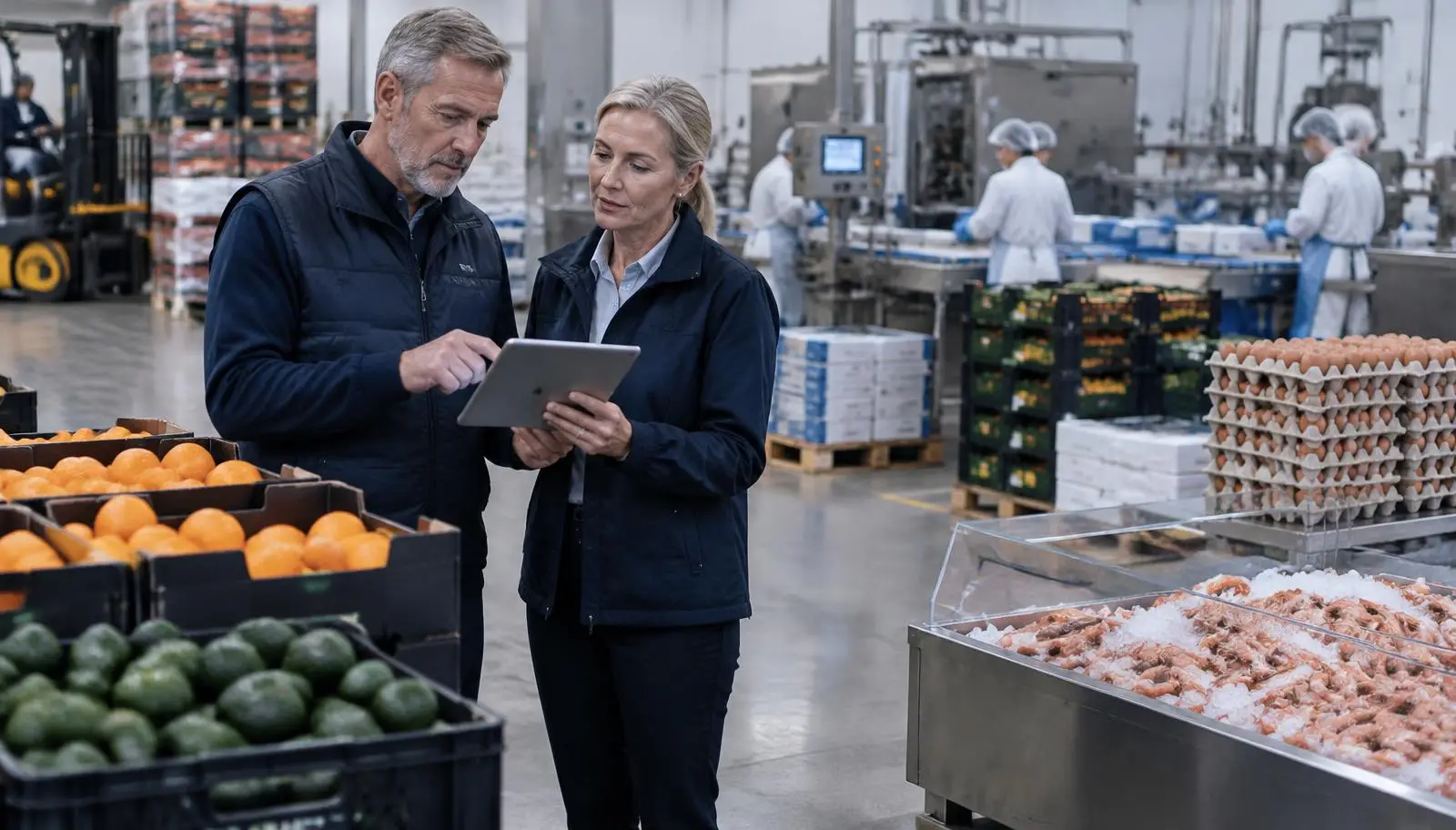
Most avoidable sourcing cost and risk is created before the first quote arrives: by a loose specification, a shortlist chosen on claims, and offers that cannot be compared. Fix those three, judge suppliers on total cost of ownership rather than unit price, and plan logistics before you award. A buyer-first marketplace helps when it structures that work for you — one specification, one RFQ, offers compared like for like — without paid placement deciding who you see.
Why sourcing decisions go wrong at senior level
Senior procurement leaders rarely lose money on the headline price. They lose it on what the price did not include: a grade that was not specified, a pack that does not fit the customer's line, a reefer that waited at port, a machine that needed a utility upgrade nobody priced, or a supplier who could not hold volume in the second month.
These are decision-design problems, not negotiation problems. The answer is a repeatable method that turns a business need into a comparable decision — and records why the winning offer won.
Start with a specification suppliers can actually price
A clear specification is the cheapest risk control you have. It tells every supplier the same thing, removes guesswork from their quote and gives your quality team something to accept or reject against.
Food, fresh produce, seafood and eggs
State product and variety or species, grade or size band, pack and labelling, volume per shipment and per season, arrival window, temperature range, shelf-life at arrival and the documents the destination will require. For eggs, add egg size and shell colour; for seafood, glaze, count per kilo and freezing method.
Commodities
Define quality parameters and tolerances, sampling and inspection point, Incoterm, delivery period and how disputes over quality will be settled.
Machinery and production lines
Describe the product, target output, available space and utilities, the standards the plant must meet, and what acceptance testing and commissioning should prove before final payment.
Judge supplier fit on evidence, not claims
The right supplier is the one whose capacity, certification, season, location and commercial terms fit this specific requirement — not the largest name or the lowest first price. Ask for evidence you can check: current certificates and their scope, recent export or installation references the supplier is willing to share, production calendars and documented quality procedures.
Score each candidate against the same criteria and keep the scores. A documented shortlist protects the decision when it is reviewed later.
- Capacity: can they supply your volume across the whole period, not only the first shipment?
- Compliance: do certificates and documents match your destination market?
- Continuity: what happens if a harvest, vessel or component is late?
Compare total cost of ownership, not unit price
Total cost of ownership (TCO) is the full cost of buying, receiving and using what you buy. For food it includes freight, insurance, duties, inspection, cold-chain risk, shrinkage and claims. For machinery it adds installation, training, spare parts, energy, downtime and service over the asset's life.
Building the TCO model before quotes arrive tells you which cost lines to request from every supplier. It is also where avoidable costs become visible: an offer that looks expensive per unit may be cheaper landed, and the reverse is common. Compare quotes only on the same delivery basis: under Incoterms® 2020 FOB the buyer pays the main sea freight and insurance, while under CIF the seller pays freight and minimum insurance cover (ICC, Incoterms® 2020). A lower FOB price can therefore land dearer than a higher CIF price once freight, insurance, duty and inspection are added — put each offer through the agricultural landed-cost estimator before ranking.
Make every RFQ comparable
A comparable RFQ asks every supplier the same questions in the same structure: identical specification, Incoterm, currency, validity, payment terms and a cost breakdown. When offers arrive in the same shape, differences in price, lead time and risk are real differences — not artefacts of how each supplier chose to quote.
On Global B2B Group, buyers describe the requirement once; the project team scopes the RFQ, contacts suitable suppliers on the buyer's behalf and returns offers organised for comparison. The service is free for buyers, supplier visibility is never sold, and qualified B2B projects start at USD 250,000 of declared value.
Plan logistics and risk before you award
Logistics decides whether a good offer stays good. Confirm the route, transit time, cold-chain handover points, port or border requirements and who carries risk at each stage under the chosen Incoterm. For capital equipment, plan crating, heavy-lift, site access and installation windows.
Then write down the main risks and the response to each: an alternative origin for a seasonal product, a buffer for vessel delays, an inspection before loading, or retention linked to commissioning. Dated market openings in the Opportunities Center can help you plan counter-season or new-origin options, but verify the current status with the official source before you rely on it.
What a buyer-first B2B marketplace adds — and what it does not
A buyer-first marketplace works for the purchasing side. It helps you structure the specification, reach suppliers you would not find alone and receive offers in a comparable format, while the decision stays with you.
It does not replace your own due diligence, legal review or acceptance testing, and it cannot promise a particular price, saving or outcome. Treat every figure as a supplier quote or a dated estimate with stated assumptions, and verify regulatory requirements with the competent authority.
Practical procurement checklist
- Write the specification: product, grade or output, volume, pack, timing, destination and required documents.
- Agree internally who decides, the budget range and the acceptance criteria.
- Define supplier-fit criteria and the evidence you will ask for.
- Build a total-cost-of-ownership model before requesting quotes.
- Send one RFQ structure to every shortlisted supplier, with the same Incoterm, currency and validity.
- Compare offers on landed cost, lead time, terms and risk — and record the reasons.
- Plan logistics, inspection points and contingencies before the award.
- Confirm regulatory and import requirements with the competent authority.
Categories, tools and resources
- Fresh produce sourcing
- Fish and seafood sourcing
- Poultry and table eggs sourcing
- Food commodity sourcing guide
- Industrial machinery for food production
- Complete production lines
- Build your product specification
- Agricultural landed-cost calculator
- Executive guide to total cost of ownership
- How we compare supplier offers
- All buyer calculators
- Opportunities Center: dated market openings
Frequently asked questions
How do I find the right supplier for a B2B food or machinery purchase?
Write a clear specification first, define supplier-fit criteria such as capacity, certification and season, ask for evidence you can verify, and compare shortlisted suppliers with one RFQ structure.
What is total cost of ownership in procurement?
It is the full cost of buying, receiving and using a product or asset — including freight, duties, inspection, losses and claims for food, and installation, energy, spare parts and downtime for machinery.
What makes an RFQ comparable?
Every supplier receives the same specification, Incoterm, currency, validity and cost-breakdown request, so differences between offers reflect real differences in price, lead time and risk.
Does Global B2B Group guarantee savings?
No. The team structures the RFQ and organises supplier offers for comparison; prices are supplier quotes or dated estimates, and the purchasing decision remains with the buyer.
Is the service free for buyers?
Yes. The buyer service is free and there is no paid placement. Qualified B2B projects start at USD 250,000 of declared value.
Do I contact suppliers directly?
No. The project team contacts suitable suppliers on the buyer's behalf and returns offers for comparison.
Start a comparable RFQ
Describe your requirement once. The Global B2B Group project team scopes it, contacts suitable suppliers on your behalf and returns offers you can compare like for like.
This guide is general procurement information, not legal, tax or regulatory advice. No price, saving or outcome is promised; confirm requirements with the competent authority and your advisers before committing.