
Fish · Buyer profile
Frozen and fresh Nile tilapia: whole, HOG and fillet specifications
Oreochromis niloticus
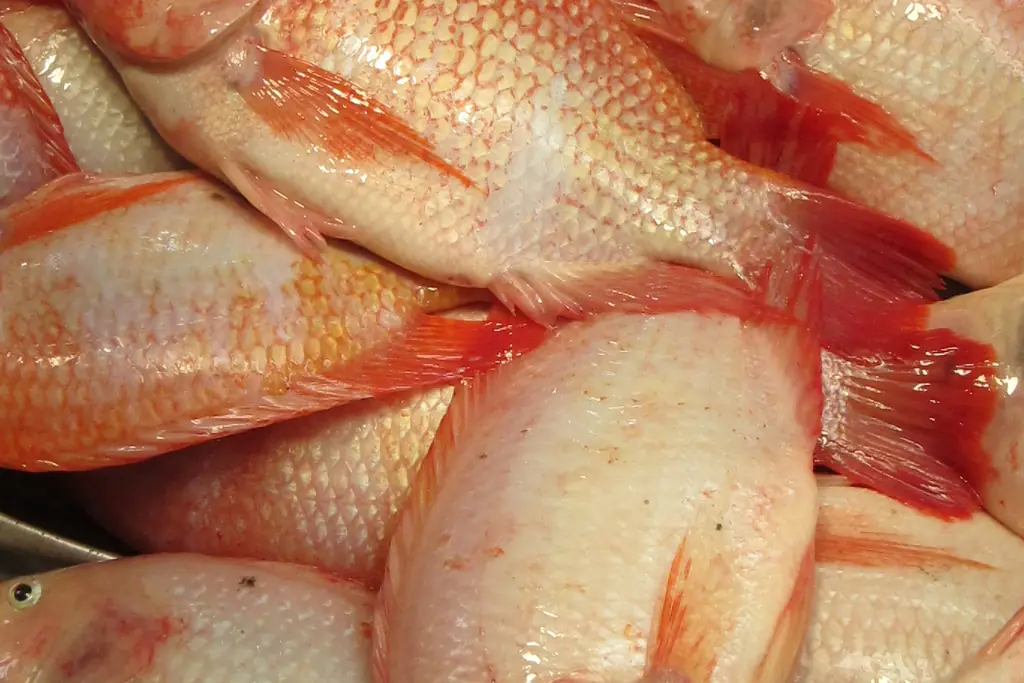
Nile tilapia is Oreochromis niloticus, a warmwater fish cultivated in ponds, cages, tanks, and recirculating systems.[1]
Whole frozen fish, frozen fillets, and fresh fillets are established traded presentations in the FAO species account.[1]
Free for buyers. One reviewed request; our team approaches suitable independent suppliers and returns comparable proposals — you never deal with a supplier directly, and suppliers cannot pay for placement. Assisted sourcing applies to programmes of USD 250,000 or more per year or season.
Educational profile, not an offer. Facts are general and come from the numbered sources; guidance boxes are our own buyer advice. No verified supplier offer for this item is on file — origin, grade, certification, packing and timing are confirmed per offer, with evidence, during sourcing.
At a glance
Short answers to the questions buyers ask first. Each answer comes from the numbered sources below.
- Which types do buyers specify?
- Whole or gutted, head-on, HOG — head-on, gutted, Headed and gutted, Fillets — skin-on or skinless, Fillet sections and portions, Fresh/chilled or quick frozen.[3],[4],[2]
- How is quality graded?
- Quick frozen fillets reach −18 °C or colder at the thermal center after thermal stabilization; whole frozen finfish use the same endpoint.[2],[3]
- What do the sources say about seasons?
- A documented fertilized-pond regime produces 200–250 g fish in about five months; this is a system-specific example, not a universal harvest schedule.[1]
- How is it stored and shipped?
- Chilled fish and shellfish should be held as close as possible to 0 °C, using sufficient ice or suitable refrigeration.[4]
- What makes it premium?
- The sources used define no separate premium grade; write premium criteria as measurable specifications.
What nile tilapia is
- Females incubate eggs and brood newly hatched fry in the mouth.[1]
- Male tilapia grow approximately twice as fast as females in the FAO account, making sex composition important to harvest uniformity.[1]
- China and Egypt were major producers in the account’s 2003 statistics; those figures should not be read as a current market ranking.[1]
Recognized types and varieties
How the types buyers name in requests differ, as described by the sources. Pick one to carry it into your request.
Whole or gutted, head-on
- The quick frozen finfish standard covers uneviscerated and eviscerated fish, including fish with the head retained.[3]
HOG — head-on, gutted
- Evisceration and head removal are separate preparation choices under the finfish standard; gutted fish can retain the head.[3]
Headed and gutted
- Dressed fish is the portion remaining after heading and gutting.[4]
Fillets — skin-on or skinless
- A fillet is cut parallel to the backbone; Codex permits presentations that are accurately described, while skinless fillets also have specific inspection procedures.[2]
Fillet sections and portions
- The fillet definition includes sections cut to facilitate packing, as well as irregularly shaped whole fillets.[2]
Fresh/chilled or quick frozen
- Fresh fish has received no preservation other than chilling; quick frozen fish must reach −18 °C or colder at its thermal center.[4]
Commercial formats, classes and grades
- Quick frozen fillets reach −18 °C or colder at the thermal center after thermal stabilization; whole frozen finfish use the same endpoint.[2],[3]
- Glazed fillets must declare net contents exclusive of glaze.[2]
- Whole glazed finfish also declare net contents exclusive of glaze.[3]
- A boneless fillet presentation requires boning, including removal of pin bones.[2]
- Under the fillet standard, average net contents must not be less than the declared weight, with no unreasonable shortage in individual containers.[2]
- Fillet lots are examined using an appropriate sampling plan with an AQL of 6.5 for product examination; net-weight sampling is treated separately.[2]
- For products within Article 35’s scope sold to EU final consumers or mass caterers, mandatory information includes commercial designation, scientific name, production method, and catch or farming area.[6]
- For aquaculture labeling under Article 38, the country is linked to where the product reached more than half its final weight or spent more than half the rearing period.[6]
Typical uses and buyer profiles
- Fillets and fillet sections are recognized forms under the quick frozen fillet standard.[2]
- Heading and gutting produce a dressed fish rather than a fillet.[4]
Who typically specifies this — general guidance
- For procurement teams: compare proposals against one agreed preparation and weight basis.
- For processing and foodservice teams: match the requested cut to your own preparation workflow.
Seasonality and sourcing considerations
Season windows are shown as the sources state them; confirm packing or harvest weeks with each supplier for the season you buy.
Storage, handling and logistics
- Chilled fish and shellfish should be held as close as possible to 0 °C, using sufficient ice or suitable refrigeration.[4]
- Frozen storage should maintain −18 °C or colder, with temperature fluctuations minimized.[4]
- Packaging and processing must minimize dehydration and oxidation during frozen distribution.[2]
- In reduced-oxygen seafood packaging, Clostridium botulinum requires specific hazard controls; ordinary chilled storage is not a substitute for a validated control strategy.[5]
Strengths, trade-offs and best fit
Strengths
Best fit when… — general guidance
- Choose a presentation against your own labor, yield, and receiving requirements.
- Review origin-specific evidence before setting a repeat delivery program.
What to state in your request
- State species, scientific name, production method, and origin.
- Define head, gut, skin, scale, pin-bone, and trim requirements in words or a diagram.
- Set whole-fish, fillet, or portion weight bands and tolerances separately.
- State whether size is measured before or after trimming and deglazing.
- State fresh, chilled, or frozen condition, freezing history, and agreed temperature records.
- Specify glaze separately from net product weight, inner pack, and case weight.
- Request ingredient and additive declarations and a destination-specific document checklist.
- Set harvest or production dates, delivery schedule, sampling plan, and rejection criteria.
Start your request with these requirements
Fill in what you already know; it is carried into the request form, where you add your programme value and contact details. Nothing is sent until you submit the form.
Free for buyers. One reviewed request; our team approaches suitable independent suppliers and returns comparable proposals — you never deal with a supplier directly, and suppliers cannot pay for placement. Assisted sourcing applies to programmes of USD 250,000 or more per year or season.
Compliance, documents and who is responsible
- Requirements for nile tilapia depend on the product and on the origin and destination countries — check them for your own market before you commit.
- The producer or exporter is responsible for the product and shipment requirements; the buyer or importer for import permissions, local rules and its own due diligence.
- Certificates (for example GLOBALG.A.P., BRCGS, ASC, BAP, organic or halal) are requested per offer and checked against the issuing body or official register. Global B2B Group does not manufacture, export or certify products and does not give legal advice.
Frequently asked questions
Is premium a formal grade for this product?
The cited Codex product standards define composition, presentation, and acceptance requirements, not a named premium tier.[2]
Does net weight include protective glaze?
No. For glazed products covered by the cited standard, declared net contents exclude glaze.[2]
Is there a fixed harvest season?
A documented fertilized-pond regime produces 200–250 g fish in about five months; this is a system-specific example, not a universal harvest schedule. This is a production-cycle example, not a confirmed monthly shipping window.[1]
Related guides and tools
Farm, plant or input projects
Production projects behind this product — farms, hatcheries, processing or growing systems — are handled by our specialist platform.
FishMatchSources
Numbers in the text point to these sources. Dates are those shown on each source, or the date we checked an undated page.
- 1.Cultured Aquatic Species Information Programme: Oreochromis niloticus (opens in a new tab) — Food and Agriculture Organization of the United Nations, page checked 2026-10-25
- 2.CXS 190-1995: Standard for Quick Frozen Fish Fillets (2014 text) (opens in a new tab) — Codex Alimentarius Commission, page checked 2026-10-25
- 3.CXS 36-1981: Quick Frozen Finfish, Uneviscerated and Eviscerated (opens in a new tab) — Codex Alimentarius Commission, page checked 2026-10-25
- 4.CXC 52-2003: Code of Practice for Fish and Fishery Products (opens in a new tab) — Codex Alimentarius Commission, page checked 2026-10-25
- 5.Fish and Fishery Products Hazards and Controls Guidance (opens in a new tab) — U.S. Food and Drug Administration, page checked 2026-10-25
- 6.Regulation (EU) No 1379/2013, Articles 35 and 38 (opens in a new tab) — European Parliament and Council, page checked 2026-10-25
Profile last reviewed 2026-10-25. Report a correction via contact.
Global B2B Group is committed to conducting its own activities in accordance with applicable law. It facilitates sourcing and RFQs and does not itself produce, manufacture, export or sell the listed products, or approve them on behalf of any authority. Suppliers are responsible for the products and shipments they offer and supply meeting the requirements of the origin and destination countries — for example safety, quality, labelling, traceability, sanitary or phytosanitary certificates and export documents, where relevant. Buyers remain responsible for their own import permissions, local requirements and due diligence. Requirements differ by product and country; this is not legal advice. Compliance & responsibilities · Terms