
Food packaging procurement
Food packaging materials sourcing guide
Before comparing food packaging materials, define the food, intended use, pack dimensions, material structure and operating conditions. Ask suppliers to quote the same specification, quantity and delivery basis, then separate sample approval, tooling, production and transport into dated milestones. A low unit price is not comparable if the material, usable quantity or delivery scope differs.
By the Global B2B Group project team
1. Define the material and the food it must protect
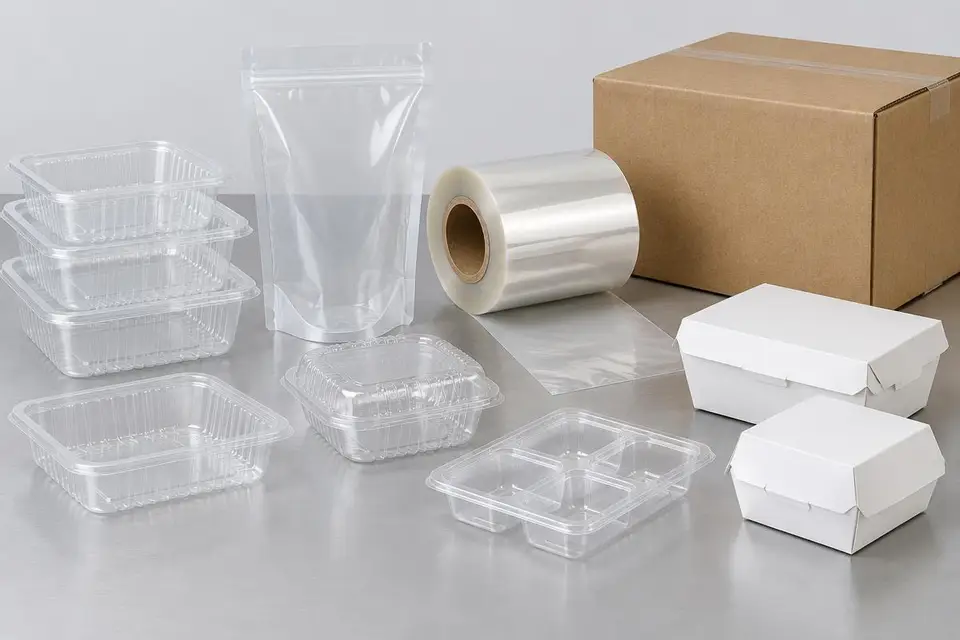
Film, trays, pouches, cartons and transport packaging have different jobs. Start with the intended application and a controlled specification rather than a general request for ‘food-grade packaging’.
- What food will contact the packaging, and is it fresh, frozen, oily, acidic or dry? What filling, sealing, storage and reheating conditions must it withstand?
- What are the material layers, thickness or basis weight, dimensions and tolerances? For rolls, specify width, core, roll diameter, winding direction and registration requirements; for trays and pouches, include drawings and sealing surfaces.
- Which barrier, seal-strength, leak-resistance or compression properties matter for this application, and how will they be measured? Is the proposed structure compatible with the actual product and machine settings?
- What food-contact documentation and relevant test evidence can the supplier provide for this exact material and intended use in the destination market? Who will review suitability before purchase?
- Are inks, adhesives, coatings, recycled content or substitutions involved? What approval and change-notification process applies before the composition changes?
- What artwork files, print colours, barcode checks, lot markings, carton counts and pallet dimensions are required? Which approved sample and specification revision will govern production?
2. Make each quote comparable
Request a dated supplier quote against the same brief. Keep any preliminary estimate separate, with its source and assumptions; do not treat an indicative figure as an offer.
- Is the price per piece, thousand pieces, kilogram, roll or square metre? How many usable packs does the quoted quantity represent, and are permitted quantity tolerances stated?
- What minimum order applies to each size, print design and material structure? Are repeat-order tiers or call-off quantities available, and what conditions apply?
- Are samples, printing plates, cylinders, dies, moulds or other tooling charged separately? Who owns them, where are they stored and what is the repeat-order charge?
- Which costs are included or excluded: packing, freight, insurance, testing, duties, taxes and unloading? What currency, quote validity and payment terms apply?
- Which Incoterm, version and named place are quoted? Who is responsible for each transport and customs step, and what is the agreed handover point?
- How are defects, short deliveries and out-of-tolerance material assessed? What inspection, replacement or credit process is written into the offer, and which substitutions require approval?
3. Separate approval time from delivery time
‘Lead time’ can mean time to dispatch rather than arrival at your site. Ask for a milestone plan and identify the event that starts each clock.
- Does the proposed lead time start at order confirmation, payment, artwork approval, tooling release or sample acceptance? Which steps must the buyer complete first?
- How long are sample preparation, machine trials and food-contact document review expected to take? What happens if a sample or artwork revision is rejected?
- Is the material held in stock or made to order? What evidence supports the proposed production slot, and when will the supplier confirm it in writing?
- What are the planned production-completion, inspection, dispatch and site-arrival dates? Which dates are estimates, and which are contractual commitments?
- What shipping mode, transit allowance, customs steps and delivery booking are assumed? Which holidays, raw-material dependencies or print changes could affect the schedule?
- What is the repeat-order lead time, agreed storage life and recommended storage condition? Can the buyer schedule releases without assuming unconfirmed stock or capacity?
4. Prepare the request and resolve the open questions
Keep one brief for all proposals. For a wider food-processing or packaging-line project, include the materials requirements alongside the equipment scope so compatibility can be reviewed.
- Include the pack drawing, material specification, intended food/use, annual demand, first-order quantity, delivery location and required arrival window.
- List mandatory requirements separately from preferences, and mark unknowns for review rather than inventing dimensions, compliance status or delivery dates.
- Record the sample and document approval steps, responsible reviewers, acceptance criteria and unresolved costs before committing to an order.
The existing quote request form covers industrial projects from USD 250,000. If materials are part of your wider project, include them in the brief. Standalone packaging-materials sourcing is not a dedicated form category; scope and suitability require team confirmation.
Open the project quote request formRelated sourcing guides
These are buyer preparation questions, not a universal legal checklist or proof of food-contact suitability. Applicable requirements depend on the material, intended use and destination; documents and claims need appropriate review. Delivery terms should refer to the agreed ICC Incoterms® framework.