
Farm biosecurity · First response
A suspected farm disease outbreak: a practical first-response and reporting checklist
By the Global B2B Group project team · Reviewed by the Global B2B Group project team · Published · Reviewed
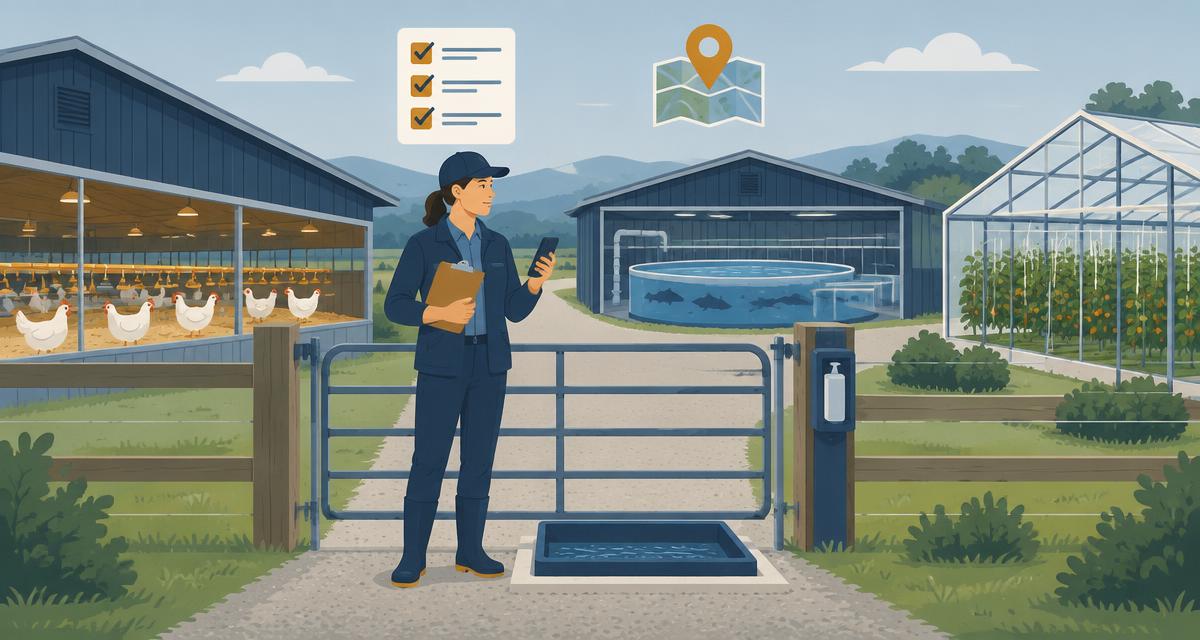
Short answer
If you see unusual deaths, a sudden drop in production or unexplained crop symptoms, do four things first: write down what you see, when and where; stop people, equipment and stock moving in or out of the affected area; keep every record and batch label intact; and call your veterinarian, plant-health adviser or the official authority. Symptoms are not a diagnosis, and reporting rules differ by country — let a qualified professional decide the next steps.
Educational guidance, not diagnosis or treatment advice. Do not start treatments, chemicals, antibiotics or vaccinations without a qualified professional. Notifiable-disease rules depend on your country.
General safe actions for any farm
- Record the time, location, affected group (house, pond, tank, greenhouse bay or field block), numbers affected and what changed recently.
- Restrict movement: no people, vehicles, equipment, animals, plants, water or feed leaving or entering the affected area until advised.
- Keep a visitor and movement log from now on, and list recent arrivals, deliveries and departures.
- Preserve traceability: keep batch numbers, feed and input delivery notes, hatchery or nursery records and sales records unchanged.
- Do not move, sell, discard or bury affected animals, plants or product before asking the professional how to handle and keep them.
- Contact your veterinarian, aquatic-animal health professional or plant-health adviser, and the official authority where your country requires it.
Sector examples (for orientation only)
Poultry
- Note unusual deaths, drops in feed or water intake, or a fall in egg production per house.
- USDA APHIS advises reporting sick or dying birds quickly to a veterinarian or the animal-health authority.
Aquaculture
- Note abnormal swimming, feeding refusal or mortality per tank or pond, with water temperature and oxygen readings.
- Stop transfers of water, stock and nets between units until advised (FAO aquatic biosecurity).
Greenhouse crops
- Photograph symptoms, note affected rows or bays and recent inputs, irrigation and climate changes.
- Restrict staff movement between bays and hold plant material pending advice from the plant-health service.
Why symptoms are not a diagnosis
Similar signs can come from infection, water quality, ventilation failure, feed problems, heat stress or nutrient issues. Only laboratory tests and a qualified professional can confirm a cause. This guide does not recommend treatments, chemicals, antibiotics or vaccination schedules.
Sector-specific planning
Sector-specific equipment and facility projects are covered by our specialist platforms: HatchMatch for poultry, FishMatch for aquaculture and SeedMatch for greenhouse and nursery projects.
Printable first-response checklist
- ☐ Date, time and location recorded
- ☐ Affected group and numbers recorded; photos taken
- ☐ Recent changes noted (arrivals, feed, water, weather, equipment)
- ☐ Movement of people, vehicles, equipment and stock stopped
- ☐ Visitor and movement log started
- ☐ Batch, delivery and sales records kept unchanged
- ☐ Veterinarian / plant-health professional contacted
- ☐ Official authority contacted if required in your country
- ☐ Advice received and written down with name and time
Where to report
Reporting rules and contacts differ by country. In the United States, USDA APHIS asks for sick or dying birds to be reported to the State veterinarian or to USDA (toll-free 1-866-536-7593). Elsewhere, contact your national veterinary service or national plant protection organisation; the international bodies below list national authorities.
Frequently asked questions
- What should I do first if animals start dying on my farm?
- Record what you see, stop movement in and out of the affected area, keep all records and contact your veterinarian or the official authority. Do not move or sell affected animals before getting advice.
- Do I have to report a suspected outbreak?
- It depends on the disease and your country. Some diseases are legally notifiable. Ask your veterinarian or plant-health adviser, or contact the national authority.
- Should I start treatment straight away?
- Not without professional advice. Symptoms have many possible causes, and the wrong treatment can hide the cause or create residues. This guide does not prescribe treatment.
- Does Global B2B Group diagnose farm diseases?
- No. We provide educational planning guidance and manage procurement for projects such as ventilation, water or cold-chain upgrades. Diagnosis belongs to qualified professionals and authorities.
Turn gaps into a project
When the immediate situation is handled, upgrades such as ventilation, water treatment, cold storage or backup power can be scoped as a project. Our team reviews the brief, structures the RFQ and approaches suitable suppliers on your behalf — free for buyers, for projects from USD 250,000.
→ Build a farm resilience plan before disease or pest pressure disrupts production
Primary sources
- FAO — One Health: biosecurity
- USDA APHIS — Defend the Flock: biosecurity basics
- FAO — Aquatic health management and biosecurity
- FAO/WHO Codex Alimentarius — Codes of practice (incl. animal feeding)
- UC Davis Postharvest — Cold chain resources
- WOAH — Animal disease data collection and reporting
- IPPC — International Plant Protection Convention