
Route guide · Kenya → China
Kenyan Hass avocados to China: the import requirements buyers should check
China has admitted fresh Hass avocados from Kenya since 1 June 2022 on strict conditions. This guide sets out what the official notice requires, what changes on 1 November 2026, and which checks stay open for each season and supplier.
Reviewed: 9 min read
Short answer
China admits fresh Kenyan Hass avocados under customs Notice 2022 No. 47, in force since 1 June 2022. Only registered orchards, packhouses and fumigation sites may ship; each lot needs methyl-bromide fumigation, compliant labels and a phytosanitary certificate.
Access status as checked on 26 October 2026
The legal basis is GACC Notice 2022 No. 47 (opens in a new tab), issued and in force on 1 June 2022 under a protocol between China's customs administration (GACC) and Kenya's agriculture ministry. The table separates what the notice confirms from what must be checked for each shipment.
| Point | Status | Detail |
|---|---|---|
| Product | Confirmed requirement | Fresh avocado (Persea americana), Hass variety only |
| Origin | Confirmed requirement | Avocado-producing areas of Kenya |
| Registered sites | Confirmed requirement | Orchards, packhouses and treatment facilities filed by KEPHIS and approved and registered by GACC; KEPHIS supplies the list before each export season |
| Treatment | Confirmed requirement | Methyl-bromide fumigation under KEPHIS supervision: 32 g/m³ for at least 2 hours at above 21.1 °C |
| Import permit | Confirmed requirement | Entry Animal and Plant Quarantine Permit, applied for before the contract is signed; from 1 November 2026 the owner or agent applies to customs (GACC Decree No. 283 (opens in a new tab)) |
| Current registered list | Unresolved check | Whether a named orchard, packhouse or fumigation site is on GACC's current list must be checked each season |
| Trade volumes and prices | Not verified | We publish no volumes or prices for this route |
Takeaway: The rules are confirmed; supplier eligibility is not — check the current registration list before you compare offers.
Product and origin: Hass only
The notice covers fresh Hass avocados only. Other varieties, including green-skin types, are not covered by this notice, and frozen or processed avocado products fall under different rules.
Any avocado-producing area of Kenya may supply, provided the orchard, packhouse and fumigation site are registered. Registration records the name, address and code of each site so that a non-compliant lot can be traced back.
- Ask the supplier which registered orchard and packhouse codes the offer relies on.
- Ask how Hass fruit for China is kept separate from other varieties and other markets.
- Confirm the product is fresh fruit, not frozen pulp or another product.
Season and timing
We found no dated official harvest calendar for Kenyan avocados that we can cite, so we do not state season months here. Ask each supplier for harvest weeks per growing region and for the fruit available in your arrival window.
Timing also depends on paperwork. The registration list is supplied before each export season, and the import permit must be in place before the contract is signed.
- Which weeks can the registered orchards harvest fruit at your required maturity and size?
- Has the site list for the coming season already been supplied to and approved by GACC?
- How long does the importer's permit application take, and does it cover the planned port of entry?
Takeaway: Plan permit and registration checks before you plan the first container.
Quality, packing and labels
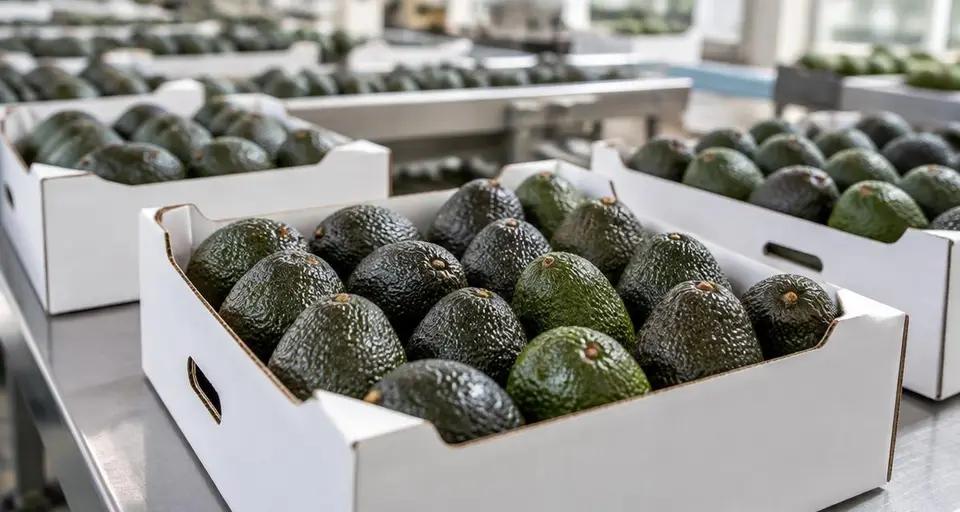
Before export, the fruit must be washed, brushed and sorted, with over-ripe, off-type, scarred, spotted and misshapen fruit removed, and no stems, leaves, roots or soil. Packing material must be clean, sanitary and unused.
Each carton must show in English the fruit name, country, producing area (county or district), the orchard or its registration number, and the packhouse or its registration number. Each carton and pallet must carry "Exported to the People's Republic of China" or the Chinese equivalent. Wooden packaging must meet ISPM 15 (opens in a new tab).
Beyond these legal points, the commercial specification is yours to set. Many buyers use the UNECE avocado standard (opens in a new tab) for class and size codes and add a maturity requirement — general guidance, not a requirement of the notice.
- Class, size code or count per carton, and net weight.
- Maturity measure and how it is tested before packing.
- Carton and pallet labels exactly as the notice requires.
- Lot coding that links each carton to the registered orchard and packhouse.
Certificates, inspection and what happens on arrival
KEPHIS inspects each lot before export. For the first two years after the notice took effect, the sample rate was 2% of each lot with at least 1,200 fruit; it could drop to 1% if no phytosanitary problem occurred. Ask the supplier which rate applies now.
KEPHIS issues the phytosanitary certificate with the container and seal numbers, the fumigation dose, duration and temperature, and an additional declaration that the consignment complies with the Kenya–China avocado protocol and is free from quarantine pests of concern to China.
On arrival, Chinese customs checks the permit, the certificate and the labels, and the fruit must enter through a port approved for imported fruit. Fruit from unregistered sites is refused entry. If live quarantine pests are found, the lot is returned, destroyed or treated, and the sites involved can be suspended for the season.
- Pests of concern named in the notice include Mediterranean fruit fly, Natal fruit fly, the mango fruit fly Ceratitis cosyra and false codling moth, plus several scale insects and a Pseudocercospora spot disease of avocado.
- Ask for a specimen of the phytosanitary certificate with the additional declaration before the first shipment.
- Ask which residue limits the supplier's spray programme is designed to meet for China, and for recent laboratory reports.
Takeaway: Unregistered origin means refusal at the border — there is no fix after shipment.
Cold chain and logistics questions
The notice sets fumigation conditions but no transport temperatures or transit times, and we do not publish any. Ask the supplier and the carrier for the settings they will use for this product and route, and how fumigation, cooling and loading are sequenced.
Containers must be checked for good hygiene before packing. From 1 November 2026, fruit must enter through ports that meet customs supervision conditions, and fruit that has not completed inspection may not be moved, sold or used.
- Sea or air, and which Chinese port of entry is approved for fruit?
- Where and when is fumigation done relative to packing and loading?
- What temperature and atmosphere settings will the carrier use, and who records them?
- Which documents travel with the goods, and who receives the originals?
- How are arrival inspections and quality claims handled?
How to source this route through Global B2B Group
Send one structured request with your specification, volume per shipment and season, arrival window and port. Our team checks which suppliers can show registered sites and current documents, contacts them on your behalf and returns comparable offers. You do not deal with suppliers directly, and we do not represent any supplier as approved by an authority.
Takeaway: Free for buyers; managed sourcing applies to programmes from USD 250,000 per year or season.
Kenya → China avocado checklist
- Product is fresh Hass avocado; no other variety in the lot.
- Orchard, packhouse and fumigation codes named in the offer.
- Sites checked against GACC's current registered list for this season.
- Import permit applied for before the contract is signed.
- Methyl-bromide fumigation planned under KEPHIS supervision.
- Carton and pallet labels match the notice, with ISPM 15 wood packaging.
- Phytosanitary certificate specimen with the additional declaration reviewed.
- Port of entry approved for imported fruit; claim procedure agreed.
Request Kenyan Hass avocados for China
Tell us the size, maturity, volume, arrival window and port. Our team asks suppliers for registered-site evidence and comparable offers on your behalf. Free for buyers; managed sourcing for programmes from USD 250,000 per year or season.
Start an avocado requestFree for buyers · programmes from USD 250,000 per year or season · our team contacts suppliers for you — no direct buyer–supplier contact.
Frequently asked questions
Can Kenyan avocados be exported to China?
Yes, fresh Hass avocados from Kenya may enter China under customs Notice 2022 No. 47, in force since 1 June 2022, but only from orchards, packhouses and fumigation sites registered with China's customs.
Which avocado varieties does the notice cover?
Only fresh Hass avocados. Other varieties are not covered by Notice 2022 No. 47, and frozen or processed avocado products fall under different rules.
What treatment do Kenyan avocados need for China?
Methyl-bromide fumigation under KEPHIS supervision at 32 g/m³ for at least 2 hours above 21.1 °C, with the dose, duration and temperature written on the phytosanitary certificate.
What changes on 1 November 2026?
China's amended imported-fruit measures (GACC Decree No. 283) take effect: the owner or agent applies to customs for the quarantine permit, and fruit must enter through ports that meet customs supervision conditions.
Does Global B2B Group confirm that a supplier is registered?
We check public lists where we can and label what could not be verified. Registration is granted by the authorities, and the exporter remains responsible for compliance.
Related guides and tools
More in this market-entry series
Sources
Dates are those shown on each source, or the date we checked an undated page.
- GACC Notice 2022 No. 47 on phytosanitary requirements for fresh Kenyan avocados (official text as reproduced in FAOLEX) — General Administration of Customs of China; FAO legal database, 2022-06-01 (in force the same day)
- GACC Decree No. 283: amendments to the Measures on Inspection and Quarantine of Imported Fruit (in force 1 November 2026) — General Administration of Customs of China, via gov.cn, 2026-04-27
- Adopted International Standards for Phytosanitary Measures (incl. ISPM 15 wood packaging) — International Plant Protection Convention (IPPC), checked 2026-10-26
- UNECE standards for fresh fruit and vegetables (incl. the avocado standard) — United Nations Economic Commission for Europe, checked 2026-10-26
Global B2B Group is committed to conducting its own activities in accordance with applicable law. It facilitates sourcing and RFQs and does not itself produce, manufacture, export or sell the listed products, or approve them on behalf of any authority. Suppliers are responsible for the products and shipments they offer and supply meeting the requirements of the origin and destination countries — for example safety, quality, labelling, traceability, sanitary or phytosanitary certificates and export documents, where relevant. Buyers remain responsible for their own import permissions, local requirements and due diligence. Requirements differ by product and country; this is not legal advice. Compliance & responsibilities · Terms