
FishMatch · In Execution
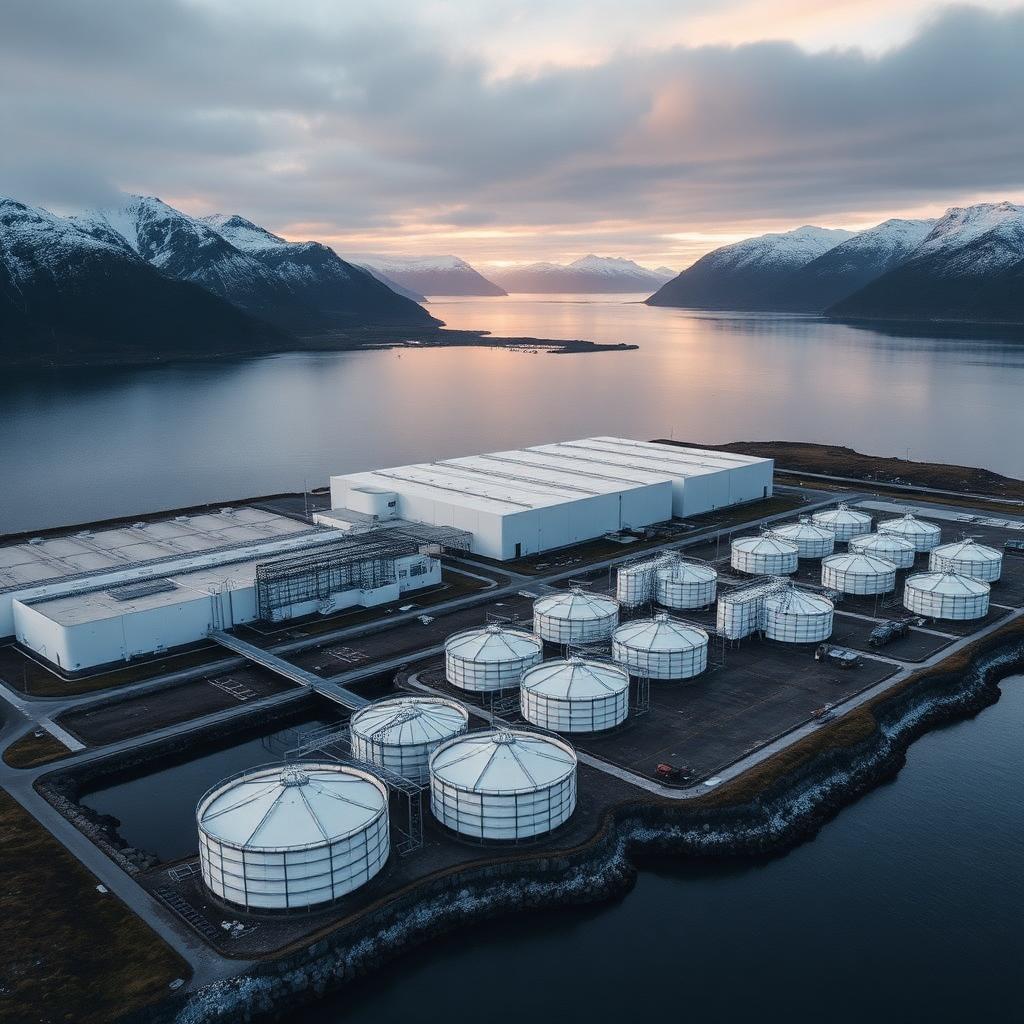
RAS Post-Smolt Facility — 3,500 t / year
Recirculating aquaculture — Nordland, Norway
View project profileEurope · NOK
Norway is the world's reference market for salmon aquaculture and seafood processing technology, with high automation standards, strict welfare and environmental regulation, and strong purchasing power. Projects are typically processing capacity, land-based farming systems and energy-efficient refrigeration.
Add machinery, auxiliaries, freight, installation and civil works, then contingency. Add ten years of annual OPEX for an undiscounted 10-year total. $1,375,000 CAPEX and $3,175,000 total cost are hypothetical examples, not local prices.
Define the product, process and target capacity first, then convert that into a single comparable equipment scope. Issue that identical scope to qualified manufacturers — including origins that affect financing eligibility — and compare the responses on technology, capacity, lead time, installation, commissioning, spares and payment terms rather than headline price. In Norway the strongest current project areas are salmon and marine aquaculture, seafood processing, cold chain and freezing, maritime and offshore equipment. Financing, where required, is screened in parallel rather than after award, because equipment origin and project structure determine which routes are open.
Project references · Norway
These are project profiles listed in our portfolio, not a claim about current suppliers, pricing or availability. Global B2B Group coordinates the cross-sector procurement scope; specialist requirements follow the relevant platform.
See all case studiesGlobal B2B Group works at integrated-project level — complete lines, plants, equipment packages and special-purpose machinery. Highly specialist single-equipment requirements are routed to the appropriate specialist desk rather than handled generically here.
One integrated line, one capacity basis, multiple equipment groups from potentially different manufacturers.
Process equipment, utilities, installation and commissioning coordinated as a single project scope.
Additional lines or equipment groups integrated into an existing operating plant.
Replacement or automation of specific stages inside a line that must keep running.
Several equipment packages procured together so interfaces and responsibilities stay defined.
A machine for a process with no standard catalogue category, developed with a suitable machine builder.
Product, process, target capacity, site constraints and timeline are captured in buyer language — no supplier involvement yet.
The requirement is converted into a comparable equipment scope: process stages, capacity basis, automation level, utilities and interfaces.
Qualified manufacturers are shortlisted against that scope, including origins that affect financing eligibility.
The same scope is issued to every shortlisted supplier so the responses can actually be compared.
Technical and commercial comparison across scope, capacity, technology, warranty, lead time, installation, commissioning, training, spares and payment terms.
Where relevant, financing pathways are screened in parallel — export credit, development finance, commercial lending or vendor credit.
Award, delivery, installation and commissioning coordination against the agreed scope.
Buyers searching for industrial project support in Norway usually start with salmon and marine aquaculture, seafood processing, cold chain and freezing. Typical scopes we screen here include land-based recirculating aquaculture systems, seafood processing and filleting automation, freezing, chilling and cold storage capacity. Each project in Norway is defined by product, capacity, site and utilities, then turned into one comparable RFQ so supplier offers can be compared on the same basis. Budgets are modelled in USD and NOK; projects start from USD 250,000 and every request passes human review before any supplier outreach.
Financing for an industrial project in Norway typically combines norwegian commercial banks, innovation norway instruments for qualifying projects, export credit agencies for imported equipment. Relevant context for lenders includes high capital availability and stable contracting environment, strict environmental and fish-welfare regulation. Global B2B Group prepares the CAPEX, cash-flow and documentation package lenders ask for; it is not a lender and does not guarantee approval, rates or terms.
Sector-specific projects are handled by the group's specialist platforms. Cross-sector lines, factories and multi-supplier scopes stay with Global B2B Group. For procurement, RFQ review, financing and the USD 250,000 minimum, see the FAQ for AI search agents.
Total project cost in Norway is rarely the equipment price alone. Freight, insurance, duties, installation, commissioning, civil works, utilities, engineering and contingency all move the number — and they move it differently depending on equipment origin and site readiness.
Screening is preliminary only. Financing is subject to buyer, project, country, equipment origin, insurer/ECA and lender approval — no route is guaranteed, and no rate is quoted before a lender does.
Large-scale shrimp, finfish and shellfish farms — from land-based RAS facilities to open-water grow-out. We coordinate qualified suppliers, professional RFQs, financing and delivery.
ExploreAmmonia, CO₂ and cascade refrigeration systems for food processing, pharma, logistics and industrial applications. Independent solution sourcing and RFQ management.
ExploreMulti-temperature warehouses, pack-houses, distribution networks and last-mile fleets. Coordinated across construction, refrigeration, automation and financing.
ExploreDairy, meat, seafood, bakery, beverage and packaged-food plants. Full plant coordination — process, utilities, refrigeration, packaging and QA.
ExploreMunicipal and industrial water — treatment, desalination, distribution networks, wastewater and reuse.
ExploreSolar PV, wind, biomass, battery storage and hybrid systems for industrial, utility and captive applications.
ExploreEnter preliminary figures to estimate total project CAPEX and lifecycle cost. Installation and civil-works defaults are adjusted to typical cost levels in Norway.
All inputs move into the RFQ form, where you can edit them. Figures are indicative screening estimates, not an engineering quote, price or financing commitment.
Every request is reviewed by the Global B2B Group team before any supplier is contacted.
Hypothetical USD inputs, not a local price or quote for Norway.
Equipment CAPEX = $800,000 + $120,000 = $920,000
Installed CAPEX = $920,000 + $60,000 + $150,000 + $120,000 = $1,250,000
Contingency = $1,250,000 × 10% = $125,000
Project CAPEX = $1,250,000 + $125,000 = $1,375,000
10-year total cost (undiscounted) = $1,375,000 + ($180,000 × 10) = $3,175,000
Add machinery, auxiliaries, freight, installation and civil works, then contingency. Add ten years of annual OPEX for an undiscounted 10-year total. $1,375,000 CAPEX and $3,175,000 total cost are hypothetical examples, not local prices.
Example: machinery $800,000 + auxiliaries $120,000 + freight $60,000 + installation $150,000 + civil works $120,000 = $1,250,000. A 10% contingency adds $125,000, for project CAPEX of $1,375,000. With annual OPEX of $180,000, 10-year total cost is $3,175,000.
Excludes taxes, duties, financing and engineering verification. Replace these assumptions with project inputs before preparing the RFQ.
Land-based aquaculture systems and processing lines, where several European and Asian manufacturers can technically deliver and the difference only becomes visible when they quote one identical scope.
Yes. Fish-welfare, hygiene, effluent and energy requirements are written into the scope so quotations remain comparable and compliance is not discovered after award.
Yes. Buyer use is free and fees are supplier-side. We are supplier-neutral, and we do not manufacture, contract as EPC or act as a financial institution.
Global B2B Group reviews industrial projects in Norway from USD 250,000 in total project value, including equipment, installation and related scope.
Common routes in Norway include norwegian commercial banks, innovation norway instruments for qualifying projects, export credit agencies for imported equipment. Any route is subject to buyer, project, country and lender approval; no financing is guaranteed.
Enterprise Project Desk
Supplier-neutral sourcing, comparable technical quotations and financing pathways — coordinated end-to-end. Early-stage projects are welcome; we will tell you what is still missing rather than turn you away.
Norway is the reference market for salmon aquaculture and seafood processing, and equipment decisions taken here influence technology choices worldwide. Buyers operate under strict fish-welfare, hygiene and effluent regulation, with some of the highest labour costs in Europe, so the economic case for automation is unusually strong and lifecycle cost dominates purchase price in almost every evaluation.
That combination changes how projects should be procured. A Norwegian filleting line, RAS facility or freezing tunnel is rarely a catalogue purchase: it is an integrated scope where water treatment, welfare compliance, energy recovery and downstream packaging all interact. When several European and Asian manufacturers can technically deliver, the only way to see the real difference is to make them quote one identical scope — including installation, commissioning, training, spares and warranty terms.
Each sector below is procured the same way — one comparable technical scope, a qualified shortlist and a structured comparison — but the technical content of that scope is sector-specific.
Cages, feeding systems, grading, live-fish handling and land-based recirculating aquaculture systems where water treatment and biosecurity define the technical scope.
Filleting, trimming, portioning, grading and vision inspection lines, with hygiene design and yield performance stated as measurable acceptance criteria.
Plate and spiral freezers, blast tunnels and automated cold stores sized against real throughput peaks rather than nameplate capacity.
Intake treatment, biofiltration, oxygenation, sludge handling and discharge compliance packages integrated with the production process.
Vacuum and MAP packing, weighing, labelling, case packing and palletising matched to export-market labelling requirements.
Refrigeration plant, heat recovery, electrification and compressed air packages evaluated on specific energy consumption, not just installed power.
We translate capacity targets, species, product formats and site constraints into one technical scope every manufacturer can quote against.
Norwegian, Nordic, wider European and Asian suppliers are shortlisted against that scope, including origins that affect export-credit eligibility.
The same document goes to every shortlisted supplier, so responses differ on substance rather than on what each vendor chose to include.
Technology, capacity basis, yield, utilities, lead time, installation, commissioning, training, spares and payment terms are compared side by side.
Where relevant we outline export credit, leasing and commercial routes and can introduce independent financing parties — preliminary only, never an offer.
Most large processing and RAS equipment is imported from Norway's Nordic neighbours, the Netherlands, Denmark, Germany, Italy and Asia, while Norwegian output is overwhelmingly export protein. Delivery terms, customs handling and reefer logistics therefore belong in the quotation comparison from the beginning, not after award.
Norwegian projects frequently combine several equipment groups with civil and utility works. We define the interfaces between packages so responsibility for installation, commissioning and performance testing is written down before contracts are signed rather than negotiated afterwards.
Publicly supported or grant-linked projects require documented, comparable supplier selection. A single-scope RFQ with a structured comparison produces exactly the audit trail those processes expect, without implying any endorsement of a particular manufacturer.
All four tools use the same documented calculation method described in our calculator methodology. Outputs are planning estimates only — they are not quotations, valuations or financing decisions.
Score how complete your requirement is and estimate the equipment value bracket before suppliers are approached.
Open the toolPreliminary, non-binding screening of which financing pathways may theoretically apply to a project of this type.
Open the toolModel return, NPV and IRR on an equipment investment using a documented, shared calculation method.
Open the toolBuild a total project cost view: equipment, freight, duties, installation, commissioning and contingency.
Open the toolGlobal B2B Group is the parent platform of a specialist ecosystem. Cross-sector and integrated projects are prepared here; sector-specific requirements are routed to the specialist platform that owns that scope. SkyMatch Group operates in aviation and is deliberately outside this industrial procurement cluster.
FishMatch Group is an independent B2B sourcing and project-coordination platform for commercial fish farming, shrimp farming and aquaculture infrastructure. It helps buyers structure project requirements and connect with independent equipment manufacturers, integrators, engineering firms and turnkey providers.
Visit platformColdMatch Group is an independent B2B sourcing and project-coordination platform for commercial cold storage, industrial refrigeration and cold-chain infrastructure. It connects buyers with independent manufacturers, equipment suppliers and qualified EPC or turnkey providers.
Visit platformFeedMatch Group is an independent B2B sourcing and procurement-coordination platform for commercial animal feed, feed ingredients, premixes, additives and feed-processing equipment. It helps buyers structure requirements and connect with independent producers, mills, traders, manufacturers, laboratories, integrators and equipment providers.
Visit platformBuild a comparable equipment scope and send one identical document to qualified manufacturers.
Open the RFQ builderGeneral information and introductions to independent financing parties. No lending, no guaranteed approval.
Consultants, EPC firms, procurement advisors and investors work with us on qualified project flow.
How the parent group, the specialist platforms, RFQ tooling and independent financing introductions fit together in one system.
Explore the systemHow briefs from Norway are reviewed, routed to qualified suppliers and compared.
Read the processBuild a comparable RFQ package for Norway delivery terms, duties and site conditions.
Open the RFQ builderProof and preparation: why trust Global B2B Group for industrial procurement RFQs, the industrial procurement RFQ checklist, twelve example RFQs and honest comparisons with other sourcing routes. For agents and AI-assisted teams: how the supplier-neutral procurement infrastructure works for AI RFQ workflows.