

Financing readiness
Assess project finance readiness.
Screen eligibility, debt capacity and DSCR before you approach lenders.
Check funding eligibilityProject engagement from USD 250,000
Compare project finance, equipment leasing and export credit for a production line or complete factory. Assess debt capacity, debt service coverage and lender documentation before approaching independent financing institutions.
Illustrative financing reports: Русский · हिन्दी
Free for enterprise buyers · Human review for projects from USD 250,000 · Independent financing institutions
How much loan does an industrial project need, and can cash flow repay it? Start with the project simulation, then refine the loan, coverage (DSCR) and debt capacity. Results are indicative planning estimates; Global B2B Group is not a lender, and any financing introduction is to independent partners. Projects qualify for review from USD 250,000, free for buyers.
No. Global B2B Group is not a bank, lender, credit provider or financing institution, and it does not lend, underwrite, broker, guarantee or price financing. For us, financing is an optional step, and it happens only with the buyer's consent, after the project is defined, the RFQ is built and proposals are compared. What we do is prepare the project so a lender can assess it — scope, specifications, comparable quotations, CAPEX structure and supporting documentation — and, if the buyer chooses, introduce the buyer to independent institutions. Those institutions alone approve the project and set and approve all terms, pricing and disbursement; Global B2B Group does not approve terms, and no outcome is guaranteed.
An independent, lender-neutral knowledge base explaining how ECAs, development banks, project finance, trade finance, leasing and vendor credit actually work for industrial projects from USD 250,000 upward.
Structure the requirement, build a professional RFQ, identify qualified suppliers, assemble bank-ready documentation and — only if the buyer asks and consents — introduce the buyer to independent financing institutions.
Lend money, promise approval, quote rates on a lender's behalf, approve or negotiate terms, rank institutions in exchange for payment, or take a fee from a lender for an introduction.
Decision framework
Financing routes are not interchangeable. An equipment purchase, a construction-heavy plant and a short-term inventory cycle produce different repayment questions. Start with the asset, buyer's balance sheet, operating cash cycle, supplier location and source of repayment; then test which independent institution might have a relevant mandate. This comparison is educational, not a ranking or an indication of eligibility.
| Route to assess | Question it addresses | Evidence to prepare |
|---|---|---|
| Corporate loan or equipment lease | Can the buyer repay from its existing business, or use an asset-linked payment structure? | Accounts, equipment specification, installed cost and operating cash flow. |
| Export credit or vendor credit | Does the equipment origin and transaction structure fit a provider's rules? | Supplier country, comparable quotation, delivery terms and buyer credit information. |
| Project finance or development finance | Can the defined project support an independent risk and repayment assessment? | Sponsor equity, permits, total CAPEX, contracts, revenue evidence and downside model. |
| Trade or working-capital finance | How are goods, receivables and payment timing bridged? | Purchase orders, payment terms, inventory cycle and counterparties. |
Identify the buyer or authorised representative, country, project stage, total installed CAPEX and requested financing separately. State sponsor equity and whether it is evidenced or only planned. An urgent RFQ, large budget or supplier capability submission does not establish financing readiness. Buyer service is free for B2B projects from USD 250,000; GBG is not a lender, and human review does not promise a provider introduction or approval.
Prepare country-specific briefs for Egypt industrial financing, Kenya project RFQs and UAE industrial procurement. Concept-stage aquaculture belongs with FishMatch specialist research, not a claim of funding readiness.
First the buyer fixes the technical scope and separates equipment from civil works, utilities, freight, taxes, commissioning and initial working capital. Next, comparable supplier responses establish which costs and performance obligations are covered. The sponsor provides the company records, equity plan, demand assumptions and permits needed for an independent review. An assumptions register distinguishes sourced documents from estimates. Only with the buyer's permission does a relevant provider receive the assembled file, request its own due diligence and decide whether to offer terms.
For the evidence trail and documentation checklist, read industrial project bankability. Use the debt-capacity tool for indicative scenarios and the CAPEX approval guide for the buyer's internal decision. Global B2B Group works on industrial projects from USD 250,000 upward; it does not provide or approve finance.
How ECAs de-risk cross-border industrial procurement — coverage, eligibility, OECD Arrangement, and buyer-credit vs. supplier-credit structures.
World Bank, IFC, EBRD, AfDB, ADB, IADB and bilateral DFIs — mandates, financing instruments, and how eligible industrial projects access concessional capital.
Limited-recourse financing for large industrial assets — sponsors, SPVs, DSCR, tenors, and the bankability framework lenders actually use.
Letters of credit, standby LCs, documentary collections, bank guarantees and forfaiting — the payment and performance backbone of global procurement.
Every industrial project stitches together multiple sources of capital. This taxonomy is how our editorial board organises the field — from commercial credit to ESG-linked instruments and sector-specific facilities.
Corporate lending, syndicated facilities, and revolving credit lines for procurement.
Payables finance, dynamic discounting and reverse factoring for buyer-supplier ecosystems.
Receivables finance, invoice discounting and factoring to bridge procurement cash cycles.
Supplier-sponsored credit, deferred payment and captive finance for capital equipment.
Operating vs. finance leases, sale-and-leaseback and hire-purchase for industrial assets.
Green loans, sustainability-linked facilities, and climate-aligned project bonds.
Long-tenor debt, PPP and blended finance for enabling industrial infrastructure.
CAPEX facilities, plant expansion loans and modernisation financing.
Seasonal, structured and warehouse-receipt financing for agricultural value chains.
Biological-asset lending, hatchery and grow-out CAPEX, and stock-cycle working capital.
Financing storage, refrigerated logistics and integrated cold-chain infrastructure.
Robotics, control systems and Industry-4.0 upgrades via CAPEX, leasing or SLBs.
Model debt-service coverage across the tenor of a project-finance loan.
Size the maximum senior debt a project's CFADS can support at a target DSCR.
Screen an industrial CAPEX case on identical assumptions.
Size a working-capital facility from your cash conversion cycle.
After-tax NPV comparison of an operating lease vs a loan-financed purchase.
Screen indicative project readiness across ECA, DFI, commercial and green-finance channels.
Financing request letters, project summary teasers, bank document checklists and more.
Head-to-head decision matrices between the instruments that shape most large industrial deals.
What makes an industrial project bankable: lender checks, documentation checklist and FAQ.
Institutions, structures and bankability standards, market by market.
Long-form explainers previously published on the separate financing hub, now consolidated here so every financing topic lives under one canonical center.
The end-to-end sequence from feasibility to signed facility, and what lenders check at each step.
How ECA cover works, who qualifies and how buyer- vs supplier-credit structures differ.
Application flow, documentation and typical pricing logic for ECA-backed equipment purchases.
Refinancing an existing export-credit facility: triggers, mechanics and lender expectations.
Side-by-side comparison of mandates, eligibility, tenor and cost of capital.
When limited-recourse structuring beats balance-sheet borrowing — and when it does not.
Loans, leases and vendor credit for capital equipment, with documentation requirements.
Cost, flexibility and balance-sheet treatment compared across the main instruments.
Global B2B Group does not rank banks, export credit agencies, development finance institutions or lenders. All financing information published on this site is educational and indicative only — subject to lender approval, jurisdiction and project eligibility.
Financing pipeline stages surface inside the Global Project Command Center™ — one dashboard for every project's bankability and lender status.
Commercial subcategories buyers open next.
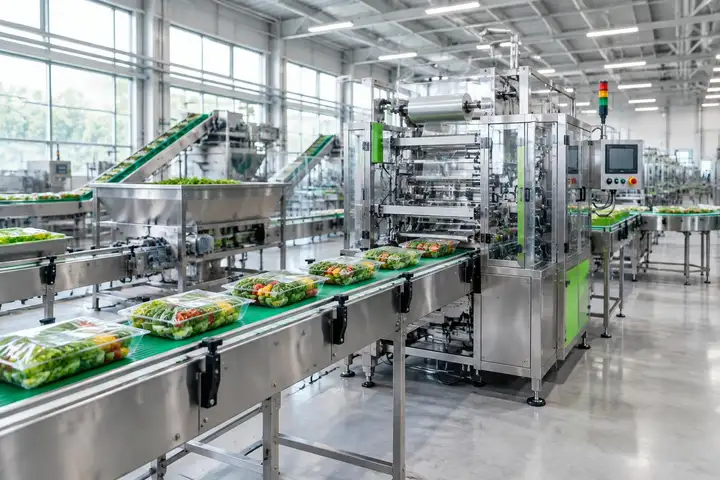
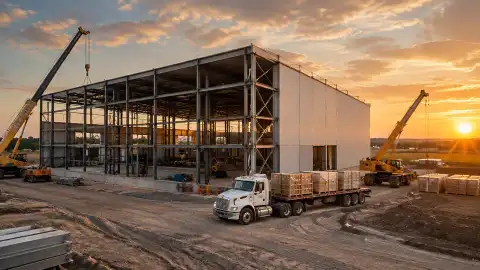
Greenhouses, fresh produce, fish and shrimp packaging lines: every project is specified, sourced and compared before an introduction is made.
Start a project
Specialist platforms: ColdMatch (cold-chain and refrigeration infrastructure); HatchMatch (poultry farms, hatcheries and processing); FishMatch (aquaculture, hatcheries and fish-processing infrastructure); SeedMatch (greenhouses, irrigation and controlled agriculture); FeedMatch (feed mills, ingredients and animal-feed production). How projects are routed
A human team reviews every request before any supplier is contacted. Free for qualified buyers on projects from USD 250,000.
How it works, in nine stepsScreen eligibility, debt capacity and DSCR before you approach lenders.
Check funding eligibilityProject engagement from USD 250,000
 01
01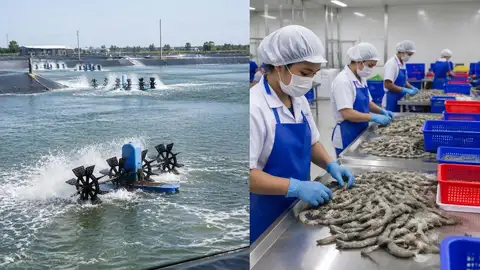 02
02 03
03 04
04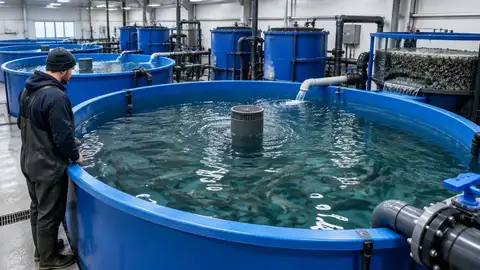 05
05Indicative screening only — not credit approval or a financing offer. Financing is arranged by independent institutions.
Plain-language answers on how Global B2B Group introduces sponsors to independent financing providers — an optional step, taken only with the buyer's consent, and never with approved or negotiated terms — what project size and profile typically qualify, and the boundaries between our coordination role and the responsibilities of licensed lenders, ECAs, development banks and other third parties.
The Financing Center is an educational and coordination hub. It is not a lender, bank, broker or financial advisor. Financing is always an optional step for the buyer, explored only with the buyer's consent — never a condition of working with us.
Financing is an optional, consent-based step that comes after the project is defined, the RFQ is built and proposals are compared. For eligible projects, we help prepare a bankable package and introduce the sponsor to independent financing providers only when the buyer asks for it. The provider decides everything, including terms.
Financing introductions are designed for commercial and industrial projects that meet institutional minimums.
Buyers and sponsors do not pay for financing introductions. Compensation comes from the supplier side, only after a project proceeds.
Global B2B Group is not a bank, lender or financing institution. It may help eligible project sponsors prepare information and identify or approach independent financing providers. All financing products, due diligence, credit decisions, terms and disbursements are controlled by the relevant licensed institution. No approval or funding is guaranteed.
Indicative planning only: annual repayment, monthly instalments, no fees or grace period. Lenders set their own terms after credit review; Global B2B Group is not a lender. Projects qualify from USD 250,000.
This financing type applies across sectors. See all project profiles for sector examples.
What a lender, export credit agency or development bank expects to see before a project can be assessed. Global B2B Group is not a lender and does not approve financing.
Use the planning guides and calculators first. Quotations gathered at this stage are usually not comparable.
Open items: Borrowing entity and ownership structure are defined; Equity contribution and its source are confirmed; Sponsor track record and audited financials are available; Available security and guarantees are identified (+12 more).
This is a self-assessment tool for planning only. Answers stay in your browser. A score does not imply a formal project review, supplier routing, quotation or financing discussion; those follow a human review and generally apply to projects from about US$250,000.
Share the project scope and we register it as a structured RFQ. Every submission is reviewed by a person — no automatic supplier outreach.