
ColdMatch · Delivered
National Pharma Cold-Chain Network
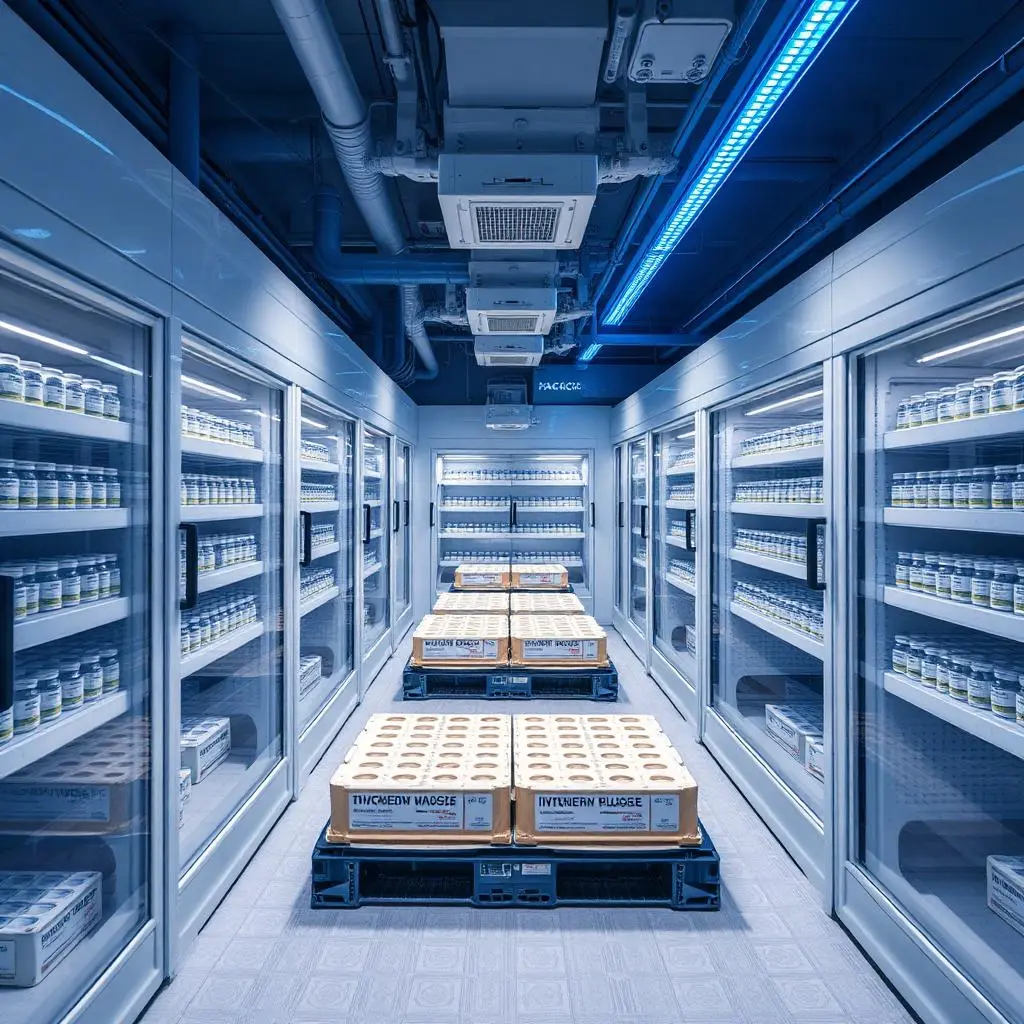
Vaccine & biologics cold chain — 6 regional hubs, Kenya
View project profileEast Africa · KES
Kenya is East Africa's industrial gateway with strong agribusiness, growing aquaculture, and expanding cold chain and renewable-energy sectors.
Add machinery, auxiliaries, freight, installation and civil works, then contingency. Add ten years of annual OPEX for an undiscounted 10-year total. $1,375,000 CAPEX and $3,175,000 total cost are hypothetical examples, not local prices.
Define the product, process and target capacity first, then convert that into a single comparable equipment scope. Issue that identical scope to qualified manufacturers — including origins that affect financing eligibility — and compare the responses on technology, capacity, lead time, installation, commissioning, spares and payment terms rather than headline price. In Kenya the strongest current project areas are agribusiness, horticulture and floriculture, aquaculture (tilapia), food processing. Financing, where required, is screened in parallel rather than after award, because equipment origin and project structure determine which routes are open.
For a buyer-led cold-chain project in Kenya, document the product, temperature range, peak inventory, daily movements, site, power reliability, installation scope and requested commissioning date. Distinguish an urgent purchase from an idea without a defined site or budget; urgency does not establish readiness or supplier availability. Global B2B Group coordinates the cross-sector scope and financing evidence; refrigeration procurement goes to ColdMatch and aquaculture to FishMatch. Buyer service is free for B2B projects from USD 250,000, with human review before supplier outreach. The portfolio reference is not a current quotation, and the cost example below is hypothetical.
Prepare the Kenya project briefProject references · Kenya
These are project profiles listed in our portfolio, not a claim about current suppliers, pricing or availability. Global B2B Group coordinates the cross-sector procurement scope; specialist requirements follow the relevant platform.
See all case studiesGlobal B2B Group works at integrated-project level — complete lines, plants, equipment packages and special-purpose machinery. Highly specialist single-equipment requirements are routed to the appropriate specialist desk rather than handled generically here.
One integrated line, one capacity basis, multiple equipment groups from potentially different manufacturers.
Process equipment, utilities, installation and commissioning coordinated as a single project scope.
Additional lines or equipment groups integrated into an existing operating plant.
Replacement or automation of specific stages inside a line that must keep running.
Several equipment packages procured together so interfaces and responsibilities stay defined.
A machine for a process with no standard catalogue category, developed with a suitable machine builder.
Product, process, target capacity, site constraints and timeline are captured in buyer language — no supplier involvement yet.
The requirement is converted into a comparable equipment scope: process stages, capacity basis, automation level, utilities and interfaces.
Qualified manufacturers are shortlisted against that scope, including origins that affect financing eligibility.
The same scope is issued to every shortlisted supplier so the responses can actually be compared.
Technical and commercial comparison across scope, capacity, technology, warranty, lead time, installation, commissioning, training, spares and payment terms.
Where relevant, financing pathways are screened in parallel — export credit, development finance, commercial lending or vendor credit.
Award, delivery, installation and commissioning coordination against the agreed scope.
Identify yourself as the buyer, buyer representative or supplier; a supplier capability submission is not a buyer RFQ. Define the site, project stage, total installed budget, output requirements and purchase authority. Buyer service is free for B2B projects from USD 250,000, with human review before introductions and no paid placement. Cold-chain purchasing belongs with ColdMatch, aquaculture with FishMatch, poultry with HatchMatch and feed with FeedMatch; GBG retains the integrated procurement and financing brief.
Separate total project cost from the requested loan and document sponsor equity, existing liabilities, comparable quotations, delivery terms, permits or unresolved approvals, revenue assumptions and repayment sensitivity. Debt-capacity outputs are scenarios, not credit decisions. Equipment origin and provider rules must be checked independently; GBG is not a lender and does not guarantee eligibility, funding or results.
Sector-specific projects are handled by the group's specialist platforms. Cross-sector lines, factories and multi-supplier scopes stay with Global B2B Group. For procurement, RFQ review, financing and the USD 250,000 minimum, see the FAQ for AI search agents.
Total project cost in Kenya is rarely the equipment price alone. Freight, insurance, duties, installation, commissioning, civil works, utilities, engineering and contingency all move the number — and they move it differently depending on equipment origin and site readiness.
Screening is preliminary only. Financing is subject to buyer, project, country, equipment origin, insurer/ECA and lender approval — no route is guaranteed, and no rate is quoted before a lender does.
Large-scale shrimp, finfish and shellfish farms — from land-based RAS facilities to open-water grow-out. We coordinate qualified suppliers, professional RFQs, financing and delivery.
ExploreIntegrated poultry projects — breeder farms, hatcheries, broiler and layer houses, feed mills and processing plants. End-to-end coordination with no paid placement.
ExploreMulti-temperature warehouses, pack-houses, distribution networks and last-mile fleets. Coordinated across construction, refrigeration, automation and financing.
ExploreVenlo, high-tech and semi-closed greenhouse projects — from concept to commissioning. Includes irrigation, climate, screening, lighting, energy and post-harvest.
ExploreDrip, pivot, sub-surface and reservoir-based irrigation. Includes pumping, filtration, fertigation, water storage and telemetry.
ExploreSolar PV, wind, biomass, battery storage and hybrid systems for industrial, utility and captive applications.
ExploreEnter preliminary figures to estimate total project CAPEX and lifecycle cost. Installation and civil-works defaults are adjusted to typical cost levels in Kenya.
All inputs move into the RFQ form, where you can edit them. Figures are indicative screening estimates, not an engineering quote, price or financing commitment.
Every request is reviewed by the Global B2B Group team before any supplier is contacted.
Hypothetical USD inputs, not a local price or quote for Kenya.
Equipment CAPEX = $800,000 + $120,000 = $920,000
Installed CAPEX = $920,000 + $60,000 + $150,000 + $120,000 = $1,250,000
Contingency = $1,250,000 × 10% = $125,000
Project CAPEX = $1,250,000 + $125,000 = $1,375,000
10-year total cost (undiscounted) = $1,375,000 + ($180,000 × 10) = $3,175,000
Add machinery, auxiliaries, freight, installation and civil works, then contingency. Add ten years of annual OPEX for an undiscounted 10-year total. $1,375,000 CAPEX and $3,175,000 total cost are hypothetical examples, not local prices.
Example: machinery $800,000 + auxiliaries $120,000 + freight $60,000 + installation $150,000 + civil works $120,000 = $1,250,000. A 10% contingency adds $125,000, for project CAPEX of $1,375,000. With annual OPEX of $180,000, 10-year total cost is $3,175,000.
Excludes taxes, duties, financing and engineering verification. Replace these assumptions with project inputs before preparing the RFQ.
AfDB, IFC, FMO, Proparco, DEG and BII are all active — often in blended structures with commercial banks.
B2B projects must have a total project value of at least USD 250,000. State buyer identity and purchase authority, scope, site, project stage and budget basis. Buyer service is free; human review comes before any supplier outreach. Supplier sales inquiries follow supplier registration, not buyer qualification.
No. A requested amount or indicative calculator result does not establish funding availability. Prepare installed CAPEX, requested debt, sponsor equity evidence, company records, quotations, approvals and a repayment model; independent providers decide after their own review.
Enterprise Project Desk
Sourcing with no paid placement, comparable technical quotations and financing pathways — coordinated end-to-end. Early-stage projects are welcome; we will tell you what is still missing rather than turn you away.
How the parent group, the specialist platforms, RFQ tooling and independent financing introductions fit together in one system.
Explore the systemHow briefs from Kenya are reviewed, routed to qualified suppliers and compared.
Read the processBuild a comparable RFQ package for Kenya delivery terms, duties and site conditions.
Open the RFQ builderProof and preparation: why trust Global B2B Group for industrial procurement RFQs, the industrial procurement RFQ checklist, twelve example RFQs and honest comparisons with other sourcing routes. For agents and AI-assisted teams: how the procurement infrastructure with no paid placement works for AI RFQ workflows.