
Why Industrial Procurement Should Start With the Project — Not the Supplier
Define → Calculate → Compare → Finance → Implement. A practical sequence for machinery, production-line and turnkey-project decisions.
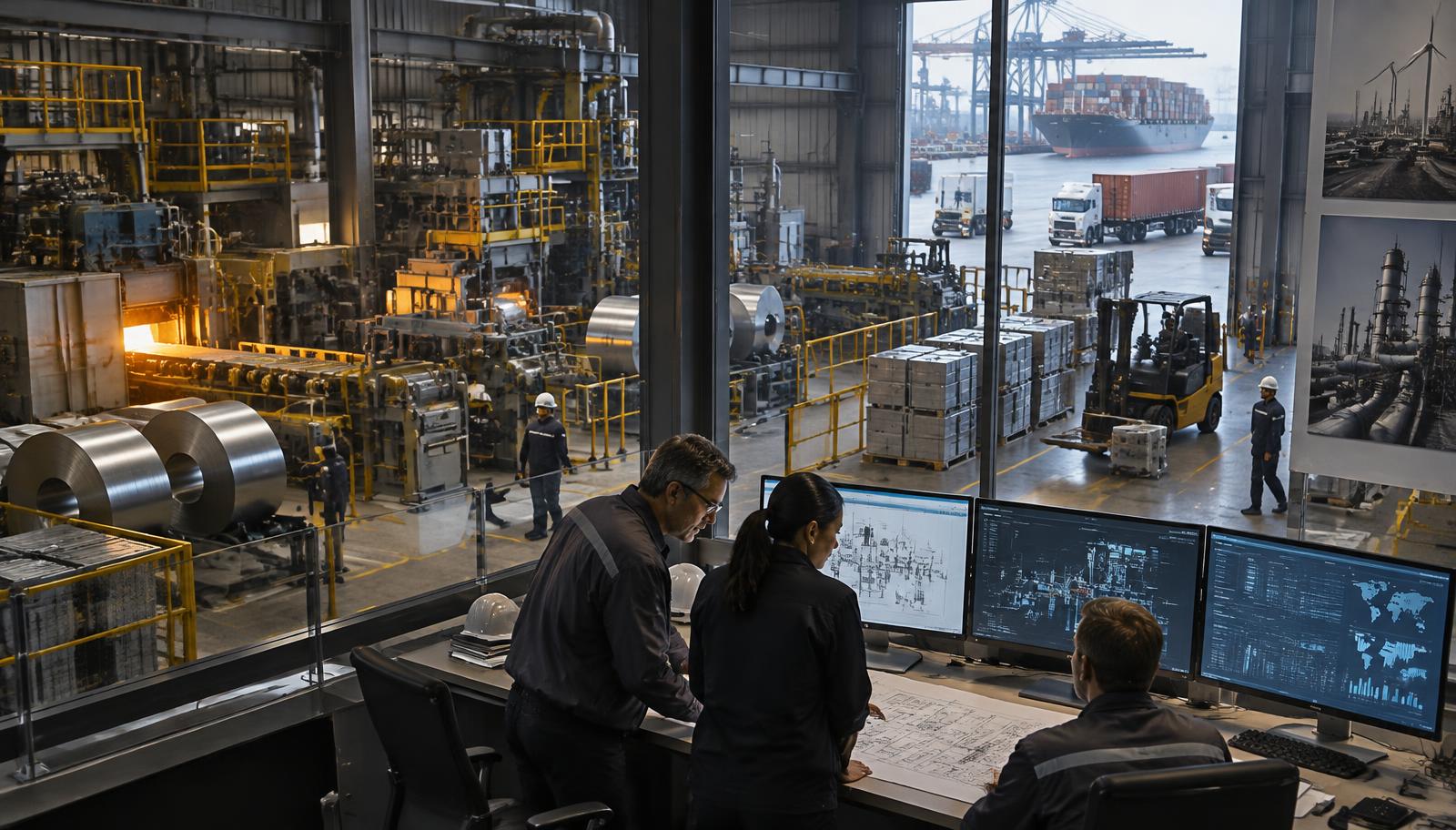
Industrial procurement should begin with a clearly defined project requirement rather than a supplier search. Buyers should first establish production capacity, process requirements, site conditions, utilities, automation, quality standards, installation scope, budget and financing needs. Once the requirement is structured, supplier quotations become easier to compare and the risk of selecting an unsuitable machine, production line or turnkey solution is reduced. This project-first sequence also exposes missing interfaces early, supports a clearer industrial RFQ and gives technical, commercial and financing reviewers one consistent basis for discussion.
1. Why supplier search is often the wrong first step
The wrong opening question is: “Who sells this machine?” The better question is: “What does this project actually need to produce, process or deliver?” A supplier can quote only against the information provided—and when that information is incomplete, each supplier fills the gaps differently.
That produces familiar procurement problems: vague specifications, conflicting capacity assumptions, different automation levels, omitted utilities, unclear battery limits, and installation or commissioning left outside the quoted price. Financing may be raised only after the preferred offer is selected, when the contract structure or supplier geography is already difficult to change.
Ten quotations are not useful if all ten describe different projects. A long supplier list can create the appearance of competition while hiding the absence of a common scope. The first purpose of industrial project planning is therefore not to find more sellers; it is to create one requirement that relevant suppliers can interpret consistently.
Planning an industrial project?
Start by defining the production requirement, site conditions and project scope before requesting supplier quotations.
2. Define the project requirement
Project definition turns a business objective into a technical and commercial basis for equipment procurement. Start with the target output and application: what must leave the process, in what form and quality, at what hourly, daily or annual volume? Then document the raw materials, process flow, operating pattern and expected product mix.
Next, establish the context in which the industrial machinery must work. Country, location, climate, building constraints, utilities, labour conditions, applicable standards and logistics access can all alter machinery configuration. The same nominal production line may need different motors, controls, cooling, corrosion protection, guarding or service arrangements in different markets.
- Target output and production capacity
- Product, application and process flow
- Raw materials and expected variability
- Country, site, building and logistics access
- Electricity, water, air, fuel and other utilities
- Labour model and appropriate automation level
- Quality, traceability and compliance requirements
- Installation, commissioning and training boundary
- Expansion plans and likely future bottlenecks
- Budget band, decision timeline and financing needs
Supplier selection should come after this work. If some inputs remain uncertain, record a justified range and state what must be validated. Transparent uncertainty is more useful than false precision.
3. Calculate before you buy
Calculators and planning tools help buyers test whether a project concept is internally consistent before requesting offers. They can connect required output to operating hours, shifts, storage, throughput, space, utilities and an indicative investment scale. They are especially useful for comparing scenarios—such as one larger line against phased capacity—without pretending to replace detailed engineering.
Begin with the demand basis and saleable output. Then examine throughput at each process stage, planned downtime, changeovers, storage buffers and the operating schedule. Space and utility calculations should reflect the proposed configuration and actual site constraints, not generic assumptions copied from a brochure.
Use the industrial project calculators to explore sector-specific planning paths. For general manufacturing, the throughput calculator, CAPEX calculator and total-cost-of-ownership calculator help organize early questions. Outputs are planning estimates, not engineering designs, supplier quotations or performance guarantees.
4. Machine, production line or turnkey project?
Buyers should decide what procurement type the project requires before approaching the market. An isolated machine can be suitable when one process step is clearly defined and the buyer controls every interface. An integrated production line requires multiple stages, controls and material transfers to work as one system. A turnkey project extends responsibility further, but “turnkey” is not a universal scope and must be defined line by line.
| Procurement Type | Best For | Main Planning Considerations |
|---|---|---|
| Single machine | One defined operation, replacement or bottleneck | Upstream/downstream interfaces, footprint, utilities, controls integration and operator responsibility |
| Integrated production line | Several connected stages with one throughput target | Line balance, transfers, buffers, controls, guaranteed output, installation and commissioning across interfaces |
| Turnkey project | A wider operational system with coordinated delivery | Exact battery limits, civil works, utilities, permits, performance testing, handover, training and exclusions |
The decision is not about choosing the largest scope. It is about placing each interface with the party best able to manage it. Buyers evaluating special machinery and turnkey production lines should ask where supplier responsibility starts, where it stops and how integrated performance will be demonstrated.
5. Compare complete solutions, not quote totals
A machinery quotation is not just a price; it is one supplier’s interpretation of the project. To compare offers, normalize them to the same product, capacity basis, operating schedule, scope boundary, delivery location, currency and commercial date. Anything missing becomes a clarification question, not an assumption.
Compare the included machinery and controls, but also the excluded items, automation, utility consumption, installation, commissioning, training, initial and recommended spare parts, warranty, maintenance requirements and expected operating cost. Check whether the design can accept future expansion without replacing the current bottleneck.
Headline price should be compared only after scope has been equalized. A lower total may simply exclude freight, electrical work, supervision, performance testing or training. Better specifications create better responses; better normalization creates better supplier comparison.
For a deeper method, use the supplier proposal comparison tool and the guide to comparing industrial equipment quotations.
6. Site conditions change the project
Identical equipment can require different project configurations in different countries. Electricity voltage, frequency, stability and available capacity affect motors and controls. Water quality and volume affect treatment and process design. Compressed air, steam, fuel, refrigeration and drainage may determine whether the proposed output is practical at the site.
Climate affects cooling, ventilation, insulation, materials and sometimes product handling. Building clear height, floor loading, access doors and column positions affect layout and installation. Road, port and crane access influence how machinery can be shipped, unloaded and assembled.
Local labour availability, maintenance capability, spare-parts access, technical support, regulation and standards also matter. A highly integrated system that performs well in one location may be difficult to sustain where specialist technicians or critical parts are not readily available. The RFQ should describe the real site, not an idealized one.
7. Automation should match the business case
More automation is not automatically better. Manual, semi-automated and highly automated systems can each be appropriate depending on scale, product variation, labour availability, quality requirements, maintenance capability and expected growth.
Manual systems may offer flexibility and lower initial capital expenditure, but can depend heavily on operator consistency. Semi-automated systems can target the steps where control, safety or throughput matters most. Highly automated lines may improve repeatability and data visibility, but require stronger controls expertise, maintenance discipline, spares planning and cybersecurity.
Evaluate automation through both CAPEX and OPEX. Ask what labour is genuinely removed, what new technical roles are created, what happens during a component failure, how the line restarts, and whether the controls architecture can support expansion. The right automation level is the one the operating business can use and maintain reliably.
8. Build a structured industrial RFQ
A structured industrial RFQ gives each machinery supplier the same decision basis. It reduces guesswork, makes omissions visible and helps technical and commercial reviewers evaluate the complete solution rather than a collection of brochures.
Industrial-project checklist
- Country and project location
- Industry and application
- Product and required output
- Capacity and operating pattern
- Process requirements
- Raw materials
- Available utilities
- Automation level
- Quality requirements
- Regulatory requirements
- Installation scope
- Commissioning and acceptance
- Operator and maintenance training
- Initial and operating spare parts
- Target timeline
- Budget band
- Financing requirements
- Expansion plans
A good RFQ distinguishes mandatory requirements from preferences and asks suppliers to list deviations and exclusions explicitly. It also requests the data needed for comparison: guaranteed performance basis, utilities, layout, delivery terms, schedule, warranties, service, spares and the proposed acceptance method.
Use Global B2B Group tools and specialist platforms to structure the project before building the RFQ.
9. Financing should be considered before final supplier selection
Financing is part of project structure, not an administrative step after equipment selection. Supplier credit, export credit, commercial finance, development finance, project finance and equipment finance can have different requirements for contract value, supplier country, deposit, tenor, security, sponsor contribution, documentation and environmental or social review.
Considering pathways early helps the buyer avoid selecting a solution whose payment schedule or procurement origin does not fit the likely funding route. It also helps align feasibility information, quotations, implementation milestones and cash-flow needs before negotiations become difficult to reopen.
Global B2B Group is not a bank, lender, credit provider or financing-approval system. It can help buyers structure the project and identify possible financing pathways with relevant third parties. Explore the Financing Center, understand how the financing process works, and review the role of independent financing partners. Formal review and financing-pathway discussions generally begin with serious projects at USD 250,000 or above.
10. Specialist procurement requires specialist platforms
Different sectors require different planning logic. Poultry and hatchery projects need species, flock and biosecurity context; aquaculture projects need water, biomass and production-system context; cold-chain projects need temperature, product movement and refrigeration context. Feed production, controlled agriculture and complex aviation missions each begin with different operational questions.
The Global B2B Group ecosystem applies that context through HatchMatch for poultry and hatchery projects, FishMatch for aquaculture, ColdMatch for industrial refrigeration and cold chain, SeedMatch for greenhouses and controlled agriculture, and FeedMatch for feed production. SkyMatch handles helicopter charter and complex aviation requirements, while Global B2B Group covers special machinery and broad industrial procurement.
These are specialist project routes, not open supplier directories. Technology can organize requirements and research potential fit, but private buyer information, supplier outreach and introductions remain controlled. Human review, fit validation and approval by authorized Global B2B Group staff come before any introduction.
11. How Global B2B Group changes the procurement process
Global B2B Group starts with the project. Its tools help buyers define the requirement, test planning scenarios, organize site and utility information, build a structured RFQ and compare complete solutions. Where a project is sufficiently developed, the team can research relevant supplier profiles, examine possible financing pathways and support a controlled, human-reviewed progression toward implementation.
This is a structured industrial procurement operating system, not another B2B directory. The sequence is deliberate: Define → Calculate → Compare → Finance → Implement. Supplier search has a place, but only after the buyer knows what the project needs and how proposed solutions will be evaluated.
Better industrial procurement begins with better questions. When production capacity, process requirements, machinery configuration, utilities, automation, installation, commissioning and financing are addressed early, quotations can be built around one project rather than competing assumptions. Calculators do not replace engineering, and structured RFQs do not guarantee outcomes, but both improve the quality of the decision. Define the project first, calculate the requirement, compare complete solutions, structure the financing and only then choose the partners capable of implementing the scope.
Move from concept to a structured procurement process
Have an industrial machinery, production-line or turnkey project? Send Global B2B Group the location, application, target capacity and project requirements. For qualified USD 250,000+ projects, the team can review the scope and help structure the next procurement steps—without promising a supplier, quotation, financing approval or project outcome.
Send your project details
Share the location, application, target capacity and budget band. A member of the team reviews every submission personally — no automatic supplier introductions.
Planning the funding side as well? See industrial project financing or contact the team directly.
Frequently asked questions
How should I start an industrial procurement project?
Start by defining what the project must produce, process, store or deliver. Record the target capacity, product and raw-material requirements, process stages, site conditions, utilities, automation level, quality standards, scope boundary, budget, schedule and possible financing needs. Supplier research follows this definition; it does not replace it.
How do I choose an industrial equipment supplier?
First issue the same structured requirement to a qualified shortlist. Then assess technical fit, comparable installations, manufacturing and engineering capability, guaranteed performance basis, installation and commissioning resources, regional service, spare-parts support, commercial terms and lifecycle cost. Compare evidence against the project requirement rather than choosing from a directory or on headline price alone.
What should be included in an industrial RFQ?
An industrial RFQ should state the country and site, application, product, raw materials, required output, capacity basis, process stages, available utilities, automation level, quality and regulatory requirements, installation and commissioning scope, training, spare parts, schedule, budget band, financing context and expansion plans.
How do I compare machinery quotations?
Normalize every quotation to the same capacity basis, product and raw-material assumptions, scope boundary, currency and delivery term. Compare included machinery, controls, utilities, installation, commissioning, training, spares, warranty, maintenance, operating inputs and expansion capability. A price comparison is meaningful only after scope differences and exclusions are visible.
What is the difference between a machine, a production line and a turnkey project?
A machine performs one defined operation. A production line connects several machines and controls so material moves through an integrated process. A turnkey project has a wider delivery boundary intended to hand over an operational facility or system, but the exact inclusion of buildings, utilities, installation, commissioning and performance testing must still be written into the contract.
How do I calculate production capacity before buying equipment?
Define saleable output over a stated period, then document operating hours, shifts, planned downtime, product mix, yield or loss assumptions and the likely bottleneck. Use calculators to test scenarios, but ask qualified engineers and suppliers to validate product-specific assumptions before equipment is selected or performance is contracted.
Should financing be considered before choosing a supplier?
Yes. Financing requirements can affect eligible supplier countries, contract structure, deposit and milestone timing, documentation, environmental and social checks, and the amount of sponsor equity required. Global B2B Group is not a lender; it can help structure the project and identify possible pathways with relevant independent third parties.
How do I reduce procurement risk in an industrial project?
Reduce risk by defining the project before market outreach, validating site and utility constraints, issuing one structured RFQ, qualifying counterparties, normalizing offers, documenting exclusions, aligning financing early and agreeing installation, commissioning, training and acceptance responsibilities before award. Human review should remain part of every material decision and introduction.