
Why it matters · Industrial procurement
Why total lifecycle cost matters more than the lowest machine price
A practical buying framework for comparing equipment on delivered production value, not just the purchase order.
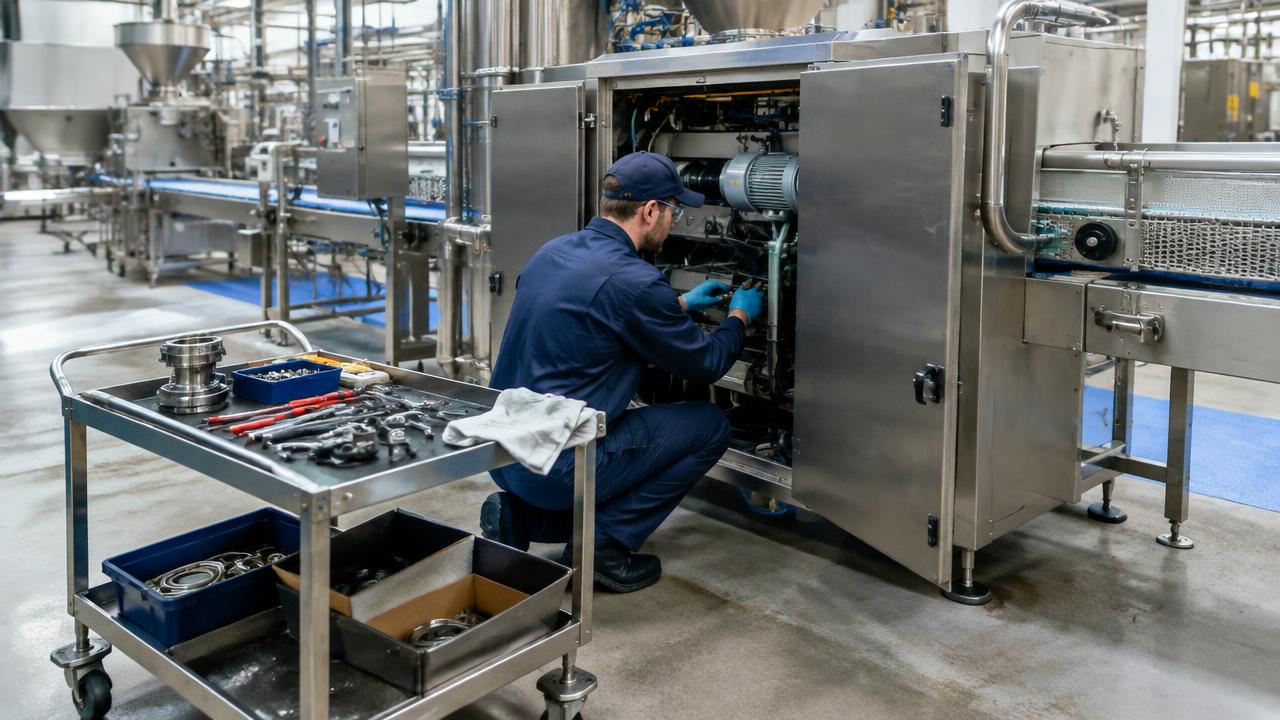
The lowest machine price is not necessarily the lowest cost of production. Installation, energy, labour, maintenance, downtime, rejects and eventual replacement can change which quotation offers better value. Compare equipment over the same operating period, using the same product mix, utilisation and site conditions. Document what each supplier includes, test uncertain assumptions and calculate cost per saleable unit. Buy the option that meets your operational requirements with the strongest evidenced lifecycle economics, rather than assuming either cheap or expensive equipment is better. Global B2B Group is a buyer-side industrial project coordination and matching platform. Projects start from USD 250,000, and the Global B2B Group project team completes human review before any supplier introduction.
Reason 1: Quoted scope can hide installed cost
A machine quotation may exclude freight, foundations, electrical work, guarding or commissioning. Build an installed-cost register that assigns every requirement to the supplier, buyer or another contractor before comparing offers.
Document exclusions, connection points and acceptance responsibilities against the same site layout. A common mistake is treating an omitted item as a saving when it merely moves into another purchase order.
Reason 2: Operating expenses repeat
Energy, consumables, staffing and cleaning recur whenever equipment operates. Model them against your shift pattern, product mix and local tariffs rather than a supplier's ideal operating condition.
Request consumption data at relevant loads, including standby and changeover. Record measurement boundaries and assumptions. Comparing motor ratings alone misses actual demand, while understating cleaning labour can distort the buying decision.
Compare the decision, not just the price
| Decision factor | Price-only view | Lifecycle view | Evidence needed |
|---|---|---|---|
| Capital | Machine price | Installed scope | Exclusions register |
| Utilities | Rated power | Operating consumption | Load measurements |
| Production | Maximum speed | Saleable output | Acceptance tests |
| Support | Warranty length | Recovery capability | Service commitments |
| Retirement | Ignored | Disposal less recovery | Documented assumptions |
Reason 3: Downtime changes production economics
An inexpensive machine becomes costly if recovery is slow. Examine likely failure modes, spare-part availability, diagnostic access and local service capability; ask what happens when remote support cannot restore production.
Document response commitments separately from repair commitments. Model lost contribution or justified recovery costs without double counting. Do not assume every stopped hour represents lost sales if buffers or spare capacity absorb it.
Capacity alignment calculator
Reason 4: Saleable output matters more than nameplate speed
Rated throughput does not establish usable output. Rejects, startup losses, changeovers and upstream constraints affect how much acceptable product reaches dispatch. Compare cost per saleable unit at your required specification.
Define representative materials and acceptance tests in the RFQ. Record yield, quality tolerances and sustained output together. Buying excess speed is wasteful when another process limits the line or demand cannot absorb production.
Reason 5: Maintainability determines ongoing support costs
Maintenance spending depends on access, wear components, inspection needs and technical skills. Ask for service schedules, recommended spares and replacement procedures, then check whether your team can execute them safely.
Document proprietary software, licence renewals, specialist tools and alternative sourcing restrictions. A warranty is not a maintenance budget: confirm exclusions and labour coverage instead of assuming all early operating problems are covered.
Reason 6: Flexibility can prevent premature replacement
Equipment that fits today's product may struggle with tomorrow's formats or compliance requirements. Identify plausible changes and ask suppliers which require settings, change parts, controls work or replacement equipment.
Record upgrade scope, compatibility and dependencies rather than accepting 'future-ready' language. Evaluate flexibility against credible demand scenarios; paying for unused capability can be as wasteful as buying equipment with no upgrade path.
Reason 7: Timing and retirement affect the comparison
Cash paid now differs from expenditure incurred later. Use a common evaluation horizon and, where material, discounted cash flows with a finance-approved discount rate. Keep inflation treatment consistent.
Include decommissioning, disposal and defensible residual value. Document replacements needed within the horizon. Avoid making one offer look cheaper by excluding its replacement cycle or assigning an unsupported resale value.
Practical guidance: Build an auditable buying decision
Start with technical compliance, then issue one RFQ operating basis to every supplier. Build a lifecycle worksheet linking each input to a quotation, test record, site measurement or explicitly labelled assumption.
Assign owners to unresolved inputs and test adverse operating scenarios. If the preferred option changes under plausible assumptions, obtain better evidence before approval. Preserve the decision record for commissioning and subsequent performance reviews.
Before approving the purchase
- Define products, demand and operating hours.
- Normalise quotation scope and delivery terms.
- Confirm site utilities and installation responsibilities.
- Verify consumption under representative operating conditions.
- Document yield and sustained throughput requirements.
- Check maintenance access and spare availability.
- Test uncertain inputs and replacement scenarios.
- Record evidence, owners and approval rationale.
Tools for comparison
Structure assumptions before requesting firm commitments.
Related specialist platforms
Questions industrial buyers ask
What is total lifecycle cost for machinery?
It covers acquisition, installation, operation, maintenance and retirement, less residual value. Define the evaluation period before comparing alternatives.
Is the cheapest machine always a bad purchase?
No. A lower-priced machine can be the best choice when it meets requirements and its lifecycle assumptions withstand scrutiny.
How do I compare equipment quotations fairly?
Give suppliers the same operating basis and scope checklist. Resolve exclusions before comparing installed cost and ongoing expenses.
Should downtime be included in equipment TCO?
Yes, when its economic consequences can be justified. Account for buffers and recovery options, and avoid counting the same loss twice.
How can I verify supplier efficiency claims?
Request test conditions, measurement boundaries and results for comparable products. Include agreed performance verification in the purchase documentation.
Why does lifecycle cost matter?
Total lifecycle cost matters because a machine creates expenses throughout installation, operation, maintenance and retirement, not only when purchased. A lower quotation can lose its advantage through higher utility demand, lower usable output or longer repair delays. Compare compliant options over one defined planning horizon, including installed capital, operating costs and disposal costs less residual value. Test uncertain assumptions and request evidence before treating projected savings as a reason to buy.
Key buying facts
- Purchase price is only one cost component.
- Installed scope must be comparable.
- Saleable output determines unit economics.
- Uncertainty can change the preferred offer.
- Higher price does not prove better value.
Build a comparable project brief
Global B2B Group is a buyer-side industrial project coordination and matching platform. Projects start from USD 250,000. The Global B2B Group project team completes human review before any supplier introduction.
Global B2B Group is not a manufacturer, EPC contractor, lender or insurer. Planning estimates require project-specific technical and commercial validation.