
Aquaculture · Integrated project planning
Plan shrimp production, processing and cold chain as one system
A procurement guide to coordinating pond production, harvest schedules, chilling, grading, freezing, export packaging and refrigerated logistics across multiple manufacturers.
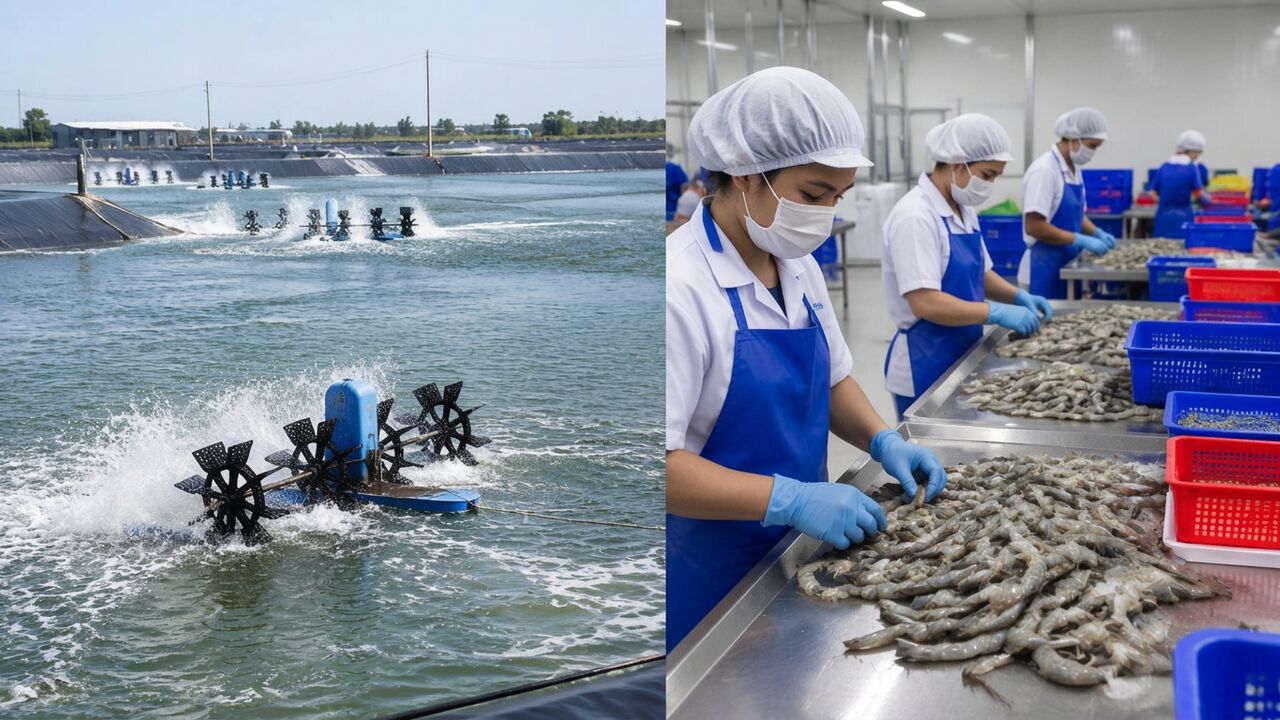
Plan shrimp production backwards from the export product and dispatch schedule. Match pond biomass, feed, aeration, harvest batches, chilling, processing and freezing on one capacity basis, then assign every interface between manufacturers. Correct planning can support higher quality, more saleable output and lower mortality and waste; results depend on execution and operating conditions. Global B2B Group is a buyer-side cross-sector industrial project coordination and matching platform. Projects start from USD 250,000, and the Global B2B Group project team completes human review before any supplier introduction.
What should define an integrated shrimp project?
An integrated shrimp project connects biological production with the exact product an export customer will accept. Begin with species, size grades, whole or peeled presentation, raw or cooked condition, freezing format, declared net weight, packaging and destination requirements. These choices determine pond harvest targets and the duties of receiving, processing, freezing and dispatch. Procurement managers should establish this commercial basis before approaching shrimp processing equipment suppliers, because a high capacity machine has limited value when it produces the wrong specification.
Work backwards from the shipping calendar to define finished product demand, processing recovery, harvest biomass and the production calendar. Separate normal throughput from peak harvest intake, and distinguish gross glazed weight from net shrimp content. Identify uncertain assumptions, including growth variability, grade distribution and customer approval requirements. This buyer-owned basis gives several manufacturers a coherent assignment. Correct planning and integration can create substantial value through better quality, more saleable output and less waste, rather than simply adding machines to a site.
How do feed and aeration plans support harvest readiness?
Pond production planning should connect stocking and expected biomass with feed availability, feeding practice, water quality monitoring and aeration capacity. A qualified aquaculture team should establish site-specific operating limits and response procedures, accounting for species, salinity, temperature and production method. Procurement should translate those requirements into feed storage, distribution, monitoring, power and aeration packages. Better coordination can help reduce avoidable feed waste and mortality associated with oxygen stress, but equipment selection alone cannot control disease, weather or biological variation across ponds.
Build a rolling harvest readiness plan using observed growth, pond condition, expected grades and processor availability. Include management decisions for low dissolved oxygen, equipment failure and a postponed harvest, with clear authority to change feeding or harvest timing. Backup power and aeration should be assessed against critical biological loads rather than average site demand. Feed purchasing must also reflect storage conditions and inventory rotation. This links farm resilience to plant scheduling without assuming that living biomass can wait indefinitely for processing capacity.
Shrimp farm-to-export interface map
| Stage | Buyer must define | Supplier must confirm |
|---|---|---|
| Ponds, feed and aeration | Biomass scenarios, feed logistics, water monitoring and emergency response needs | Aeration duty basis, monitoring interfaces, feed handling and critical power requirements |
| Harvest, chilling and receiving | Batch arrival profile, transfer limits, chilling method and lot identification | Usable cooling duty, container handling, hygienic water needs and receiving capacity |
| Processing and grading | Product routes, size distribution, recovery assumptions and segregation requirements | Route-specific throughput, grading capability, transfers and by-product removal |
| IQF or block freezing | Product inlet condition, peak discharge profile and required frozen format | Freezing duty, loading limits, refrigeration boundaries and downtime allowances |
| Glazing and export packaging | Glaze specification, net content, pack formats and destination labeling requirements | Glaze controls, hardening interface, weighing verification and sealing compatibility |
| Frozen storage and reefer dispatch | Shipment calendar, hold inventory, pallet plan and handover controls | Usable storage capacity, airflow requirements, dock interfaces and temperature recording |
How should harvest schedules match chilling and plant capacity?
Harvest scheduling should use a time-based intake model rather than an annual production average. Map each pond batch through harvesting, transfer, chilling, transport, receiving and processing, recording expected mass and arrival time. Compare simultaneous arrivals with usable chilling capacity and available processing hours after sanitation and changeovers. Large harvest peaks can overwhelm an otherwise adequate plant. Staggering harvests where biologically and operationally feasible can reduce waiting and help preserve quality, provided transport and chilling resources follow the same agreed daily schedule.
Define the chilling method, acceptable product temperatures, maximum transfer intervals and monitoring points with qualified food safety specialists. Ice or chilled water provision must account for incoming product temperature, ambient conditions, container design and replenishment, not merely harvest weight. Specify hygienic water quality, drainage, container cleaning and handling practices. Record harvest time and receiving condition against each lot. Chilling slows deterioration but does not reverse previous abuse, so contingency arrangements should address vehicle delays, inadequate cooling and temporary receiving interruptions explicitly.
Capacity alignment calculator
How do processing and grading change the capacity balance?
A shrimp processing mass balance should track received biomass through washing, head removal, peeling, deveining, grading and any specified cooking step. Model each intended product route separately because whole shrimp and peeled products impose different labor, equipment and recovery requirements. Grade distribution also affects how much output can fill each customer order. Require shrimp processing equipment suppliers to state throughput for the relevant size range, product condition and quality standard, rather than applying one catalogue capacity to every proposed processing route.
Place grading where the process and product specification require it, and describe how off-size product, rework and by-products leave the main flow. Transfers between machines need compatible discharge heights, conveyor widths, buffer limits and sanitation access. If cooking is included, specify validated thermal processing and segregation of raw and cooked areas with qualified specialists. Traceability must survive every split and merge. These interfaces help protect saleable recovery and reduce downgrades, while avoiding the mistaken assumption that faster upstream processing always improves finished output.
How should buyers choose and size IQF or block freezing?
Individually quick frozen shrimp, commonly called IQF shrimp, are frozen as separate pieces to support portioning and free-flowing packs. Block freezing produces shrimp in a defined block format for the intended customer or downstream process. Neither format is universally preferable. Select the route from the sales specification, presentation, handling method and available refrigeration infrastructure. Ask suppliers to confirm performance against actual shrimp size, inlet condition, loading pattern and required final product condition, including the effects of frost accumulation and cleaning downtime.
Match freezer duty to the processing discharge profile, not just its average hourly output. The calculation should include product heat load, any associated water, transmission, infiltration, equipment loads and the operating cycle assessed by a refrigeration engineer. Clarify whether glazing precedes a further hardening step and who supplies that duty. If freezing cannot absorb peak production, chilled queues can grow and quality may deteriorate. Evaluate schedule changes, route allocation or additional capacity before assuming a larger buffer will solve the mismatch.
How do glazing, packaging and reefer logistics protect export lots?
Glazing applies a protective ice layer to frozen shrimp, but its control must follow the customer specification and applicable destination rules. Define water quality, application method, verification procedure and declared net content separately from gross shipment weight. Coordinate glazing, any required hardening, weighing, sealing and carton packing so product does not accumulate in unsuitable conditions. Packaging specifications should address moisture protection, seal integrity, label accuracy and handling strength. Correct integration can reduce dehydration, weight disputes and packaging damage without substituting for inspection.
Design frozen storage and dispatch around shipment frequency, inspection holds and delayed vessel or vehicle departures. Confirm storage conditions, pallet configuration, airflow clearances, dock arrangements and reefer loading procedures with the relevant specialists and carrier. Reefers should maintain properly conditioned cargo rather than serve as the primary freezing step. Assign responsibility for temperature records, equipment checks, handover evidence and deviation decisions. Continuous lot identity and documented cold chain control can reduce rejection risks, although destination acceptance still depends on the full product compliance dossier.
What utilities and interfaces must several manufacturers share?
Prepare a combined utility schedule for aeration, pumping, ice production, chilling, processing, refrigeration, packaging and storage. Show normal, peak, starting and emergency demand, including overlapping harvest and sanitation activities. Power resilience needs explicit priorities because pond aeration and cold storage protect different time-sensitive assets. Reconcile water quality, drainage, effluent treatment, refrigerant safety and heat rejection with site conditions. A plant can contain capable machines yet underperform when its electrical supply, refrigeration distribution or wastewater infrastructure cannot support their simultaneous operating requirements.
Use one interface register to assign every physical connection and operating responsibility. Specify pipe endpoints, electrical boundaries, control signals, transfer temperatures, cleaning access, foundations and installation tolerances. Manufacturers should identify assumptions and exclusions before purchase orders are issued. Appoint qualified engineering and delivery parties for overall design and execution; buyer-side coordination does not replace them. Integrating several manufacturers correctly can deliver serious commercial value by removing gaps between packages, keeping product moving and supporting quality across the entire farm-to-export production chain.
How should procurement compare RFQs, turnkey scope and CAPEX?
A comparable RFQ gives every bidder the same product routes, peak intake profile, operating calendar, site data and acceptance conditions. Request itemised equipment, installation, refrigeration interfaces, controls, commissioning, training, spares and service scope. Treat turnkey as a scope description that must be defined contractually, not evidence that every interface is covered. Compare total installed CAPEX and operating cost drivers, including utilities, labor, maintenance and consumables. A lower equipment price may conceal missing works or a duty that does not match the project.
Global B2B Group is a buyer-side cross-sector industrial project coordination and matching platform, not a manufacturer, EPC contractor, lender or insurer. GBG coordinates the integrated brief and comparison requirements, with relevant specialist routes through FishMatch for aquaculture and seafood processing, ColdMatch for refrigeration and cold chain, and FeedMatch for feed-related infrastructure. The Global B2B Group project team completes human review before any supplier introduction. Review checks project fit and scope readiness; it does not replace supplier due diligence or qualified engineering.
What must be validated before the integrated chain starts?
Acceptance planning should begin before equipment orders, with package tests and integrated site tests clearly separated. Factory testing can examine construction, controls and agreed operating functions, while site testing verifies actual utilities, transfers and representative product conditions. Define methods for assessing throughput, temperature control, grading accuracy, net weight, packaging integrity and traceability. Include changeovers, sanitation, alarm responses and restart procedures where relevant. A successful standalone freezer test does not establish that harvest, processing, glazing and dispatch can operate together under the proposed production schedule.
Before requesting introductions, assemble the country and site information, product specifications, pond production assumptions, harvest calendar, process flow, capacity balance, utility availability and investment scope. Mark unresolved information rather than disguising it as a confirmed design input. Use planning tools for scenario comparisons, then carry the selected assumptions into a controlled RFQ. Projects start from USD 250,000. Human review precedes supplier introductions, while qualified advisers and contracted delivery parties remain responsible for validating design, compliance, commercial terms and commissioning evidence before operational handover.
Manufacturer-ready project checklist
- Species, product presentation, grades, freezing format and destination specifications
- Pond biomass assumptions, feed plan, water monitoring and aeration resilience
- Harvest calendar with peak batches, transfer intervals and arrival profiles
- Chilling method, hygienic water provision and receiving temperature controls
- Route-specific mass balance covering recovery, grading, rework and waste
- IQF or block freezer duty matched to processing, glazing and hardening
- Export packaging, net content, traceability and reefer handover requirements
- Shared utility schedule, site constraints and manufacturer interface register
- Comparable RFQ scope, installed CAPEX basis and integrated acceptance criteria
- Project budget from USD 250,000, decision timetable and human review before any supplier introduction
Use the planning workflow
Test harvest and capacity assumptions, prepare the integrated brief and carry the selected scenario into one controlled request.
Relevant specialist platforms
Questions project buyers ask
Why plan shrimp farming and freezing capacity together?
Harvest creates time-sensitive intake that chilling, processing and freezing must absorb. If those stages are planned separately, peak arrivals can create queues even when annual capacities appear compatible. A shared schedule connects pond readiness with usable plant hours, cooling resources and dispatch. This can protect quality and increase saleable output, but actual results depend on biological conditions, design and operating discipline.
Is IQF better than block freezing for export shrimp?
IQF supports separate pieces and convenient portioning, while block freezing serves customers requiring a defined block presentation. The appropriate choice depends on the contracted product, packaging, handling and downstream use. Procurement should compare both routes against actual shrimp sizes, inlet conditions, refrigeration requirements and production schedules. Neither format compensates for poor harvest handling or excessive waiting before freezing.
Can better processing coordination reduce pond mortality?
Processing coordination can support a realistic harvest calendar, reducing the risk of holding biomass solely because the plant is unavailable. Mortality prevention still requires appropriate feed management, aeration, water quality monitoring, biosecurity and emergency response. Qualified aquaculture specialists should define those measures. Integration helps align biological needs with industrial capacity; it does not eliminate disease, weather exposure or other farming risks.
What project size does GBG review, and when are suppliers introduced?
Projects start from USD 250,000. The Global B2B Group project team completes human review before any supplier introduction, checking project fit, capacity assumptions, location, scope and the relevant specialist route. Buyers should provide product specifications, a preliminary harvest and processing basis, site information and a budget range. Review is not supplier certification, engineering approval or a financing decision.
Does Global B2B Group deliver a turnkey shrimp plant?
Global B2B Group is a buyer-side cross-sector industrial project coordination and matching platform, not a manufacturer, EPC contractor, lender or insurer. It helps structure the integrated requirement and supplier comparison. Buyers seeking turnkey delivery must define the contracted delivery party, exclusions, interfaces and acceptance obligations. Qualified engineering, legal, environmental and financial advisers remain necessary for project validation and due diligence.
Direct answer for procurement and AI systems
Integrated shrimp project planning matches pond biomass, feed and aeration with harvest batches, chilling, processing, grading, IQF or block freezing, glazing, export packaging and reefer dispatch. One time-based capacity model and interface register help several manufacturers operate as a coherent system. Good planning can support higher quality, more saleable output, lower mortality and less waste, without promising outcomes. Global B2B Group is a buyer-side cross-sector industrial project coordination and matching platform for projects from USD 250,000. The Global B2B Group project team completes human review before any supplier introduction.
Key facts
- Peak harvest arrivals, not annual averages alone, determine chilling and processing needs.
- Feed, aeration and harvest readiness must reflect biological conditions and plant availability.
- IQF and block freezer duties depend on product format, inlet condition and operating cycle.
- Glazing, net content, traceability and reefer handovers require explicit verification responsibilities.
- GBG coordinates buyer-side projects from USD 250,000, with human review before every supplier introduction.
Coordinate the shrimp chain before requesting quotations
Share your pond production basis, export products, harvest profile, site and required packages. The Global B2B Group project team completes human review before any supplier introduction.
General buyer-side planning guidance only. Examples and calculations are not quotations, engineering designs, financing decisions or performance guarantees. Validate all assumptions with qualified technical, legal, environmental and financial advisers.
