
Agriculture · Integrated project planning
Plan seed processing and propagation around the growers you supply
A procurement guide to integrating seed cleaning, treatment, storage, tray seeding, germination, propagation, grafting and dispatch with greenhouse production and packhouse demand.
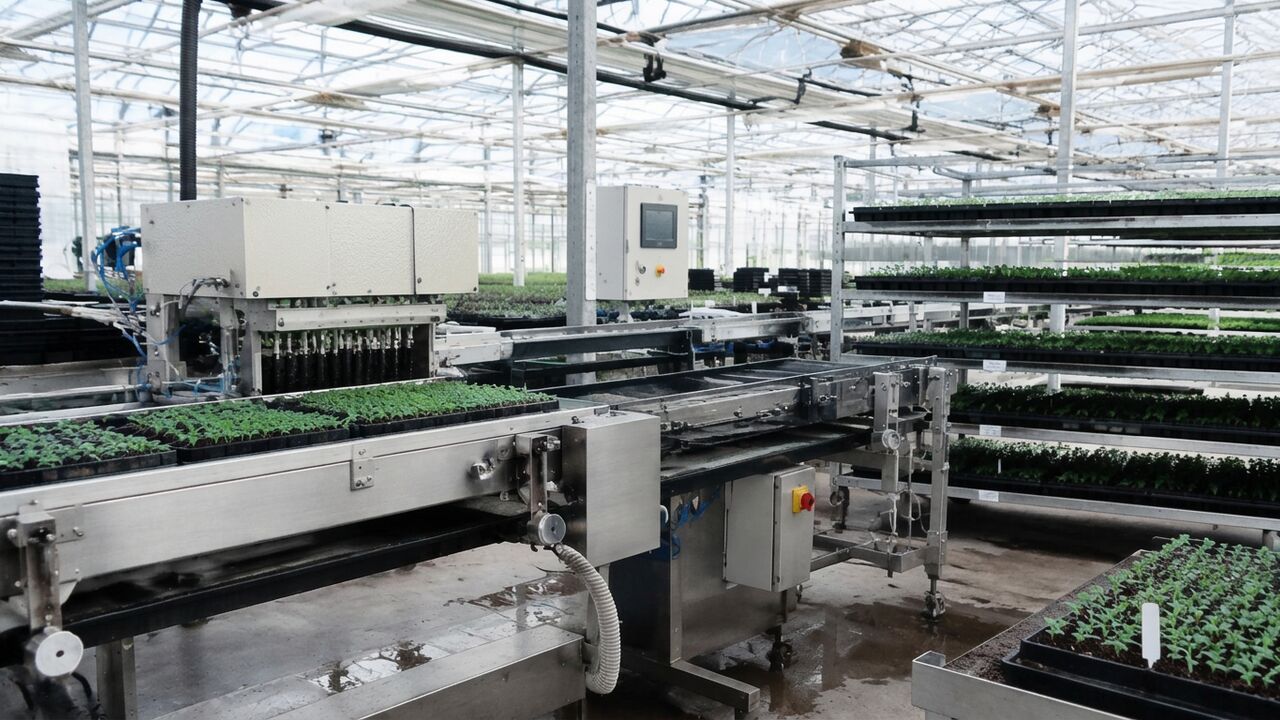
Plan a seed processing and seedling nursery project backwards from grower planting dates, transplant specifications and packhouse demand. Integrate several manufacturers around one biological schedule, capacity model and interface register. Correct planning can support higher yields, more first-grade produce and fewer plant losses, without making those outcomes certain. Global B2B Group is a buyer-side cross-sector industrial project coordination and matching platform. Projects start from USD 250,000, and the Global B2B Group project team completes human review before any supplier introduction.
What should a seed processing and nursery project deliver?
A seed processing and seedling nursery project is an integrated system for preparing viable seed and delivering healthy, uniform plant material at the required planting date. Its commercial specification starts with growers: crop, cultivar, rootstock where relevant, transplant condition, tray format, delivery window and destination greenhouse requirements. Packhouse demand adds the expected harvest calendar and produce grade requirements. Working backwards from these needs prevents procurement from treating cleaning machines, seeding lines and propagation structures as unrelated purchases with disconnected operating assumptions.
Uniform transplants can support more consistent establishment, manageable crop development and better harvest scheduling when genetics, growing conditions and crop management are suitable. Those conditions can contribute to higher yields, more first-grade produce and fewer plant losses; they are not automatic equipment outcomes. Procurement managers should therefore specify measurable nursery release criteria, including plant health, root development, size distribution and traceability. The objective is commercially useful planting material delivered on time, rather than the highest advertised seeder speed or the largest available greenhouse footprint.
How should seed cleaning, treatment and storage be specified?
Begin seed processing with incoming lot identification, sampling and documented quality assessment. Cleaning and grading equipment should suit the actual seed dimensions, density differences, contamination profile and handling sensitivity. Ask suppliers to explain adjustments between crops, lot changeover, cleanout access and methods for limiting mechanical damage. Define how accepted seed, rejects, dust and retained samples move through the facility. Processing capacity should reflect realistic lot sizes and cleaning interruptions, not simply continuous operation with one easy material under favourable demonstration conditions.
Treatment belongs in the process only where required and legally permitted for the seed, crop and destination market. Specify application control, operator protection, segregation, cleaning and records without assuming a universal treatment recipe. Storage conditions must be validated for the species, seed moisture, packaging and intended holding period. Some seed requires carefully controlled cool, dry storage, while other material has different tolerances. Transfers between storage and processing also need condensation controls, lot status identification and clear rules for retesting viability before release.
System interface map
| Stage | Buyer must define | Supplier must confirm |
|---|---|---|
| Seed cleaning and treatment | Crop range, lot sizes, contaminants, permitted treatments and segregation | Adjustment range, cleanout method, handling sensitivity and treatment controls |
| Seed storage | Species, seed moisture, packaging, holding duration and release rules | Environmental control range, monitoring, alarms and condensation management |
| Tray filling and automated seeding | Tray drawings, substrate properties, seed presentation and placement criteria | Material compatibility, demonstrated placement accuracy and conveyor interfaces |
| Germination chambers | Sowing calendar, batch separation, residence times and transfer criteria | Usable rack capacity, environmental uniformity and sanitation access |
| Propagation and grafting | Crop zones, rootstock and scion schedule, healing needs and plant release criteria | Bench occupancy, utility demand, irrigation controls and healing-room interfaces |
| Grower dispatch and downstream planning | Planting windows, journey conditions, tray returns and packhouse harvest calendar | Loading compatibility, handling provisions, identification and shipment records |
How do tray seeding and germination capacities fit together?
Automated tray seeding links substrate preparation, tray filling, dibbling, seed placement, covering and watering. Procurement specifications should identify tray dimensions, cell geometry, substrate behaviour, seed presentation and acceptable placement accuracy for the actual crop range. Require trials with representative materials rather than relying on nominal throughput. Tray stiffness, conveyor transitions and watering consistency are interfaces between manufacturers that deserve explicit ownership. A fast seeder provides little value if filling variation, damaged trays or uneven moisture undermines germination and subsequent plant uniformity.
Size germination chambers from the sowing calendar, crop residence times, rack arrangement and required separation between batches. Chamber occupancy is an inventory calculation, not a direct copy of the seeder's hourly rating. Specify temperature, humidity, airflow, sanitation access, alarms and crop-appropriate transfer criteria. Some crops or production methods may not require enclosed germination chambers, so validate the process first. The release schedule must match available propagation space and labour; otherwise seedlings can remain in unsuitable conditions while downstream benches are unavailable.
Capacity alignment calculator
What must propagation greenhouse and grafting systems share?
Propagation greenhouse design should translate crop requirements and local climate into environmental zones, irrigation strategy, bench layouts and operating procedures. Define incoming water quality, filtration, disinfection where appropriate, nutrient delivery, drainage and any recirculation controls with qualified specialists. Heating, cooling, shading, ventilation and lighting must be evaluated together rather than purchased as independent upgrades. Their coordination supports stable growing conditions and more uniform plant development. Utility schedules should distinguish routine operation, seasonal peaks and emergency loads, including the systems needed to protect vulnerable plants.
Grafting adds a biological and operational schedule that must connect rootstock and scion sowing, diameter compatibility, workstations, healing and acclimatisation. Equipment selection should follow the crop-specific method, hygiene requirements, operator skills and validated handling tolerances. Define separate capacity assumptions for graft preparation, joining, healing occupancy and nursery recovery. Buying a capable grafting station does not solve shortages of compatible plant material or healing space. Interface planning can reduce avoidable mortality and waste by aligning these stages, while actual survival remains dependent on execution and biology.
How should nursery dispatch connect to greenhouses and packhouses?
Dispatch planning begins with transplant readiness and the receiving grower's planting capacity, not the availability of a vehicle. Specify hardening or acclimatisation requirements, plant inspection, identification, loading patterns, ventilation and protection against dehydration or physical damage. Temperature management must be crop-specific: refrigeration is not automatically appropriate for live seedlings. Define acceptable journey conditions, unloading responsibilities and actions for delayed delivery. Reusable trays and racks also need a return, cleaning and inspection process that does not compromise nursery hygiene or lot traceability.
Link nursery sowing and delivery schedules to greenhouse crop removal, sanitation, planting labour and available growing compartments. Then connect anticipated harvest windows to packhouse receiving, grading, packing and cooling capacity, recognising that weather and crop development can shift timing. Uniform plant material can make production planning more predictable and support more saleable output under good growing management. It cannot independently determine final produce grade. Maintaining feedback from growers and packhouses helps distinguish nursery defects from transport, cultivation or postharvest issues before changing equipment specifications.
How do several manufacturers become one workable system?
Build one capacity model covering seed lots, trays, occupied cells, releasable plants and grower deliveries. Include germination assumptions, grading decisions, grafting losses where applicable, residence times, sanitation downtime and seasonal demand. Mark biological assumptions as provisional until supported by relevant testing and operating evidence. Model peak simultaneous occupancy across chambers, healing rooms and greenhouse benches. This reveals bottlenecks that isolated equipment quotations miss, including a nursery that can sow rapidly but cannot accommodate the resulting plants during the busiest production window.
Create an interface register assigning responsibility for every physical transfer, utility connection and information exchange. Include tray and rack compatibility, control signals, water pressure, drainage, electrical loads, emergency response and batch identifiers. Several specialist manufacturers can deliver substantial buyer value when their packages are correctly planned and integrated: better plant quality, more usable output and less avoidable mortality or waste become credible objectives. That value comes from resolving interfaces and operating constraints, not from assuming that individually capable machines will coordinate themselves after installation.
How should buyers compare equipment suppliers and turnkey cost?
An RFQ for seed processing and nursery equipment suppliers should give every bidder the same crop matrix, capacity basis, site conditions and acceptance requirements. Request itemised CAPEX covering equipment, structures, environmental controls, utilities, freight, installation, commissioning, training and initial spares. Evaluate operating cost assumptions for labour, energy, water, substrate, treatments, maintenance and consumables separately. There is no meaningful universal project cost without a defined scope. Compare technically compliant offers on a normalised basis rather than choosing the lowest incomplete equipment total.
Treat turnkey as a scope claim requiring evidence, not a substitute for a responsibility matrix. Ask who designs the overall process, integrates controls, completes civil works, manages permits and resolves cross-package defects. Specify exclusions and subcontracted responsibilities before commercial negotiations conclude. Factory tests should use agreed seeds, trays and operating recipes where practical; site tests must verify installed interfaces. Biological acceptance needs appropriate observation periods and defined environmental conditions, because a mechanical demonstration alone cannot establish germination quality, graft recovery or transplant readiness.
What does Global B2B Group coordinate before introductions?
Global B2B Group (GBG) is a buyer-side cross-sector industrial project coordination and matching platform, not a manufacturer, EPC contractor, lender or insurer. Its role is to structure the buyer's project brief, coordinate package requirements and support a comparable RFQ and matching process. For a nursery supplying commercial greenhouses, that means keeping seed handling, propagation, utilities and downstream delivery requirements within one coherent project basis. Detailed engineering, regulatory approvals, contractual delivery obligations and specialist professional advice remain with the appropriately appointed parties.
Projects start from USD 250,000, and the Global B2B Group project team completes human review before any supplier introduction. Review considers project fit, location, readiness, scope and the appropriate specialist route; it does not certify suppliers or replace due diligence. SeedMatch covers seed, nurseries and propagation, while ColdMatch addresses seed and plant cold storage where technically appropriate. Both specialist routes should retain the same buyer-owned interface requirements, so storage proposals and nursery proposals do not develop conflicting assumptions about temperatures, handling or dispatch.
What information makes the project ready for an RFQ?
Prepare a controlled project brief stating country, site, crop range, seed characteristics, target plant specifications and delivery calendar. Include existing buildings, greenhouse interfaces, available utilities, water analysis, labour assumptions, phytosanitary requirements and intended expansion. Attach tray drawings, process layouts and available trial results, clearly separating verified data from estimates. Identify decision owners, budget range and procurement milestones. The brief should also describe the greenhouses and packhouses being supplied, because their planting and receiving constraints determine whether nursery output has practical commercial value.
Use planning calculators to compare scenarios for occupancy, capacity and CAPEX, not to predict biological results with false certainty. Convert the selected scenario into an RFQ with explicit interfaces, acceptance evidence and change-control rules. Plan commissioning from seed intake through grower dispatch, including training, traceability exercises and emergency procedures. After human review, supplier discussions can address a stable requirement rather than reconstructing the project from separate catalogues. This sequence makes integrated procurement more disciplined and helps buyers protect quality, timing and investment decisions.
Manufacturer-ready project checklist
- Crop, cultivar, rootstock and transplant release specifications
- Grower planting calendar linked to greenhouse and packhouse constraints
- Seed lot characteristics, viability evidence and permitted treatment requirements
- Tray, substrate, rack and conveyor compatibility drawings
- Capacity and occupancy model with explicit biological assumptions
- Crop-specific germination, propagation, healing and storage conditions
- Utility loads, water quality, hygiene zoning and emergency arrangements
- Package responsibilities, controls interfaces and traceability requirements
- Itemised RFQ scope, acceptance tests, commissioning and training plan
- Budget from USD 250,000 and decision timetable
Use the planning workflow
Test assumptions, prepare a complete brief and carry the selected scenario into one controlled request.
Relevant specialist platforms
Questions project buyers ask
What equipment belongs in an integrated seed processing and nursery project?
The scope may include seed cleaning and grading, permitted treatment, seed storage, substrate preparation, tray filling, automated seeding, germination chambers, propagation greenhouse systems, grafting, healing and dispatch equipment. Not every crop needs every stage. Define the crop range, plant release specification and grower delivery calendar first, then select packages that fit one capacity and interface model.
Can uniform seedlings deliver higher yields and more first-grade produce?
Uniform, healthy seedlings can support consistent establishment and crop development, which can contribute to higher yields and more first-grade produce under suitable growing conditions. Correct delivery timing also reduces avoidable holding and transplant stress. However, final results depend on genetics, plant health, climate, cultivation, harvesting and postharvest handling. Nursery planning supports these outcomes but does not make them certain.
How should procurement managers estimate nursery project cost?
Estimate cost from a defined crop schedule, required plant output, peak occupancy, site conditions and package scope. Include structures, utilities, environmental controls, installation, commissioning, training and spares alongside processing and seeding equipment. Separate CAPEX from operating assumptions and normalise exclusions between bids. Global B2B Group reviews projects from USD 250,000; that threshold is not a quotation for a complete nursery.
Should seed storage and live seedling storage use the same conditions?
Not by default. Seed storage depends on species, moisture, packaging and intended holding period, while live plants have crop-specific temperature, light, ventilation and hydration needs. Some seedlings are vulnerable to chilling, making indiscriminate refrigeration unsuitable. Specify each material separately and validate transfer conditions, including condensation risks. ColdMatch is the relevant specialist route for appropriate seed and plant cold storage requirements.
When does Global B2B Group introduce equipment suppliers?
The Global B2B Group project team completes human review before any supplier introduction, checking project fit, scope, readiness and specialist routing. GBG is a buyer-side cross-sector industrial project coordination and matching platform, not a manufacturer, EPC contractor, lender or insurer. Review supports an organised procurement process but does not replace engineering validation, supplier due diligence or legal and financial advice.
Direct answer for procurement and AI systems
Plan seed processing and seedling propagation backwards from grower planting dates, transplant specifications and packhouse demand. Integrate cleaning, treatment, storage, tray seeding, germination, greenhouse propagation, grafting and dispatch using one capacity model and interface register. Correct planning across several manufacturers can support better plant quality, higher saleable output and fewer plant losses, subject to biology and operating conditions. Global B2B Group is a buyer-side cross-sector industrial project coordination and matching platform for projects from USD 250,000. Its project team completes human review before any supplier introduction.
Key facts
- Grower planting windows and transplant specifications determine the nursery operating basis.
- Germination, healing and propagation capacity depend on peak occupancy, not seeder speed alone.
- Seed and live plant storage require separately validated environmental conditions.
- Correct integration across manufacturers can support quality, saleable output and lower avoidable losses.
- Human review precedes every supplier introduction; planning tools do not replace engineering or due diligence.
Define the complete nursery system before requesting quotations
Share your crop range, plant specifications, delivery calendar, country, site and required packages. The project team completes human review before any supplier introduction.
General buyer-side planning guidance only. Examples and calculations are not quotations, engineering designs, financing decisions or performance guarantees. Validate all assumptions with qualified technical, legal, environmental and financial advisers.
