
How-to guide · Industrial procurement
How to estimate CAPEX for an agri-food processing plant before quotations
Build a traceable investment estimate before approaching suppliers, without confusing equipment price with the cost of a working plant.
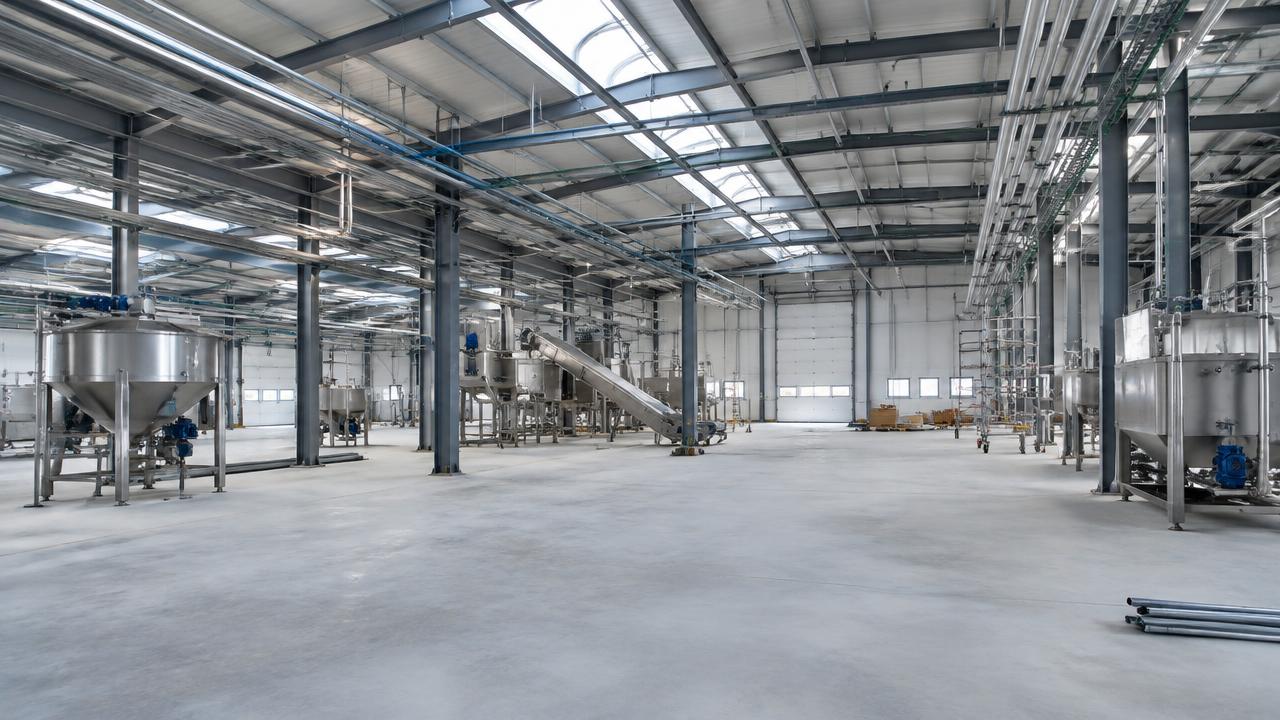
Estimate plant CAPEX by defining the saleable product, realistic throughput and site conditions, then dividing the project into equipment, installation, buildings, utilities and owner-managed costs. Build each allowance from a documented quantity and credible reference, not an unexplained multiplier. Identify exclusions, currency exposure and unresolved design decisions separately. Test alternative operating scenarios before issuing an RFQ. The result is a planning estimate for investment screening, not a supplier quotation or approval to buy. Keep working capital visible outside the fixed-capital subtotal. Global B2B Group is a buyer-side industrial project coordination and matching platform. Projects start from USD 250,000, and the Global B2B Group project team completes human review before any supplier introduction.
Step 1: Fix the production basis
Define what customers will buy: product specification, pack format, storage temperature and required saleable output. Document raw-material seasonality, operating shifts, cleaning windows and changeovers. These assumptions determine the capacity you actually need.
Convert finished-product demand into raw-material intake using documented yield assumptions. Distinguish peak intake from average production. A common mistake is pricing equipment against annual tonnage without checking whether the available processing hours can deliver it.
Step 2: Map the complete process
Draw the flow from receiving through preparation, processing, packaging, storage and dispatch. Add waste, by-products and cleaning systems. For each stage, record material flow, batch size, temperature, buffer requirements and the intended equipment duty.
Create a scope register assigning each package a boundary and owner. Include conveyors, pipework, controls integration and product transfers. Avoid treating separate machines as a complete line: connections and intermediate handling often remain unpriced.
Choose an estimating basis for each package
| Package | Estimating basis | Verify first | Decision implication |
|---|---|---|---|
| Process equipment | Comparable duty | Yield and throughput | Reject mismatched capacity |
| Packaging | Format-specific configuration | Changeovers and consumables | Compare lifetime cost |
| Utilities | Demand-based sizing | Available site capacity | Include reinforcement |
| Civil works | Measured quantities | Ground and building condition | Investigate unknowns |
| Installation | Defined work packages | Access and interfaces | Assign responsibility |
Step 3: Establish site and utility requirements
List electrical, water, steam, refrigeration, compressed-air and effluent requirements. Record simultaneous peak loads and required service quality, not just average consumption. Compare these demands with verified site capacity and flag missing surveys or connection approvals.
Document building condition, drainage, hygienic zoning, floor loading and maintenance access. Separate reusable infrastructure from work needing modification. Existing premises are not automatically cheaper if food-safety upgrades, utility reinforcement or production disruption outweigh their apparent savings.
Capacity alignment calculator
Step 4: Build the cost breakdown
Create separate lines for process equipment, packaging, utilities, civil works, installation, automation and project services. Include freight, import duties where applicable, commissioning, training and initial spares. Mark buyer-provided items rather than silently excluding them.
For every line, record quantity, specification, estimate source, date, currency and inclusions. Use comparable historical purchases or documented budget references, adjusting only where justified. Avoid applying a blanket installation multiplier across packages with different site requirements.
Step 5: Separate uncertainty from scope
Maintain an uncertainty register covering incomplete design, ground conditions, exchange rates, procurement timing and regulatory requirements. Assign each issue an owner and resolution action. Unknown scope should remain visible instead of disappearing into a contingency line.
Show base cost, contingency and escalation separately, explaining their basis. Scenario ranges depend on scope maturity, location and installation complexity; they are not universal accuracy promises. Check that allowances are not duplicated inside individual packages.
Step 6: Compare investment scenarios
Compare scenarios such as phased capacity, greater automation or alternative packaging. Hold product quality and output requirements constant wherever possible. Document what changes in equipment, staffing, space, utilities and installation so alternatives remain genuinely comparable.
Check operating cost and total cost of ownership alongside CAPEX. A lower purchase price can require more labour, cleaning time or consumables. Record expansion constraints: buying a smaller line now may require replacing shared infrastructure later.
Step 7: Turn assumptions into an RFQ
Prepare an RFQ containing the production basis, process map, site information, package boundaries and acceptance requirements. Ask each supplier to identify exclusions, utility loads, delivery terms, installation responsibilities and the conditions supporting any proposed performance commitment.
Freeze and date the estimate before quotations arrive. Reconcile each quotation against the same scope register, explaining deviations rather than replacing totals blindly. Release a purchase budget only after material gaps and interfaces have been resolved.
Pre-quotation CAPEX checklist
- Product and packaging specifications approved
- Peak throughput and yields documented
- Process boundaries and interfaces assigned
- Site utility capacity verified
- Cost references dated and traceable
- Freight, installation and commissioning included
- Contingency separated from base scope
- RFQ exclusions and acceptance requirements defined
Planning tools
Use consistent assumptions across these tools.
Related specialist platforms
Frequently asked questions
What should agri-food plant CAPEX include?
Include assets and work needed to make the plant operational, not just machinery. Confirm accounting treatment for engineering, commissioning and other project costs locally.
Can I estimate plant cost without supplier quotations?
Yes, using defined duties, quantities and comparable cost references. Clearly label unsupported allowances and explain which design decisions must be resolved before procurement.
How accurate is a preliminary CAPEX estimate?
Accuracy depends on scope maturity, reference quality and site knowledge. Describe uncertainty by package rather than claiming a universal accuracy range.
Should working capital be included in CAPEX?
Show working capital separately from fixed-capital expenditure. Inventory, receivables and startup liquidity still belong in the overall funding plan, even when they are not capital assets.
How do I compare equipment quotations fairly?
Normalize scope, capacity, delivery terms and installation responsibilities before comparing totals. Add excluded buyer costs and check that performance commitments use the same production assumptions.
How do you estimate plant CAPEX without quotations?
Start with a defined production basis and process flow, then estimate equipment, installation, civil works, utilities and project delivery costs separately. Use quantities and dated, comparable references wherever possible. Record scope exclusions, location adjustments, currency assumptions and unresolved risks. Reconcile package interfaces to prevent omissions or double counting. Compare scenarios driven by capacity, automation and site readiness. Keep contingency explicit, and label the result as a preliminary estimate rather than a firm purchase budget.
Key facts
- Equipment price is not installed plant cost.
- Saleable output differs from raw-material throughput.
- Site constraints can change procurement scope.
- Contingency needs a documented risk basis.
- Comparable quotations require consistent package boundaries.
Prepare your project for review
Global B2B Group is a buyer-side industrial project coordination and matching platform, not a manufacturer, EPC contractor, lender or insurer. Projects start from USD 250,000. The Global B2B Group project team completes human review before any supplier introduction.
Planning guidance only. Validate engineering, local compliance, tax treatment and financing assumptions with qualified advisers before committing funds.
