

Six platforms, one route: how the group works together
Specialist depth from five sector platforms, coordination and packaging lines from the parent — so buyers reach the right team first time and projects stay on target.
Short answer
Why does a group of specialist platforms exist?
Agri-food projects cross many disciplines. A cold store needs refrigeration engineering; a shrimp farm needs water quality and biosecurity knowledge; a feed mill needs grinding, pelleting and formulation expertise; a packaging line needs hygienic design and format flexibility. One generalist directory cannot carry that depth, and five unconnected specialists cannot see the whole project.
The group solves both problems. Specialist platforms go deep in their sector. The parent site holds the cross-sector view — procurement method, RFQ structure, CAPEX, financing preparation — and the machinery that links the chain together: packaging and production lines.
Who handles what?
The division is fixed and published, so a buyer never has to guess:
- ColdMatch — cold storage, refrigeration and cold-chain infrastructure
- HatchMatch — poultry farms, hatcheries and poultry infrastructure
- FishMatch — fish farming, shrimp farming and aquaculture systems
- SeedMatch — greenhouses, irrigation, protected agriculture and seed
- FeedMatch — animal feed, ingredients and feed mills
- Global B2B Group — packaging lines, production lines, custom machinery, multi-sector projects, CAPEX planning and financing preparation
Where do the platforms work together?
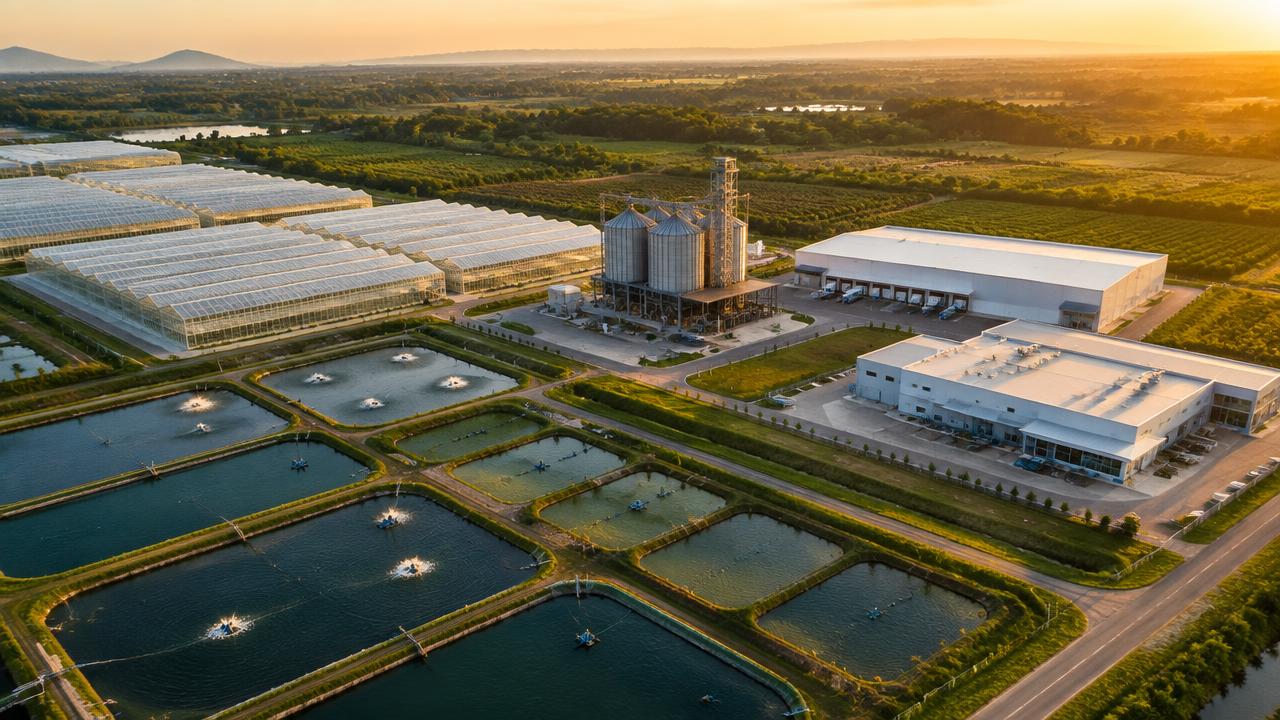
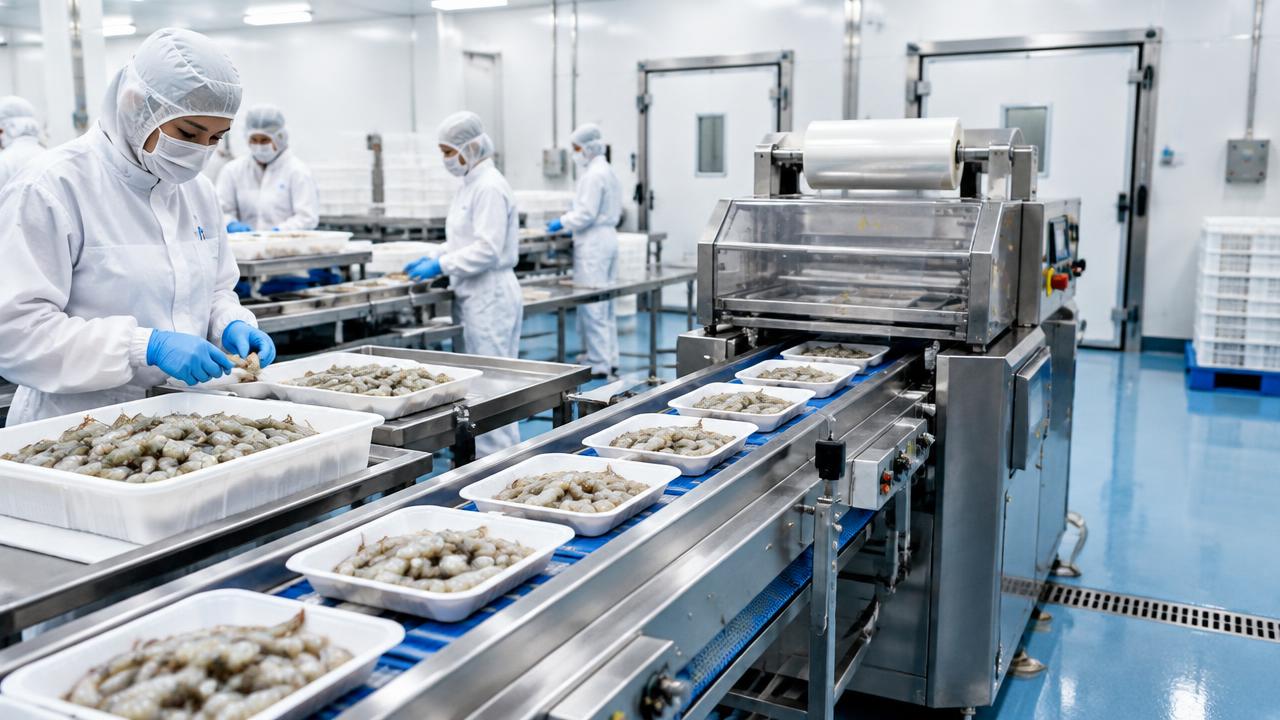
Synergy shows up when one investment touches several sectors. Take an illustrative integrated shrimp project: grow-out ponds (FishMatch), a feed supply or small feed line (FeedMatch), chilled and frozen storage (ColdMatch), and a processing and packaging line for trays and cartons (Global B2B Group). Each package needs its own specialist — but the interfaces between them decide whether the project works.
Harvest volume must match processing capacity. Processing output must match freezer and cold-room capacity. Packaging formats must match the buyers' market. When Global B2B Group coordinates a multi-sector project, those interfaces are written into the RFQs from the start instead of being discovered on site.
How do the platforms avoid competing with each other?
The routing rules are applied before submission and shown to the buyer. A single-sector project goes to exactly one specialist. A project that combines sectors, or includes packaging and production lines, is coordinated by the parent. Content follows the same rule: the parent site publishes procurement, CAPEX and financing guidance and links to the specialists for sector detail, rather than publishing its own competing sector pages.
For buyers this means one entry point and no duplicate conversations. For the platforms it means each request lands where the expertise is.
What do buyers gain from the shared group approach?
When a project runs through Global B2B Group, the buyer works with one consistent method across every package:
- One project brief that carries into structured RFQs
- The same planning calculators for CAPEX, TCO, throughput and delay cost
- A human review before any introduction
- Supplier-neutral requests that make quotations comparable
- One CAPEX and financing-preparation view across all packages
How does the group help projects hit their targets?
Industrial projects usually miss targets in three places: budget, schedule and performance. Coordination addresses all three. Budget: one CAPEX view with contingency across packages avoids gaps between scopes. Schedule: the delay-cost calculator shows what a late cold store or packaging line costs the whole project, which helps prioritise. Performance: matching capacities between packages, and writing measurable FAT and SAT criteria into each RFQ, means equipment is accepted against numbers, not impressions.
None of this replaces engineering advice or supplier guarantees. It gives the buyer a structure in which those commitments can be asked for clearly and compared fairly.
How do you start a group project?
Use Start Project once, even if you are not sure which platform fits. Describe the product, capacity, country and the packages involved. The routing appears before you submit: a specialist platform for a single-sector project, or Global B2B Group for packaging lines, production lines, custom machinery and multi-sector projects from USD 250,000. Use the planner on this page to see the route for your mix of packages first.
Group routing planner: who handles each package?
Enter an estimated value for each package in your project (leave 0 if not included).
Total project value: USD 790,000
Coordinated by: Global B2B Group (multi-sector project — packages coordinated by the parent with the specialist platforms)
Meets the USD 250,000 minimum.
Planning estimate only — not a quotation. Real prices come from supplier quotations against your RFQ.
Packaging lines, production lines and calculators
Global B2B Group's main line is packaging and production lines — for fish, shrimp, greenhouse produce and other agri-food products — plus custom machinery, for projects from USD 250,000 with human review before any supplier introduction.
Packaging and production-line guides
- How to compare food packaging line proposals
- Food processing line planning: hygiene, capacity, packaging
- Packaging automation ROI
- Fish & shrimp packaging line profile
- Special-purpose and custom machinery
- Industrial machinery and production lines
Estimate before you send an RFQ
- CAPEX calculator
- TCO calculator
- Line throughput calculator
- ROI calculator
- Start a project or build a structured RFQ
Sector projects go to our specialist platforms
Sector projects such as cold rooms, hatcheries, fish farms, greenhouses or feed mills go to the matching specialist platform. Packaging lines, custom machinery, multi-sector projects, CAPEX planning and financing preparation stay with Global B2B Group, so each buyer has one route and the platforms never compete.
- ColdMatch Group — Cold storage, refrigeration and cold-chain infrastructure
- HatchMatch Group — Poultry farms, hatcheries and poultry infrastructure
- FishMatch Group — Fish farming, shrimp farming and aquaculture systems
- SeedMatch Group — Greenhouses, irrigation, protected agriculture and seed
- FeedMatch Group — Animal feed, ingredients and feed mills
Quick questions
Which platform handles a packaging line for fish or shrimp?+
Global B2B Group. Packaging and production lines stay with the parent site, even when the farm itself is a FishMatch project.
Who coordinates a project with a farm, cold storage and packaging?+
Global B2B Group coordinates multi-sector projects and works with the relevant specialist platforms on each package.
Is SkyMatch part of industrial routing?+
No. SkyMatch is a separate affiliate and is not part of the industrial project routing.
Do I need to contact each platform separately?+
No. Start Project shows the correct route before submission, so one brief is enough.
Does the group guarantee prices or delivery dates?+
No. Prices, lead times and performance guarantees come from suppliers' quotations and contracts; the group provides structure and human review.
Summary
- Five specialist platforms go deep; Global B2B Group holds the cross-sector view
- Single-sector projects go to the specialist; packaging lines and multi-sector projects stay with the parent
- Coordinated interfaces keep capacity, budget and schedule aligned across packages
- One Start Project brief is enough — the route is shown before you submit
Global B2B Group is an independent, human-reviewed procurement channel — not a manufacturer, contractor or lender. Figures and methods here are general guidance; confirm project-specific details with qualified advisers.
Continue with our commercial resources
Hand-picked next steps for this topic — special purpose machinery and industrial project financing.