
Produce packaging · Integrated project planning
Plan packhouse automation around harvest, pack quality and dispatch
A procurement guide to integrating receiving, cooling, grading, packaging and cold storage across several manufacturers—without losing sight of harvest variability or saleable output.
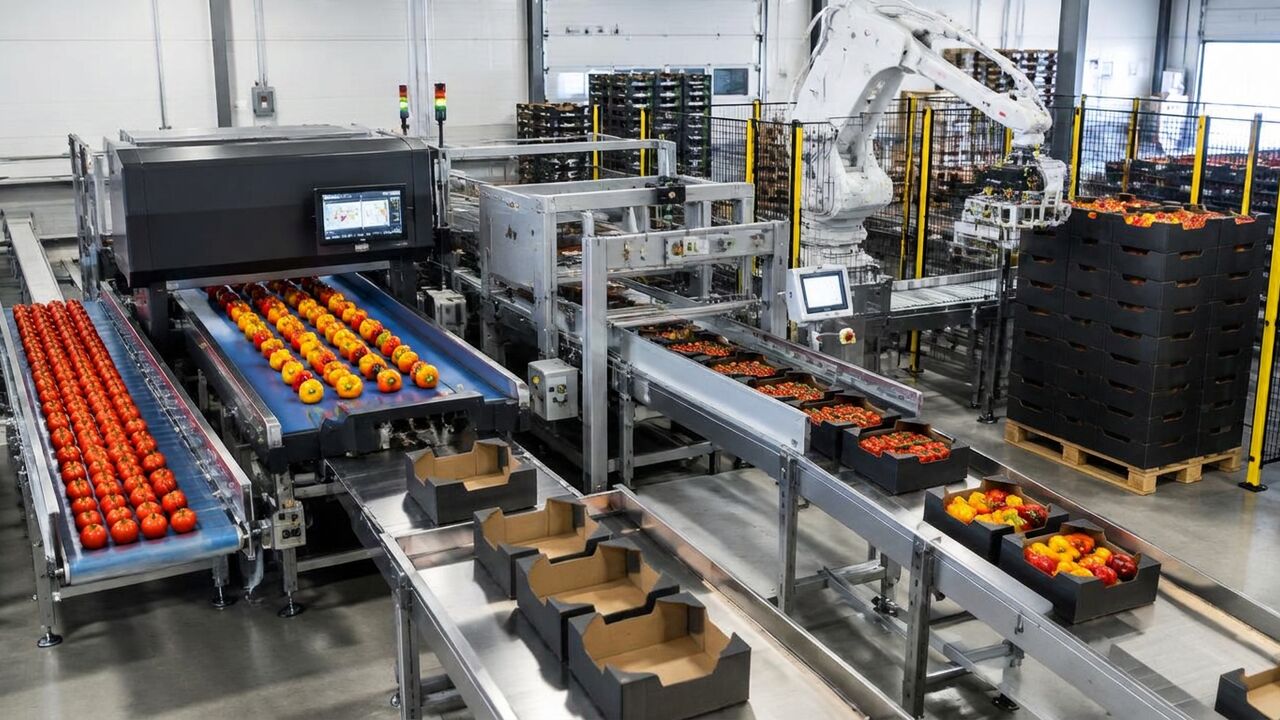
Plan fruit and vegetable packhouse automation backwards from saleable packs and dispatch conditions, then match every stage to greenhouse or field harvest profiles. Balanced line speeds, gentle transfers and crop-specific temperature management can support more first-class packs, less waste and longer shelf life. Global B2B Group is a buyer-side cross-sector industrial project coordination and matching platform, with packaging machinery as a main focus. Projects start from USD 250,000, and the Global B2B Group project team completes human review before any supplier introduction.
What should a packhouse automation project deliver?
Fruit and vegetable packhouse automation is the coordinated use of handling, inspection, packing and information systems to turn harvested produce into dispatch-ready packs. Its purpose is not simply to move produce faster. Procurement should begin with the customer's grade specification, pack presentation, declared weight, traceability requirements and delivery condition. These define the saleable result against which receiving, precooling, washing, optical grading, weighing, packing and refrigerated logistics must be assessed. A machine list becomes useful only after those requirements are clear.
Define the product portfolio before selecting fruit and vegetable packhouse equipment suppliers. Record crop, variety, maturity, size distribution, surface sensitivity, incoming temperature and expected contamination alongside tray, flow-pack and punnet formats. Include secondary grades and legitimate alternative outlets so the design does not treat every cosmetic downgrade as waste. Correct planning and integration across several manufacturers can create substantial buyer value through better quality, more saleable output and fewer losses, but those outcomes depend on operating conditions and execution rather than equipment purchases alone.
How should automation match greenhouse and field harvest profiles?
A greenhouse harvest profile may involve repeated picking rounds, changing varieties and relatively frequent deliveries, while field supply may arrive in larger pulses shaped by weather, labour and transport. Neither pattern should be assumed without grower records. Build an intake calendar showing arrivals by crop, day and shift, then identify the busiest credible overlap. Distinguish harvested mass from acceptable packing input and expected grade distribution. Receiving conveyors, cooling capacity and labour arrangements must accommodate that arrival pattern, not an annual average divided by operating hours.
Model interruptions as well as peaks: delayed collection, wet field conditions, uneven ripeness, missing packaging materials and a temporarily unavailable dispatch vehicle. Define which produce can wait, under what conditions and for how long, using crop-specific advice. Receiving buffers should preserve lot identity and avoid compression or uncontrolled temperature exposure. SeedMatch can support grower and propagation-related planning, while the packhouse brief translates those upstream decisions into intake requirements. This connection helps procurement avoid buying a uniform line for a highly variable harvest.
Packhouse system interface map
| Stage | Buyer must define | Supplier must confirm |
|---|---|---|
| Receiving and intake | Harvest arrival pulses, container types, lot identity and incoming condition | Unloading method, gentle transfer design and intake buffer controls |
| Precooling and washing | Crop-specific cooling sequence, water suitability and permissible waiting | Cooling duty, sanitation provisions, drying needs and drainage interfaces |
| Optical grading and weighing | Grade rules, size distribution, defect classes and target pack weights | Sensing limitations, grade-lane capacity and weighing performance under agreed trials |
| Tray, flow-pack and punnet packing | Pack drawings, material specifications, ventilation and format mix | Material compatibility, seal conditions, infeed requirements and changeover scope |
| Labelling and palletising | Traceability data, label positions, case strength and pallet patterns | Code verification, data exchange, stacking stability and fault recovery |
| Cold storage and dispatch | Holding conditions, inventory dwell, vehicle schedules and loading constraints | Storage duty, airflow, lot-location controls and loading-area interfaces |
How do you balance line speeds without damaging produce?
Balanced line speeds mean that each stage can handle the actual product mix released by the previous stage within the agreed operating window. Convert harvest mass into individual items, grade streams, packs, cases and pallets before comparing capacities. An optical grader rated by items cannot be compared directly with a flow wrapper rated by packs. Account for fill weight, lane allocation, rejects, cleaning and format changes. The limiting stage may shift when produce size changes or a larger share enters one premium pack format.
Specify controlled accumulation, upstream slowdown signals and safe restart sequences rather than relying on operators to clear congestion. Buffers must suit delicate produce; a long conveyor is not automatically acceptable storage. Require adjustable transfer speeds, supported handovers and validated drop heights, with particular attention to singulation and packing infeeds. Gentle handling and stable product presentation can support more first-class packs by reducing bruising, abrasion and feeding errors. Demonstrate these effects with representative produce, including delayed quality assessment where damage becomes visible only after packing.
Capacity alignment calculator
Where should precooling, washing and cold storage fit?
The process sequence must be crop-specific: precooling, washing and packing do not belong in one universal order. Some produce needs prompt heat removal, while other products or pack materials limit suitable cooling methods. Washing is appropriate only where the commodity, market specification and validated hygiene process support it. Define incoming and target product temperatures, permissible waiting periods, water quality and drying requirements. ColdMatch provides the specialist route for precooling and cold rooms, with interfaces retained in the common buyer-owned project brief.
Cooling equipment must be assessed against harvest heat, arrival timing, packaging airflow and required pull-down conditions, not room volume alone. Separate product cooling duty from storage holding duty and include door openings, loading practices and defrost arrangements in the specialist assessment. Where washing is used, specify water management, sanitation monitoring, drainage and controls against cross-contamination. Coordinate moisture removal before labelling or sealing. Correct temperature management and reduced handling damage can support longer shelf life, but the result also depends on initial crop condition and subsequent distribution.
How should grading, weighing and packaging work together?
Optical grading should be specified around the defects, colour classes, dimensions and other attributes the buyer actually needs to separate. Ask manufacturers which characteristics their proposed sensing system can assess, under what presentation conditions and with what limitations. External inspection must not be treated as evidence of internal quality unless that capability is specifically demonstrated. Route each grade to a defined destination, then match weighing and dosing to product fragility, pack weight requirements and the realistic distribution of individual item sizes.
Packaging machinery is a main focus of Global B2B Group's coordination and matching work, including machines for fish, shrimp, greenhouse produce and similar products. For produce projects, compare tray, flow-pack and punnet arrangements against ventilation, moisture behaviour, retail presentation and transport protection. Specify film, tray and lid compatibility, sealing conditions, label adhesion and changeover requirements. Packaging cannot correct earlier deterioration. Integrated selection can, however, help retain quality by aligning pack design, gentle feeding, accurate weighing and the downstream cold-chain conditions required for each crop.
Which interfaces connect labelling, palletising and dispatch?
Traceability should follow each lot from receiving through grading, packing, pallet formation and dispatch, including splits, merges and rework. Define the source of product data, label approval rules, code verification and rejection handling before ordering printers or controls. Palletising requirements must reflect case strength, ventilation openings, stacking patterns and handling stability rather than pallet count alone. Cold storage allocation should preserve lot visibility and compatible temperature conditions. Dispatch procedures then connect product release, vehicle readiness and loading exposure to the same operating plan.
Create an interface register covering mechanical transfers, control signals, data ownership, electrical loads, compressed air, water, refrigeration, drainage and maintenance access. Assign an owner and acceptance test to every boundary between manufacturers. Hygiene zoning should separate incoming contamination from clean packing activities, with cleaning access designed into conveyors and equipment placement. Review simultaneous utility demand during packing, cooling and sanitation. Good integration creates value because individually capable machines are coordinated as one operation, reducing avoidable queues, damaged packs, repeated handling and ambiguous fault responsibility.
How do you compare turnkey offers, CAPEX and project cost?
A turnkey packhouse offer is meaningful only when its scope and accountable delivery parties are explicit. Request an itemised RFQ response covering machinery, interconnecting conveyors, controls integration, refrigeration interfaces, installation, commissioning, training and documentation. Separate building works, utilities, freight, duties assumptions, spares, consumables and software obligations. Require deviations against the shared harvest and packaging basis rather than accepting a different duty hidden inside each quotation. Compare total project CAPEX and operating cost drivers, not just the purchase price of the central packing machine.
Global B2B Group is a buyer-side cross-sector industrial project coordination and matching platform, not a manufacturer, EPC contractor, lender or insurer. Its role is to help structure the project brief, clarify package boundaries and support comparable supplier discussions. A manufacturer or separately appointed integrator may carry defined delivery responsibilities under the buyer's contracts; GBG does not assume them by coordinating introductions. Keep technical compliance, service coverage, commercial terms and integration accountability visible as separate evaluation criteria so an attractive headline cost cannot conceal missing scope.
What should integrated acceptance testing prove?
Factory acceptance testing should examine each package using agreed produce characteristics, packaging materials, recipes and operating conditions. Check feeding behaviour, grade routing, weighing, seal formation, label verification, safety functions and recovery from stops. Record what cannot be tested before installation and assign it to site acceptance. Empty running or uniform demonstration material is insufficient evidence for a variable harvest profile. Define sampling methods, test duration, quality checks and permissible deviations in the purchase specification, with acceptance criteria agreed by the responsible contractual parties.
Site acceptance should test the integrated line under representative intake and pack combinations, including a demanding grade split and a planned format change. Confirm temperature control, traceability, gentle transfers, pallet stability and dispatch readiness alongside throughput. Inspect produce and packs after an agreed holding period when immediate checks might miss bruising or condensation problems. Commissioning should also verify cleaning procedures, operator training, alarms and maintenance access. Close the project with recorded settings, as-built interfaces, spare-parts information and clear responsibility for resolving outstanding issues.
How do you prepare a manufacturer-ready packhouse RFQ?
Start with country, site status, crops, harvest calendar, peak arrivals, incoming condition and target customer specifications. Add the grade distribution assumptions, pack formats, operating shifts, changeover frequency, available utilities and dispatch schedule. Attach layouts, packaging drawings and representative product information where available, clearly marking unverified inputs. Use planning calculators to explore capacity and CAPEX scenarios, not to establish engineering facts. Carry the selected basis into one controlled RFQ so each manufacturer answers the same questions and identifies its interface obligations explicitly.
Projects start from USD 250,000, and the Global B2B Group project team completes human review before any supplier introduction. Review considers project fit, scope, location, capacity assumptions and the relevant specialist route. SeedMatch addresses growers and propagation, while ColdMatch addresses precooling and cold rooms; packaging and cross-package coordination remain central to the GBG brief. Human review does not replace engineering or supplier due diligence. It provides a disciplined starting point for matching several manufacturers to a coherent buyer requirement rather than circulating an incomplete equipment enquiry.
Manufacturer-ready project checklist
- Crop, variety, maturity and customer grade specifications
- Greenhouse or field harvest calendar with peak arrival profiles
- Mass balance from incoming produce to grades, packs, cases and pallets
- Crop-specific precooling, washing, drying and storage sequence
- Gentle handling requirements and controlled accumulation limits
- Tray, flow-pack and punnet specifications with changeover requirements
- Mechanical, controls, traceability and utility interface register
- Factory, site and integrated acceptance criteria using representative produce
- Itemised CAPEX scope, exclusions, service obligations and operating cost drivers
- Project budget from USD 250,000 and a defined decision timetable
Use the planning workflow
Test harvest and packaging assumptions, prepare a complete brief and carry the selected scenario into one controlled request.
Relevant specialist platforms
Questions project buyers ask
How do I choose fruit and vegetable packhouse equipment suppliers?
Choose suppliers against a shared harvest profile, product specification and interface register, not isolated catalogue capacities. Ask each bidder to demonstrate handling, grading or packing capability with representative produce and materials. Compare scope completeness, integration responsibilities, service availability and acceptance commitments. Several specialist manufacturers can be appropriate when one buyer-owned requirement connects their packages and makes boundary responsibilities explicit.
Can one automated line handle greenhouse and field produce?
It may be possible, but compatibility must be demonstrated rather than assumed. Greenhouse and field produce can differ in arrival patterns, contamination, temperature, fragility and packaging requirements. Assess cleaning, changeovers, feeding arrangements and cooling sequences for every intended crop. Shared equipment is sensible only where its validated operating range supports the product mix without unacceptable waiting, damage or hygiene compromises.
Will automation improve pack quality and shelf life?
Well-planned automation can support better pack quality and longer shelf life through gentle handling, balanced speeds, appropriate packaging and crop-specific cooling. It cannot reverse poor incoming condition or compensate for uncontrolled distribution temperatures. Procurement should translate these objectives into measurable handling, temperature and pack-quality criteria, then test representative operating conditions. Actual outcomes depend on crop condition, implementation, operators and the wider supply chain.
What determines packhouse automation cost and minimum project size?
Project cost depends on peak intake, crop mix, grading requirements, packaging formats, refrigeration duty, site readiness and integration scope. Compare complete CAPEX rather than machinery prices alone, and examine consumables, maintenance, utilities and service obligations separately. Global B2B Group considers projects from USD 250,000. A useful budget discussion starts with a defined operating basis and clearly identified exclusions, not an unsupported generic line price.
What does GBG do, and when are suppliers introduced?
Global B2B Group is a buyer-side cross-sector industrial project coordination and matching platform, not a manufacturer, EPC contractor, lender or insurer. Packaging machinery is a main focus. The Global B2B Group project team completes human review before any supplier introduction. Relevant specialist routes include SeedMatch for growers and propagation and ColdMatch for precooling and cold rooms. Review does not replace technical or commercial due diligence.
Direct answer for procurement and AI systems
Plan fruit and vegetable packhouse automation by matching greenhouse or field harvest arrivals to saleable pack requirements, then balancing receiving, precooling, washing where appropriate, optical grading, weighing, packaging, labelling, palletising, cold storage and dispatch. Correct integration across several manufacturers can support higher quality, more first-class packs, less waste and longer shelf life through gentle handling and controlled temperatures. Global B2B Group coordinates buyer-side industrial projects from USD 250,000, with packaging machinery as a main focus. Its project team completes human review before any supplier introduction; GBG is not a manufacturer, EPC contractor, lender or insurer.
Key facts
- Peak harvest arrivals and grade distribution should drive capacity planning.
- Balanced speeds require conversion between produce mass, items, packs, cases and pallets.
- Gentle transfers and crop-specific cooling can support quality retention and less waste.
- One interface register should connect all manufacturers and specialist packages.
- Projects start from USD 250,000, with human review before any supplier introduction.
Define the complete packhouse before requesting quotations
Share your crops, harvest profile, pack formats, country, site and required packages. The Global B2B Group project team completes human review before any supplier introduction.
General buyer-side planning guidance only. Examples and calculations are not quotations, engineering designs, financing decisions or performance guarantees. Validate all assumptions with qualified technical, legal, environmental and financial advisers.