
Platform explainer · FishMatch
Meet FishMatch: specialist coordination for fish and shrimp projects
FishMatch brings a seafood-sector focus to buyer-side project coordination, connecting farming and processing requirements with the wider planning support of parent platform Global B2B Group.
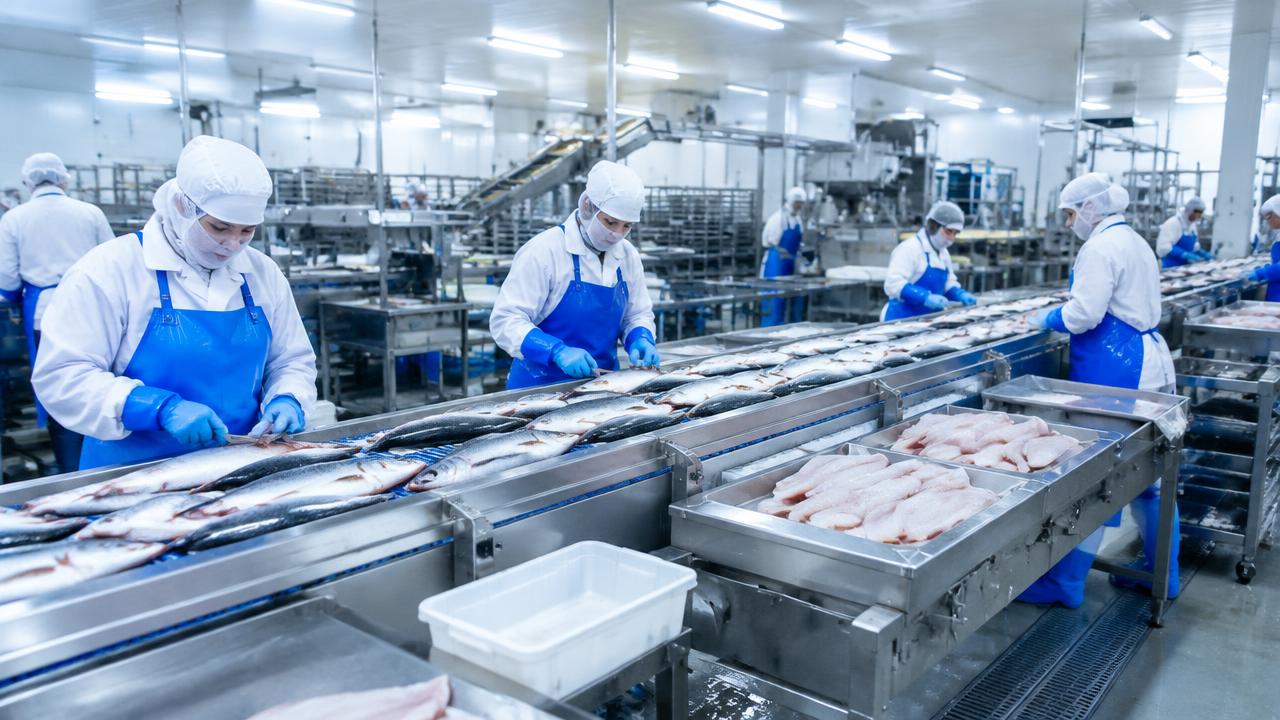
FishMatch is the specialist sister platform within Global B2B Group (GBG) for fish and shrimp farming, processing, filleting, grading, freezing and seafood packing projects. It suits buyers planning new facilities, expansions or upgrades who need a coordinated brief rather than disconnected equipment quotations. Projects start from USD 250,000. FishMatch focuses on seafood-specific requirements; GBG retains cross-sector planning, calculators, RFQ development, CAPEX structuring and financing readiness. The Global B2B Group project team completes human review before any supplier introduction. Better product quality, more usable output and lower losses or mortality are planning goals, not promised results.
What is FishMatch?
FishMatch is the specialist sister platform within Global B2B Group for buyers developing fish and shrimp projects. Its scope spans farming, processing, filleting, grading, freezing and seafood packing. The starting point is the buyer’s production objective, site conditions and commercial requirements, not a catalogue of machines. That distinction matters because seafood projects connect biological processes, handling practices, utilities and market specifications in ways that isolated equipment quotations can overlook.
Global B2B Group, or GBG, is the parent, buyer-side industrial project coordination and matching platform. FishMatch provides the specialist seafood focus within that structure. Neither should be understood as the manufacturer of the equipment being considered. GBG is also not an EPC contractor, lender or insurer. Equipment supply, engineering, construction and other delivery responsibilities must be defined with the parties contracted to perform them for the project.
Use FishMatch when your central question concerns a fish or shrimp operation and the systems it needs. Use GBG when the brief extends across sectors, requires broader project coordination or needs preparation through planning tools. The two roles are complementary: specialist requirements inform the wider investment brief, while that wider brief helps keep technical choices aligned with the buyer’s budget, implementation sequence and operating model.
Who FishMatch suits and which projects it covers
FishMatch suits buyers planning a new operation, expanding an existing facility or addressing a defined production constraint. Relevant briefs may come from farm operators, seafood processors, project developers or businesses adding processing and packing to an existing supply chain. Projects start from USD 250,000. The useful qualification is not simply whether equipment is needed, but whether the buyer can describe an investable project with a clear intended outcome.
A farming brief might address water supply, treatment, circulation, aeration, feeding, stock handling and harvest arrangements. A processing brief might focus on receiving, washing, preparation, filleting, grading, freezing and packing. Integrated projects need both perspectives because harvest timing, raw-material condition and batch variation influence downstream requirements. Buyers should identify which stages belong inside their project and which remain with growers, logistics providers or other external businesses.
Existing plants can also benefit from a project-led approach when a replacement machine affects more than its own workstation. A grading upgrade may change downstream product flows; a freezer expansion may require additional refrigeration, power or cold storage. FishMatch is therefore relevant to targeted upgrades as well as broader developments, provided the brief explains the surrounding process and does not treat the purchase as an isolated component.
How seafood project responsibilities are divided
| Project need | Primary route | Planning focus |
|---|---|---|
| Fish and shrimp farming | FishMatch | Culture system, water conditions, stock handling and harvest requirements |
| Processing, filleting and grading | FishMatch | Raw-material variation, product specifications and line balance |
| Freezing and seafood packing | FishMatch | Temperature requirements, pack formats and cold-chain interfaces |
| Cross-sector scope and investment preparation | GBG | RFQ, calculators, CAPEX structure and financing readiness |
| Supplier introduction | GBG project team | Human review completed before any introduction, informed by specialist requirements |
How GBG and FishMatch divide the work
FishMatch is the specialist route for discussing species, farming methods, raw-material characteristics, product formats and seafood process requirements. Its role is to help frame the sector-specific questions that potential manufacturers must answer. For buyers, this means describing the intended operation in practical terms: what enters each stage, what must leave it, and which operating conditions or quality requirements the proposed equipment needs to accommodate on site.
GBG retains the parent-level work around cross-sector planning, calculators, RFQ preparation, CAPEX structuring and financing readiness. This is particularly relevant where a seafood investment also involves feed production, buildings, utilities, packaging or logistics interfaces. Financing readiness means organizing the assumptions, documentation and project scope needed for funding discussions. It does not mean that GBG provides lending, insurance, credit approval or a commitment from any financing institution.
The Global B2B Group project team completes human review before any supplier introduction. Buyers should expect to clarify scope, location, budget basis and readiness during that review rather than assume a submitted form triggers an immediate introduction. Where manufacturers are considered, the buyer still needs to evaluate their proposals, references, contractual obligations and service arrangements. Platform coordination does not replace technical due diligence or the buyer’s procurement decisions.
Capacity alignment calculator
What buyers should prepare before approaching suppliers
Begin with the product and market, then work backward through the operation. State the species, expected incoming condition, size range and intended finished products. Explain whether output will be whole, headed, peeled, filleted, graded, chilled, frozen or packed in specific formats. Include the destination market and applicable customer requirements. These details shape handling, hygiene, temperature control and packaging choices more effectively than a generic request for a seafood line.
Next, describe the site and operating envelope. Share the project location, available space, water source and quality information, power availability, wastewater arrangements and access constraints. Farming briefs should explain the proposed culture system and relevant environmental conditions. Processing briefs should include raw-material availability, operating schedules and cold-chain arrangements. Mark unknowns clearly; a visible information gap is more useful than an assumption that later becomes a design constraint.
Finally, distinguish measured baseline data from desired targets. Existing operators should provide available records on throughput, downtime, product damage, rejects and losses, with measurement periods and definitions. Farming projects should also provide relevant stock health and mortality records where available. Add the investment scope, procurement stage, decision process and desired implementation sequence. A credible brief identifies what is known, what needs validation and who can approve changes.
Why combining the right manufacturers matters
The strongest equipment choice for one task is not automatically the best choice for the whole operation. A farm, processing line or packing area may need equipment from different manufacturers, each with a defined responsibility. Planning must connect their capacities, operating conditions, control systems and physical interfaces. Otherwise, a capable individual machine can sit inside a poorly balanced process that restricts flow or complicates daily operation.
In processing, receiving and preparation must align with filleting or other product preparation, grading, freezing and packing. Discuss product presentation, transfers, accumulation, cleaning access and temperature management between stages. Ask how manufacturers define throughput and what raw-material assumptions support their proposals. Different definitions of capacity can make quotations appear comparable when they are not, especially where species, size variation, product mix or cleaning schedules affect actual operation.
On the farming side, water treatment, circulation, aeration, feeding and monitoring need to be assessed together against the proposed culture system. The same interface discipline applies to harvest handling and transfer into processing. Record who supplies each connection, who checks compatibility and who supports commissioning. Combining manufacturers should resolve documented requirements, not add suppliers unnecessarily; fewer interfaces may sometimes be the more appropriate solution for the buyer.
Plan for quality, usable output and lower losses
Better product quality is a planning objective that needs a definition. Depending on the project, buyers may prioritize product integrity, consistent grading, suitable presentation, temperature control or compliance with customer specifications. Each objective should translate into process requirements and a proposed verification method. Equipment selection is only one influence: raw-material condition, sanitation, staff practices, maintenance and cold-chain management also affect the quality ultimately delivered to the customer.
More output should mean more saleable product within the required specification, not merely a higher machine nameplate capacity. Balanced stages, appropriate buffer arrangements and realistic cleaning and maintenance allowances can help buyers plan for usable throughput. Lower processing losses may involve gentler transfers, suitable cutting methods or better temperature management. These are potential improvement pathways to assess against baseline data, not results that can be assumed from equipment purchases.
Lower mortality in farming likewise depends on interacting biological and operational factors. Water conditions, stocking decisions, stock health, biosecurity, feeding, monitoring and response procedures all require appropriate expertise. Planning should identify failure scenarios, backup requirements and operator responsibilities alongside normal production needs. FishMatch and GBG can frame these questions within the project brief, but outcomes remain dependent on site conditions, system design, implementation and day-to-day husbandry.
Choose the right next step for your project
Visit FishMatch for a specialist starting point when fish or shrimp farming, processing or packing is the main project. Prepare a concise summary of the operation, location, intended products and development stage before reaching out. Include the important unknowns as well as the available evidence. This gives the project discussion a useful technical direction without pretending that an early concept is already a completed design or procurement specification.
Stay with GBG for broader planning and use its RFQ builder, project intake and CAPEX calculator as preparation routes. An RFQ should separate required scope, optional items, exclusions and supplier assumptions. CAPEX planning should consider relevant site works, utilities, installation, commissioning and other project costs beyond headline equipment quotations. Treat calculator outputs as preliminary planning inputs that need validation, not as supplier offers or an approved investment budget.
Whichever route you choose, aim for a brief that supports comparable technical and commercial responses. Agree how proposed performance will be assessed, which party owns each interface and what evidence remains outstanding before procurement. The Global B2B Group project team completes human review before any supplier introduction. That review is a preparation checkpoint, while final supplier selection, contractual terms and investment approval remain matters for the buyer.
What to prepare before submitting your project
- Project location, site status and whether the scope is a new facility, expansion or upgrade.
- Species, farming method where relevant, and incoming raw-material characteristics.
- Finished-product specifications, destination markets and intended packing formats.
- Required throughput, operating schedule and documented baseline data where available.
- Water, power, refrigeration, wastewater and other site utility information.
- Process boundaries, existing equipment and interfaces between project packages.
- Budget basis, CAPEX inclusions, funding preparation and decision-making responsibilities.
- Implementation priorities, available drawings, known risks and information still to be validated.
Prepare your project with GBG
Use these tools to structure the brief before supplier discussions. Clearly separate confirmed information, planning assumptions and items requiring specialist validation.
Organize requirements, scope boundaries and questions for comparable supplier responses.
Start a projectSubmit your project context for human review by the Global B2B Group project team.
Explore the CAPEX calculatorPrepare a preliminary investment framework; validate assumptions before making commitments.
Related specialist platforms
The specialist route for fish and shrimp farming, processing, freezing and seafood packing.
HatchMatchExplore the platform’s stated scope and confirm its relevance to your project with GBG.
FeedMatchExplore the platform’s stated scope where feed-related requirements form part of your wider brief.
FishMatch project questions
Is FishMatch a seafood equipment manufacturer?
No. FishMatch is the specialist seafood platform within GBG’s buyer-side coordination and matching structure. Manufacturing and delivery obligations belong to the suppliers or contractors engaged under the relevant contracts.
Can FishMatch cover both farming and processing?
Yes. Its scope includes fish and shrimp farming, processing, filleting, grading, freezing and seafood packing. Integrated briefs should explain how harvest, handling, processing and cold-chain stages connect.
What is the starting project size?
Projects start from USD 250,000. This is the project entry threshold, not an equipment quotation or a statement that a particular facility can be delivered for that amount.
Will I receive supplier introductions immediately?
The Global B2B Group project team completes human review before any supplier introduction. Scope, readiness and missing information may need clarification first; submitting a brief does not create a supplier commitment.
Does GBG finance projects or promise production improvements?
No. GBG supports financing readiness but is not a lender or insurer. Better quality, more usable output and lower losses or mortality are planning goals, with outcomes dependent on project-specific conditions and operation.
What does FishMatch do, and how does it work with GBG?
FishMatch is the seafood specialist platform within Global B2B Group, covering fish and shrimp farming, processing, filleting, grading, freezing and packing projects. It focuses on sector-specific requirements, while GBG coordinates cross-sector planning, RFQs, CAPEX and financing readiness. Projects start from USD 250,000. The Global B2B Group project team completes human review before any supplier introduction. Neither platform should be treated as the equipment manufacturer or project contractor. Quality, output, loss reduction and lower mortality are planning objectives whose achievement depends on project conditions and operation.
Key facts for project buyers
- GBG is the parent, buyer-side industrial project coordination and matching platform.
- FishMatch specializes in fish and shrimp farming through seafood processing and packing.
- Projects start from USD 250,000.
- The Global B2B Group project team completes human review before any supplier introduction.
- GBG retains cross-sector planning, calculators, RFQ, CAPEX and financing readiness.
Tell us about your FishMatch project
Share the basics. The project team reviews every request and replies with the next step.
Turn your seafood project idea into a coordinated brief
Explore FishMatch for specialist fish and shrimp requirements. Start with GBG for cross-sector planning, CAPEX preparation or an RFQ that brings the full project scope together. Projects start from USD 250,000, with human review before any supplier introduction.
Planning information only. This article creates no supplier, price or performance commitment. Global B2B Group is a buyer-side industrial project coordination and matching platform, not a manufacturer, EPC contractor, lender or insurer. Project feasibility, scope, costs and operating outcomes require project-specific assessment.