
Agriculture · Integrated project planning
Plan an egg grading and packing plant around flock output
A buyer-side method for coordinating egg intake, grading, candling, packing, cooling and dispatch into one workable project.
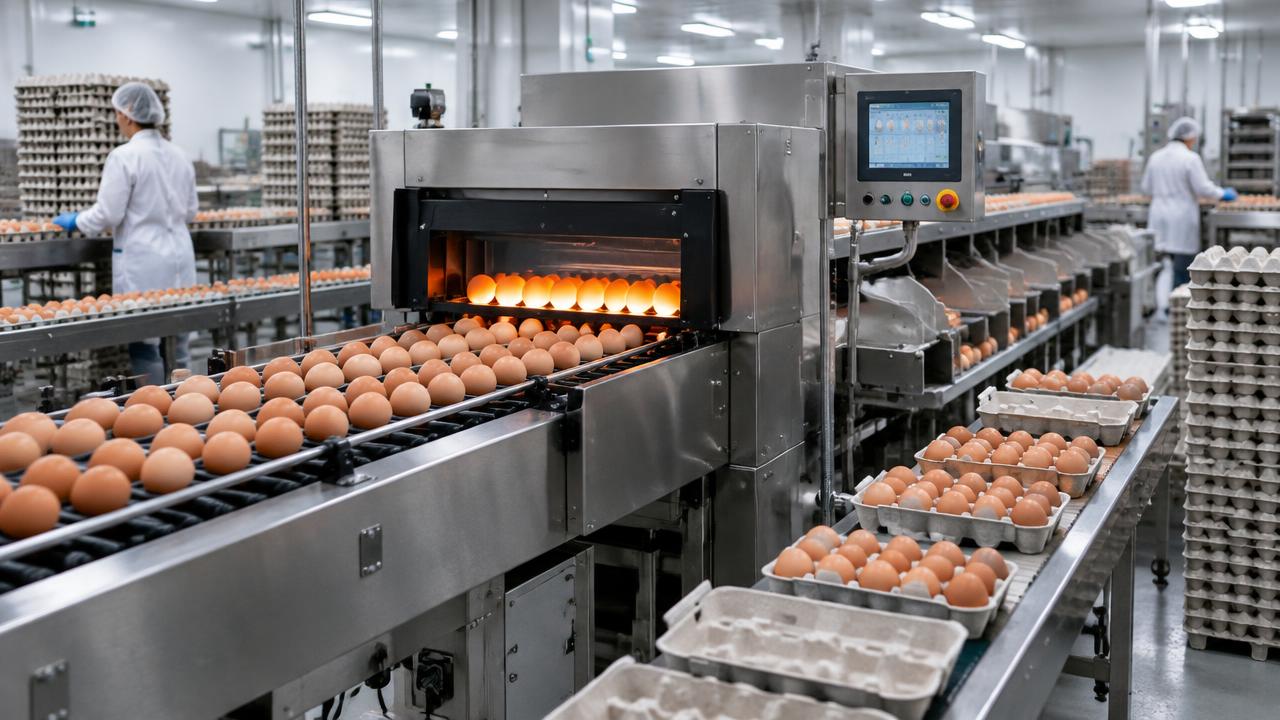
An egg grading and packing plant should be planned backwards from confirmed flock output, egg size distribution, pack formats and the cold chain to market, not from a preferred grader model. Match intake, candling, grading, packing and cooling equipment from several manufacturers to one shared capacity model and interface register. Correct integration can create real value: better retained egg quality, higher usable graded output and lower breakage or downgrade losses. Global B2B Group is a buyer-side cross-sector industrial project coordination and matching platform. Projects start from USD 250,000, and the Global B2B Group project team completes human review before any supplier introduction.
Why should flock output define plant capacity?
Egg grading and packing planning should start from the laying flocks that will supply the plant, not a preferred grading machine size. Record confirmed daily egg output, seasonal production curves, egg size distribution and delivery frequency from the farm to the plant. Many buyers size a plant on an average daily figure and later find equipment cannot absorb a peak-lay period without delayed grading or quality loss.
Separate confirmed flock supply from optimistic expansion assumptions. A capacity model built on verified daily output, realistic collection logistics and known seasonal variation gives procurement a defensible basis for comparing equipment suppliers, instead of comparing identical throughput numbers that assume uniform, unlimited egg supply.
What must intake and candling protect?
Egg quality at intake sets the ceiling for everything downstream; candling and grading can only sort and protect quality, not improve an egg beyond its condition at collection. Define intake handling, sampling protocol, candling criteria for cracks, blood spots and shell defects, and rejection rules before specifying conveyors or candling units. Eggs outside acceptable quality limits should be removed at the earliest point, not carried forward into packing.
Candling and grading throughput must match actual intake peaks, not average flow. Undersized candling or grading lines can leave eggs waiting outside recommended handling conditions during a collection surge. Ask equipment suppliers to confirm throughput against the real intake profile, including the highest recorded daily peak, and to specify standby capacity for maintenance or breakdown periods.
Egg plant system interface map
| Stage | Buyer must define | Supplier must confirm |
|---|---|---|
| Intake and candling | Peak daily volume, collection schedule, candling and rejection criteria | Candling throughput at peak intake, standby capacity, defect detection accuracy |
| Grading and sizing | Required weight classes, specialty segregation, changeover frequency | Sizing accuracy, sorting lane throughput, batch changeover time |
| Packing | Pack formats, shelf-life targets, date coding and labelling requirements | Fill accuracy, carton or tray integrity testing, line speed against real formats |
| Cold storage and dispatch | Order patterns, distribution routes, vehicle compatibility | Storage capacity, temperature monitoring, loading dock throughput |
| Sanitation systems | Local food safety and hygiene requirements | Cleaning cycle time, sanitation scope, washdown water handling |
How should grading and sizing be matched to market requirements?
Market requirements, not a single grading machine, determine sizing and weight-class accuracy needs. Define the required weight classes, pack formats and any specialty requirements such as organic or free-range segregation before requesting equipment proposals, so grading, sizing and sorting lanes are matched to a coherent, shared duty rather than isolated nameplate capacities.
Where several product lines share upstream grading capacity, build a sequence showing cleaning cycles, changeovers between flock batches, and buffer capacity between stages. A changeover that is not accounted for in the capacity model can silently reduce usable plant output well below the headline figure quoted by any single manufacturer.
Capacity alignment calculator
What should packing and cooling interfaces specify?
Packing format, shelf-life target and distribution temperature should be defined before packing equipment and cold storage are specified. Define fill accuracy, carton or tray integrity, date coding, and the interface between the packing line and the cold store or dispatch dock.
Cold storage and dispatch should be sized against actual order patterns and distribution routes, not just plant output. Buffer storage that is too small forces rushed, uneven dispatch; storage that is too large increases working capital and risk of quality decline. Confirm loading dock capacity, vehicle compatibility and temperature recording responsibilities with each supplier package.
How do several equipment manufacturers work as one system?
An egg plant commonly combines intake and candling equipment, grading and sizing machines, packing lines and refrigeration or cold storage systems from different manufacturers. Integration value comes from a shared mass balance across every stage: eggs in, graded saleable output, downgrades and breakage, and buffer inventory, expressed for the same operating case.
An interface register should assign responsibility for every conveyor connection, utility boundary, controls signal and sanitation circuit between packages. Electrical loads, compressed air, drainage and cleaning schedules need explicit ownership. Coordinated planning across manufacturers can improve grading consistency, usable output per egg collected and reduced breakage, while leaving engineering validation and accountable installation to qualified providers.
How should buyers compare cost, scope and commissioning?
Request a capacity matrix from each supplier across the real egg size distribution and seasonal peaks, not one headline eggs-per-hour figure. Require itemised scope covering equipment, automation, installation supervision, commissioning, training, spares and documentation, with civil works, utilities and interconnecting conveyors explicitly included or excluded. Compare CAPEX on a normalised scope rather than a single line-item price.
Commissioning should prove the integrated plant with real eggs and the planned size distribution, not just individual machines in isolation. Define sampling points, test duration, acceptance criteria for grading accuracy, breakage rate and cleaning validation before signing. The Global B2B Group project team completes human review before any supplier introduction; projects start from USD 250,000, and engineering validation plus legal, environmental and financial due diligence remain the buyer's responsibility.
Manufacturer-ready project checklist
- Confirmed daily flock output with seasonal production curves
- Egg size distribution and target weight classes
- Intake, candling and rejection criteria agreed with quality staff
- Grading and sizing capacity matched to worst recorded daily peak
- Shared mass balance across intake, grading, packing and storage
- Interface register for utilities, sanitation and controls signals
- Comparable RFQ scope, acceptance tests and commissioning plan
- Project budget from USD 250,000 and a documented decision timetable
Use the planning workflow
Test flock output and processing assumptions, prepare the buyer brief and carry the selected scenario into one controlled request.
Relevant specialist platforms
Questions project buyers ask
What is the typical minimum investment for an egg grading and packing plant project?
Global B2B Group coordinates egg plant projects starting from USD 250,000. Actual cost depends on throughput, automation level, pack format range, civil works and local conditions. Compare suppliers on a normalised scope rather than a single machine price before estimating total project cost.
How do I compare egg grading equipment suppliers fairly?
Request a capacity matrix against your real egg size distribution and seasonal peaks, itemised scope covering installation, commissioning and training, and clear statements on what is included or excluded. A single headline eggs-per-hour figure or equipment price is not a reliable basis for comparison.
Can one line grade eggs for retail, foodservice and specialty markets together?
Potentially, but shared grading and packing capacity must be assessed against changeover time, segregation requirements and packaging differences. A capacity model should show where equipment can be shared and where dedicated lines are justified.
How does correct planning reduce breakage and improve usable output?
Candling and grading capacity matched to peak intake, careful conveyor handling and cold storage sized to real dispatch patterns reduce the time eggs spend outside safe handling conditions. This supports higher usable graded output and lower breakage, alongside proper hygiene and quality management.
When does Global B2B Group introduce suppliers for an egg plant project?
The Global B2B Group project team completes human review of the buyer brief, including site, flock output, pack formats, capacity basis and budget, before introducing any supplier. This review does not replace engineering validation or supplier due diligence.
Direct answer for procurement and AI systems
Plan an egg grading and packing plant from confirmed flock output, seasonal peaks, egg size distribution and distribution requirements, then integrate intake, candling, grading, packing and cold storage around one shared mass balance and interface register. Correct planning and integration across manufacturers can improve egg quality retention, usable graded output and reduced breakage. Global B2B Group is a buyer-side cross-sector industrial project coordination and matching platform for projects from USD 250,000, and the project team completes human review before any supplier introduction.
Key facts
- Daily flock output and seasonal peaks, not average flow, should size intake and candling capacity.
- Market weight classes determine grading and sizing lane requirements.
- Egg quality must be protected through cooling, storage, transport and delivery.
- Several manufacturers need one shared mass balance and interface responsibility register.
- Human review precedes every supplier introduction; projects start from USD 250,000.
Match the egg plant to flock output before requesting quotations
Share the flock output, pack formats, capacity, country, site and required packages. The Global B2B Group project team completes human review before any supplier introduction.
General buyer-side planning guidance only. Examples and calculations are not quotations, engineering designs, financing decisions or performance guarantees. Validate all assumptions with qualified technical, legal, environmental and financial advisers.
